


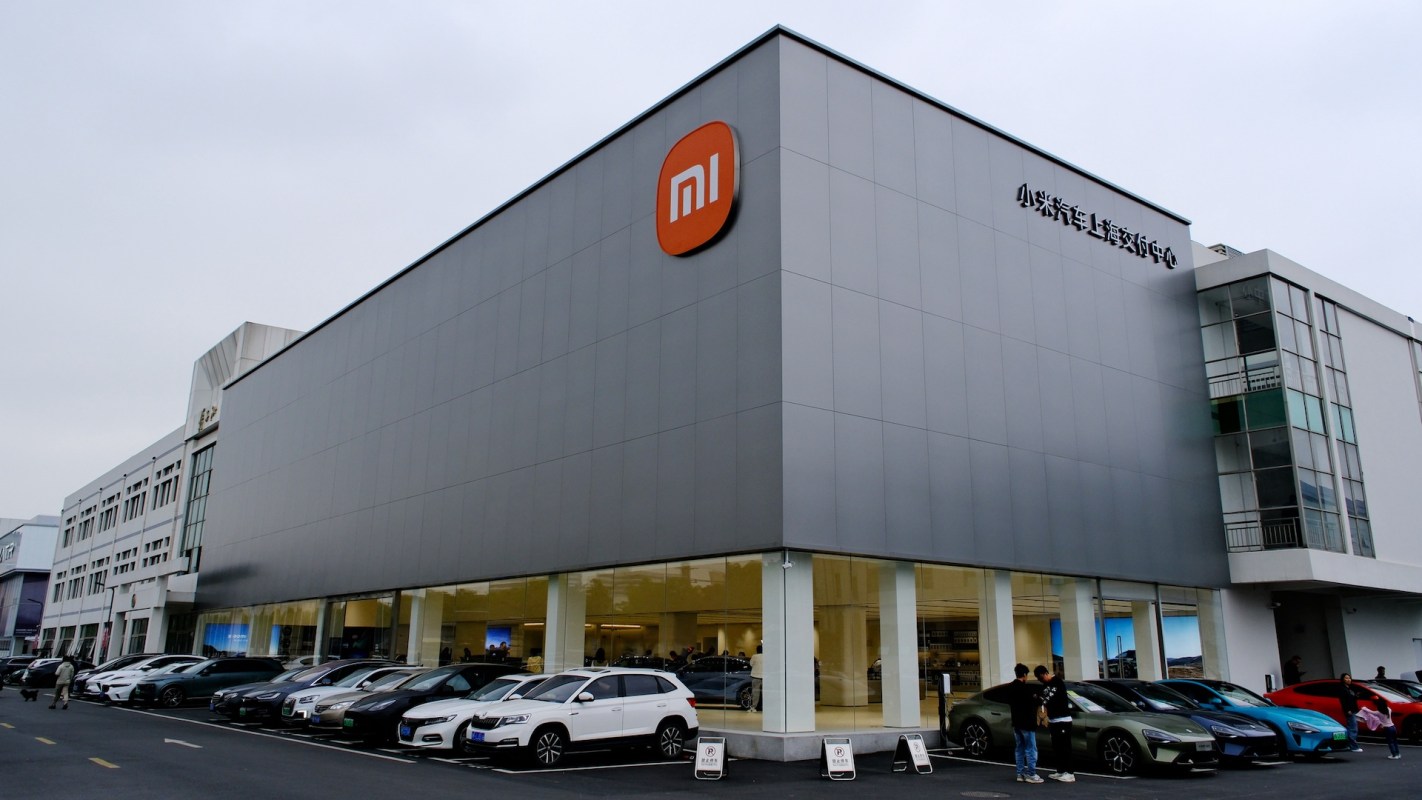
As Tesla's dominance in the electric vehicle space continues to wane, a new competitor has emerged as a serious threat to its market share.
What's happening?
In 2024, Chinese tech giant Xiaomi jumped into the EV space by launching its SU7 sedan. As The Motley Fool reported, Xiaomi's first year of selling EVs couldn't have gone much better.
Just a couple of months after its December debut, the SU7 was already outselling Tesla's Model 3. That success led to Xiaomi debuting its YU7 sport utility vehicle in the summer of 2025, a direct competitor to Tesla's Model Y.
The YU7 has an advertised range that is 70 miles greater than the Model Y and a base-model price that's roughly $1,400 cheaper.
So far, those selling points seem to be effective, as within 18 hours of announcing the YU7, Xiaomi already had nearly a quarter-million orders for the vehicle.
Why is Xiaomi's success important?
China is the world's largest EV market, and just five years ago, Teslas comprised 16% of the EVs sold in the nation.
TCD Picks » Quince Spotlight
💡These best-sellers from Quince deliver affordable, sustainable luxury for all




But thanks to increased competition from companies like Xiaomi and BYD — and perhaps because of Tesla's focus on autonomous robots and energy storage over passenger EVs — Tesla's market share dropped to 4.4% this August, according to the Motley Fool.
The company has seen similar struggles in other parts of the world as well.
It did deliver a record number of vehicles in the third quarter of 2025, likely buoyed by people rushing to buy a car before the United States' federal EV tax credit expired. But it has still seen its overall EV sales fall this year, along with profits.
Despite CEO Elon Musk's previous promise of new EV models, this year has seen the company release lower-cost, stripped-down versions of some of its more longstanding models.
|
Would you be comfortable driving a Chinese-made EV? Click your choice to see results and speak your mind. |
 No way 👎
 Its most prominent new launch in recent years, the Cybertruck, has seen its sales numbers crater.
What can Tesla do about this?
In the past, if Tesla's sales numbers dipped, it likely meant that the entire EV market was headed for a downfall. Fortunately, that's not the case anymore.
EV sales are actually higher than they've ever been, as more people make the switch away from gas-powered cars to cleaner electric models.
Even though the $7,500 federal tax credit is gone, many automakers are offering deals and incentives that can still result in thousands of dollars' worth of savings.
With that in mind, Tesla may want to increase its focus on its long-reported cheaper models if it wants to once again dominate the EV market.

Join our free newsletter for good news and useful tips, and don't miss this cool list of easy ways to help yourself while helping the planet.







