


As federal tax credits aimed at helping schools do everything from upgrading to electric school buses to installing solar panels and electric-vehicle charging stations are now set to expire years before previously anticipated, districts across the country are facing an unforeseen financial crunch, according to The Hechinger Report.
"Phasing out the tax credits for wind and solar energy is going to make a huge, huge difference," 18-year-old Tanish Doshi told the nonprofit media outlet. While a high school student, Doshi helped the Tucson Unified School District take on a plan to invest millions in climate-friendly upgrades.
"It ends a lot of investments in poor and minority communities. You really get rid of any notion of environmental justice," he added.
What's happening?
Tucson has not been alone in seeing its plans land on shaky ground. Incentivized by billions of dollars worth of programs contained in the 2022 Inflation Reduction Act, school districts across the country adopted ambitious multi-year plans aimed at making their schools cleaner, healthier, and more affordable in the long term.
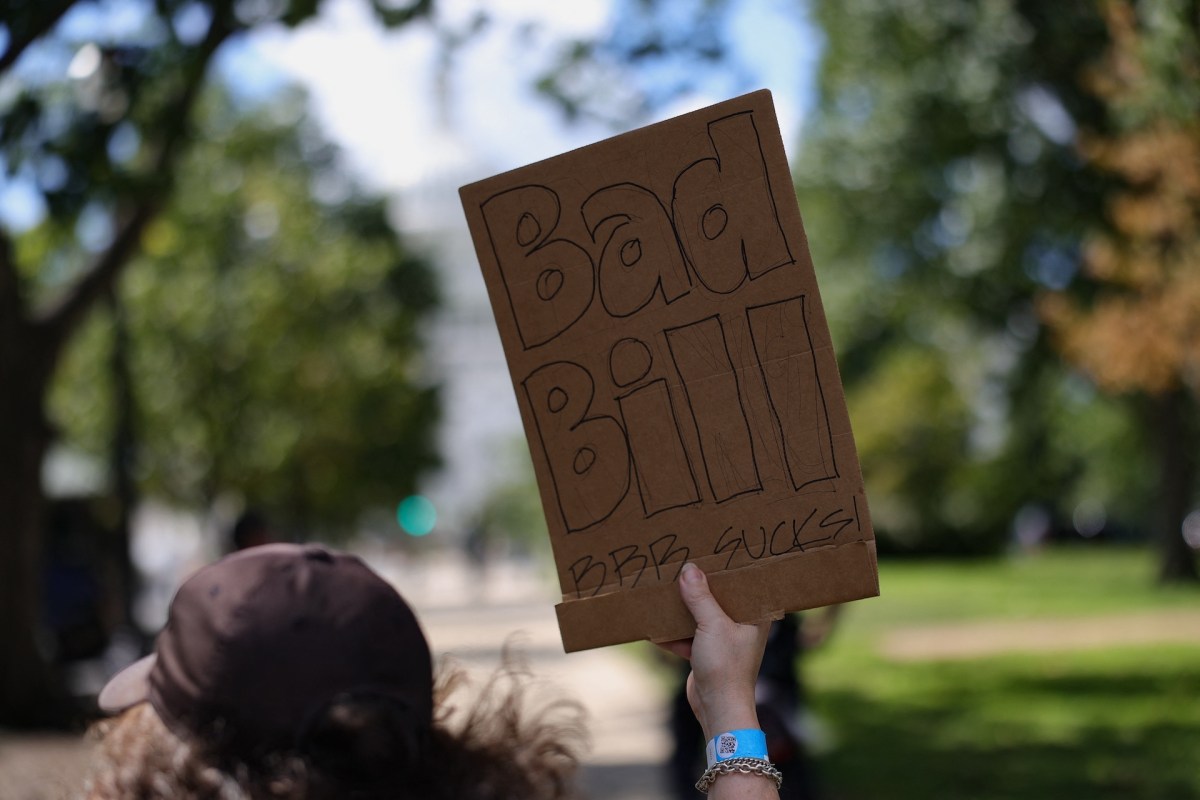
However, the so-called "Big Beautiful Bill" that became law earlier this year significantly rolled back many of those programs. Some tax incentives, such as those for EVs, were originally slated to last well into the 2030s. Now, many of them will end significantly sooner, leaving districts scrambling to cover millions of dollars in shortfalls.
If they are unable to find alternative funding sources or creatively budget their way through the gaps, these projects might have to be significantly cut back or canceled altogether.
In California, the Los Angeles Unified School District planned to install 21 solar projects and 13 EV charging stations across its campuses. These upgrades were key components of the district's goal to run entirely on renewable energy by 2040, according to The Hechinger Report.
All told, the upgrades were expected to cost $90 million, with the district relying on $25 million in federal tax credits to cover more than a quarter of the overall cost. With the district unlikely to meet the new, tighter deadlines imposed under the "Big Beautiful Bill," it must either find the money elsewhere or significantly downscale its plans.
"It's disappointing," Christos Chrysiliou, chief eco-sustainability officer for LAUSD, told The Hechinger Report. "It's nice to be able to have that funding in place to meet the goals and objectives that we have."
Why does it matter?
The lost funding has put at risk billions of dollars' worth of projects nationwide. These efforts aimed not only to significantly reduce heat-trapping pollution but also to improve public health.
TCD Picks » Quince Spotlight
💡These best-sellers from Quince deliver affordable, sustainable luxury for all




|
Should schools teach more about gardening and lawn care?
Click your choice to see results and speak your mind. |
 It should be a main subject 💯
 For example, the transition to electric school buses has not only been about combating rising global temperatures, but also protecting the health of children and of drivers.
According to the California Air Resources Board, gas-powered school buses produce significant amounts of health-harming pollution, such as carbon monoxide and particulate matter. This pollution not only impacts people outside of school buses but also passengers inside.
"In California, about one in eight children take a school bus between home and school," the California Air Resources Board says on its website. "Even though the time children spend in school bus commutes account for less than 10% of a child's day, the commutes contribute 33% of a child's daily exposure to some air pollutants."
Transitioning to electric school buses, which do not produce tailpipe pollution while in operation, could significantly reduce children's overall exposure to health-harming emissions. However, under the new law, districts could end up paying as much as $40,000 more per vehicle than previously anticipated, according to The Hechinger Report.
"At this point, everybody's holding their breath," Rick Brown, founder of a clean energy consultancy that works with schools and government agencies, told the outlet.
Schools often pull double-duty as community hubs as well, particularly in rural and under-resourced areas. The new budget concerns are set to strain already strapped municipalities, and the fear of losing out on expected infrastructure upgrades could have ripple effects across districts that rely on school spaces and transportation to meet multiple needs.
What are people doing about it?
One potential silver lining to the financial shortfalls is the knowledge that if the law could be changed once, it may be changed again. Concerned residents are continuing to make the case to their elected representatives that federal funding should be restored for clean energy upgrades.
Meanwhile, regardless of the policies coming out of Washington, D.C., driving an EV or installing solar at home can save consumers money on gas and electricity costs while also reducing heat-trapping pollution.
With federal tax credits for EVs now expiring on September 30 and tax credits for solar ending on December 31, however, buyers will need to act fairly fast to take advantage of thousands of dollars in savings. If all these changes feel overwhelmingly complicated, EnergySage can make it easier to navigate with free online tools that let prospective buyers compare quotes from vetted local installers.
District leaders, student advocates, and more may be feeling overwhelmed right now too. But creative proposals like the formation of a state-level "climate superfund" advocated by youth activists Emma and Molly Weber in Colorado could see to it that big polluters help to make up the lost funding for clean energy projects, per The Hechinger Report.
Technological innovations may be able to help too. The Environmental Protection Agency has previously suggested that some electric school buses may be able to store energy and supply it back to the grid, perhaps even powering municipal buildings. It's possible that actually doubling down on clean energy could be leveraged to help rebalance local budgets.

Join our free newsletter for good news and useful tips, and don't miss this cool list of easy ways to help yourself while helping the planet.
Cool Picks





