



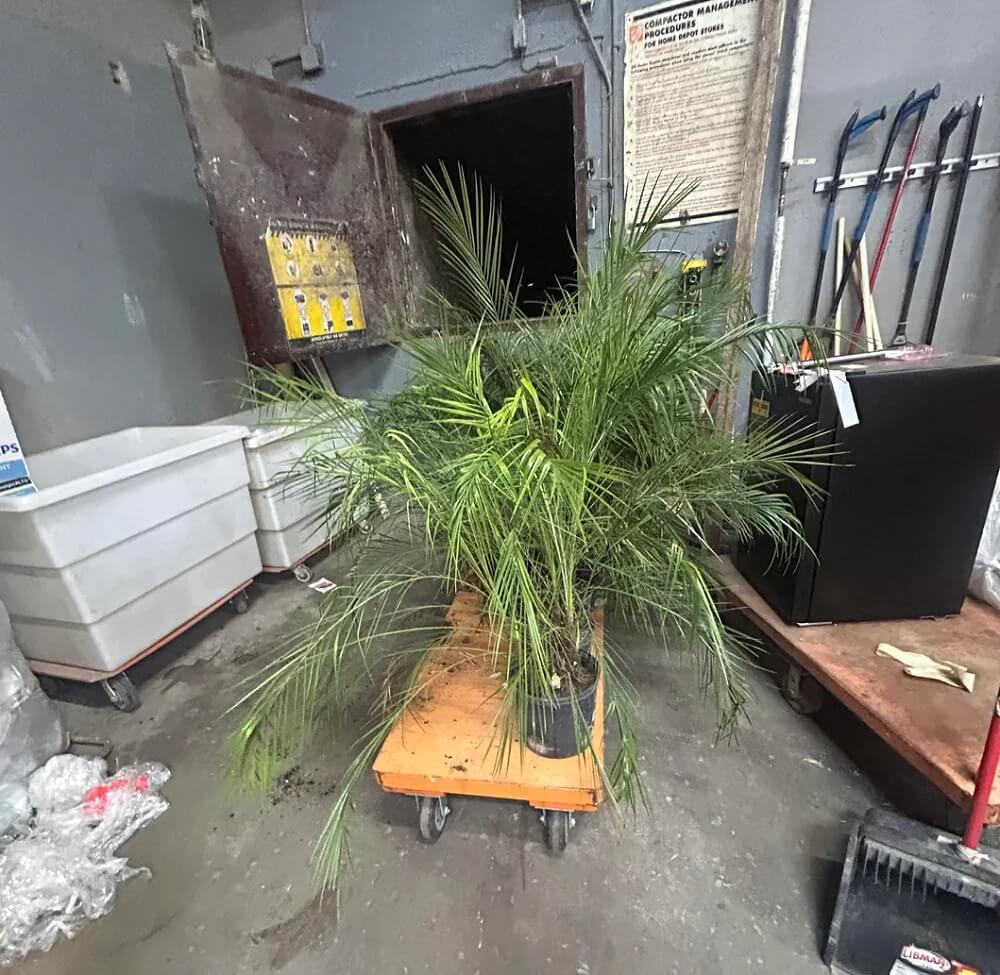
A Home Depot employee sparked outrage with a before-and-after showcase of what happens to plants at their store. One Redditor referred to the scene as "Toy Story 3, for plants." Others called it "distressing."
What's happening?
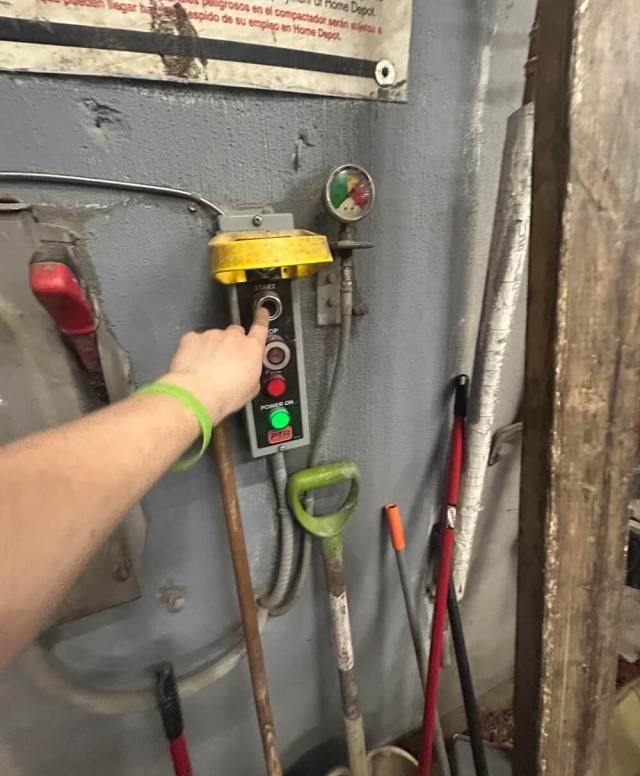
"This is what happens to plants at big box stores like Home Depot," the employee wrote. "At Home Depot we can't discount plants because we don't own them. It's a third-party company that does, and they tell us to toss them in the trash compactor and smash them."
The first image they shared in r/houseplants revealed a thriving fern-like plant. The scene in the next photo showed a pile of dirt and smashed greenery. "It makes me sad," the poster concluded.
"And it's sadder bc it is actually a living organism," a commenter added.
"This is heartbreaking," another commiserated.
"Oooof. I want to go hug my plants," a third said.
Why is this important?
A worldwide movement is underway to drastically reduce plastic waste — and rightfully so, as plastic litter is a hazard to wildlife, including this fox that got its head stuck in debris, and an economic burden to communities that rely on tourism. Microplastics have also been found on every corner of Earth and can contaminate waterways and soil for generations.
While organic waste may seem "cleaner," it still needs to be taken seriously. For one, all the resources and energy that went into cultivating the product become a sunk cost when it is trashed. Organic matter also produces methane pollution when it breaks down in landfills.
Is Home Depot doing anything about this?
Home Depot is no stranger to criticism surrounding its plant policies. Many blame the store's vendors for the issues, while others say the company's refund policy is the problem.
While circularity is one of Home Depot's sustainability pillars, the program seems to focus more on preventing inorganic products and packaging from becoming waste.
TCD Picks » Quince Spotlight
💡These best-sellers from Quince deliver affordable, sustainable luxury for all




|
Do you recycle your old electronics? Click your choice to see results and speak your mind. |
 Yes! 👍
 In its latest Living Our Values report, the company said it is "tracking ahead" of its goal timeline to reduce 200 million pounds of plastic in products and packaging by 2028.
Efforts to reduce organic waste appear to be store-specific. For instance, in 2021, Home Depot highlighted a Puget Sound, Washington, initiative across more than 20 stores to turn organic items into nutrient-rich compost. Composting significantly reduces methane production.
What's being done about organic waste more broadly?
Last year, Forbes examined how the United States became the world's trash leader while accounting for less than 5% of the global population. It found that 80% of items in landfills could have been recycled — an important discovery given that landfills are projected to exceed capacity by 2036.
Fortunately, composting initiatives are popping up around the country. For instance, the University of San Diego is turning food waste into compost that saves the campus money on landscaping costs, while Detroit last year began testing a food waste drop-off program to divert items from landfills.
You can compost your food scraps and other organic matter at home, too — and it's easier than you might think. The Environmental Protection Agency has information about which items are suitable for your pile. You can also explore a variety of tried and true tips and tricks.

Get TCD's free newsletters for easy tips to save more, waste less, and make smarter choices — and earn up to $5,000 toward clean upgrades in TCD's exclusive Rewards Club.
Cool Picks





