


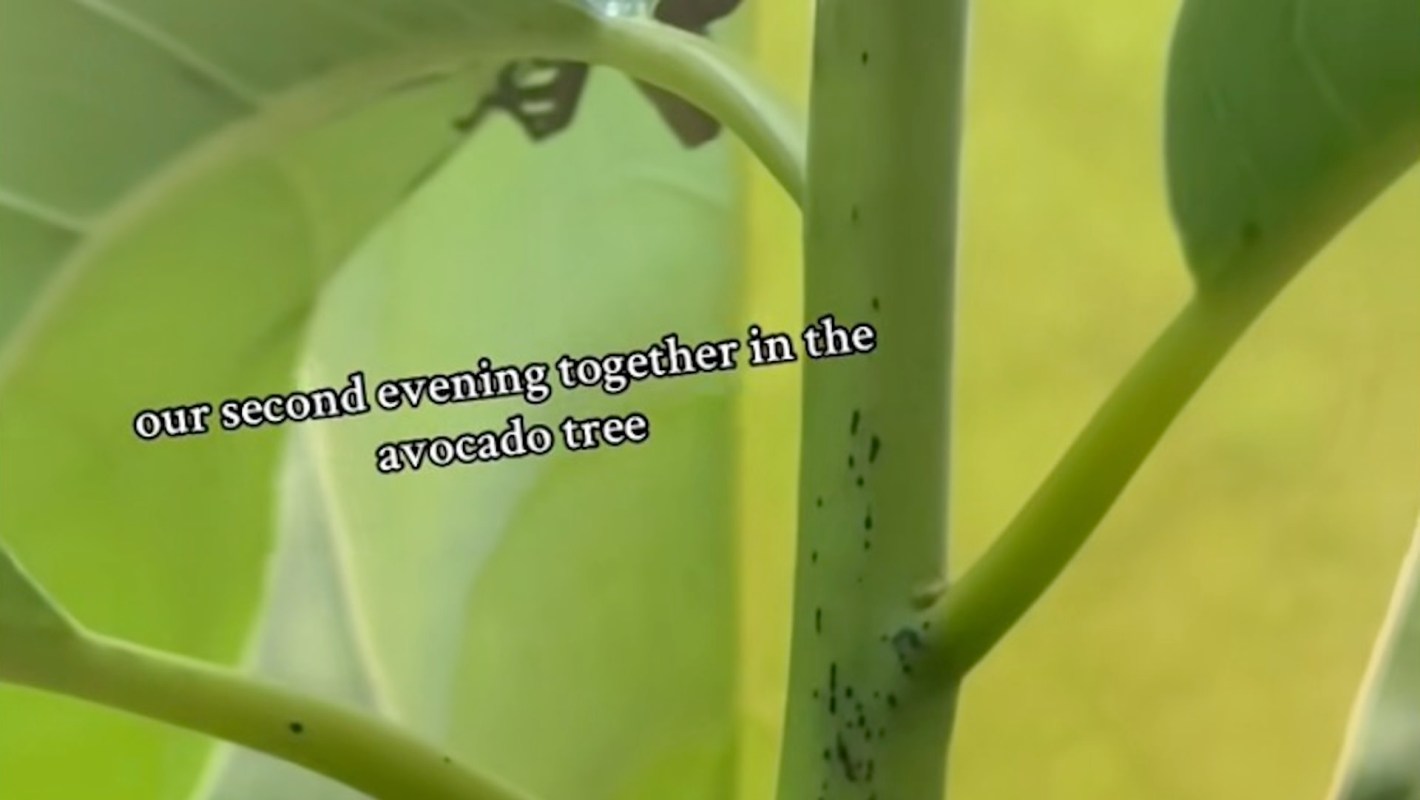
Occasionally, gardening brings some unexpected surprises. This TikToker was shocked to find a new resident in their garden that had found their avocado tree to be a pleasant perch.
Ashley Franz, a TikToker and native plant gardener (@ashleymfranz4), shared a whimsical video of a small frog sitting gently on a large leaf in their avocado tree.
@ashleymfranz4 I hope he is a residential guy that stay around! Anyone have suggestions on avocado companion planting before I go to the UF IFAS website? Zone 9B #garden #florida #avocado #lizard #green ♬ Blue Diamond's Remorse - Steven Universe & aivi & surasshu
Ashley captioned the video, "Our second evening together."
Ashley wanted the frog to stick around, asking for more tips on companion plants that could help the avocado tree thrive.
The TikTok community was too distracted by the adorable frog to answer Ashley's question, though.
"Hi little friend," one said.
"Look at that sweet little face," said another.
"You gotta name him!" said a third.
This simple video captures the tranquil feeling of gardening, in which small moments are savored.
And as far as companion plants for the avocado tree, Ashley pointed out in the post's text that she can reference the University of Florida Institute of Food and Agricultural Sciences website. She added that she is in Zone 9B, which helps identify plants that are native to the area.
TCD Picks » Quince Spotlight
💡These best-sellers from Quince deliver affordable, sustainable luxury for all




|
What is the biggest reason you don't grow food at home? Click your choice to see results and speak your mind. |
 Not enough time ⏳
 Native plant gardening is quietly radical, an act that reclaims the beauty of place-based landscaping. It's an amazing way to learn about your region and micro-climate, and help it to flourish.
Not to mention, landscaping in this way requires much less water, reducing the time and money you spend holding the hose or running irrigation. Also, you'll find that you need less fertilizers, herbicides, and pesticides, as rewilding your yard creates a balanced, biodiverse ecosystem that helps moderate itself.
But the impact of native planting goes beyond just saving time and money on irrigation, fertilizers, and mowing. For example, in prairie lands, native plants' root systems descend 10, even 15 feet, reworking the soil, sequestering carbon, and holding water like subterranean reservoirs.
Leadplant and its nitrogen-fixing cousins offer a major gift to their neighbors by enriching the soil, while wildflowers maintain mutually beneficial relationships with pollinators because their life cycles are matched up perfectly after millennia of co-evolution.
Yet aesthetics are never neglected: natural lawns covered in buffalo grass turn bronze when dormant, while late-blooming species like coneflowers and asters extend the season. Seedheads also linger in winter, ensuring that winter birds stick around.
And because these plants are native, their survival comes free from the costly trappings of irrigation, fertilizers, or endless pest battles — proof that a garden designed with native species prioritized is beneficial to both homeowner and ecosystem.

Join our free newsletter for good news and useful tips, and don't miss this cool list of easy ways to help yourself while helping the planet.
Cool Picks




