


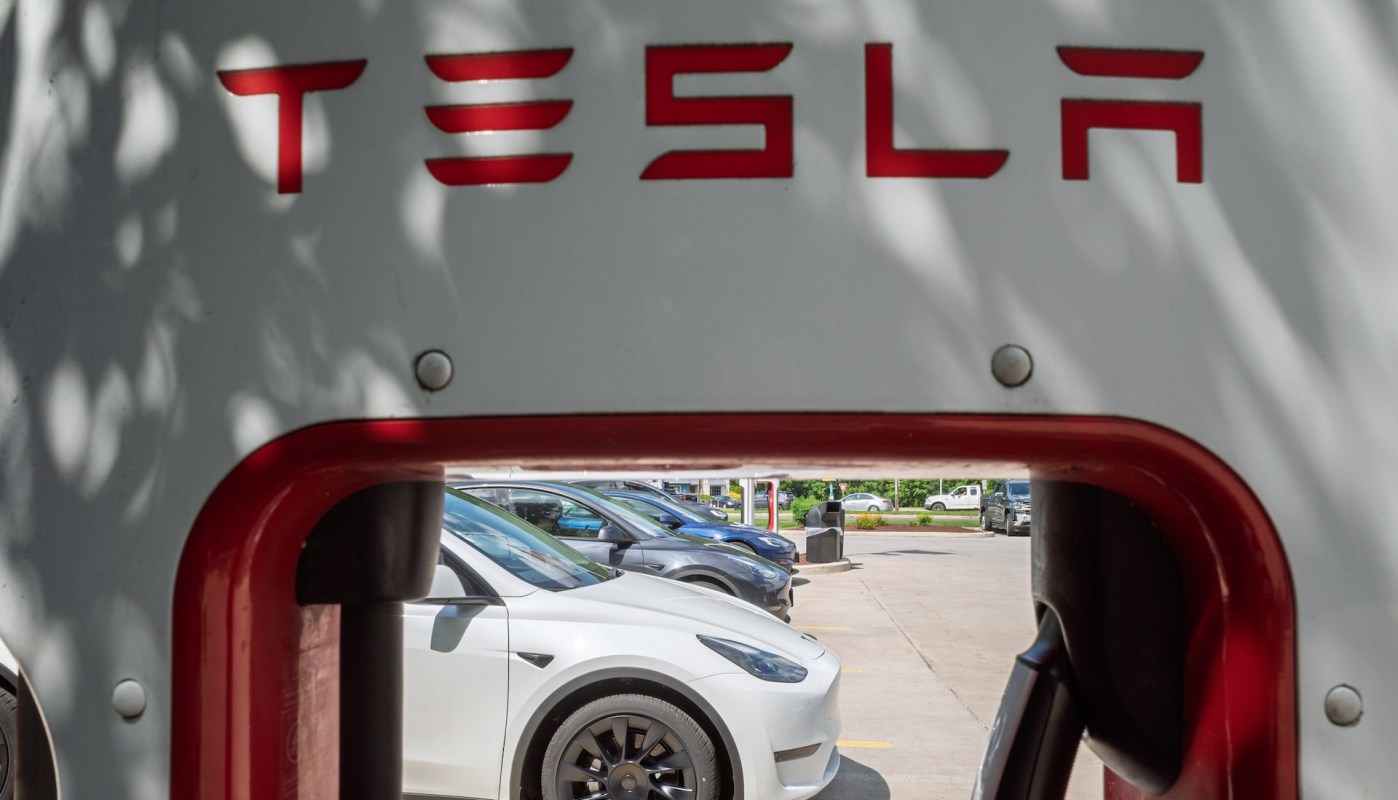
Many electric vehicle drivers have had access to Tesla Superchargers for the past year, even if they don't drive Teslas. But connectivity to this wide network of chargers continues to prove elusive for one major automaker.
What's happening?
As Teslarati reported, Volkswagen has delayed giving its EV drivers access to the Supercharger network. The company has not yet been able to solve compatibility issues between its vehicles and the Tesla chargers.
"The timeline has been delayed by technical challenges, and we ask for customers' patience," a Volkswagen spokesperson told PCMag. "We still expect to deliver access this year."
Many other automakers offer access to this charging network via NACS-to-CCS adapters. Honda and Acura recently began selling a $225 adapter that allows drivers of its EVs to use Superchargers.
Even EVs made by Audi and Porsche — each of which is owned by Volkswagen — are able to access Superchargers.
The Supercharger network has more than 70,000 charging stations worldwide, including more than 20,000 in the United States.
Why is this important?
Anything that makes charging more difficult or complicated could discourage someone from purchasing an electric vehicle. And even though this story isn't Tesla's fault, it is another piece of unfortunate news that is connected to the company.
So far this year, the company has dealt with numerous protests thanks to CEO Elon Musk's political involvements, slumping sales, and a number of key executives leaving the company. Tesla also faces a class-action lawsuit in California over alleged misleading claims about its autonomous-driving features.
Even the Superchargers haven't been immune to bad news. This summer, San Bernardino County shut down one of Southern California's largest charging stations because its labeling did not meet state requirements.
What can I do about this?
Regardless of whether you charge it at a Supercharger, another public charging station, or at home, having an EV is considerably better for the environment than filling up an internal-combustion engine vehicle with gas.
TCD Picks » Quince Spotlight
💡These best-sellers from Quince deliver affordable, sustainable luxury for all




|
Which of these factors is the biggest obstacle preventing you from getting solar panels? Click your choice to see results and speak your mind. |
 The upfront cost 💰
 Because EVs don't burn gas, they don't produce the toxic tailpipe pollution of their gas-powered counterparts. This means fewer heat-trapping gases are released into the atmosphere.
Although the federal EV tax credit expires at the end of September, going electric can still be a worthwhile investment. Studies have shown that the driving costs of an EV are roughly one-half to one-third of driving a gas-powered car.

Join our free newsletter for good news and useful tips, and don't miss this cool list of easy ways to help yourself while helping the planet.
Cool Picks





