


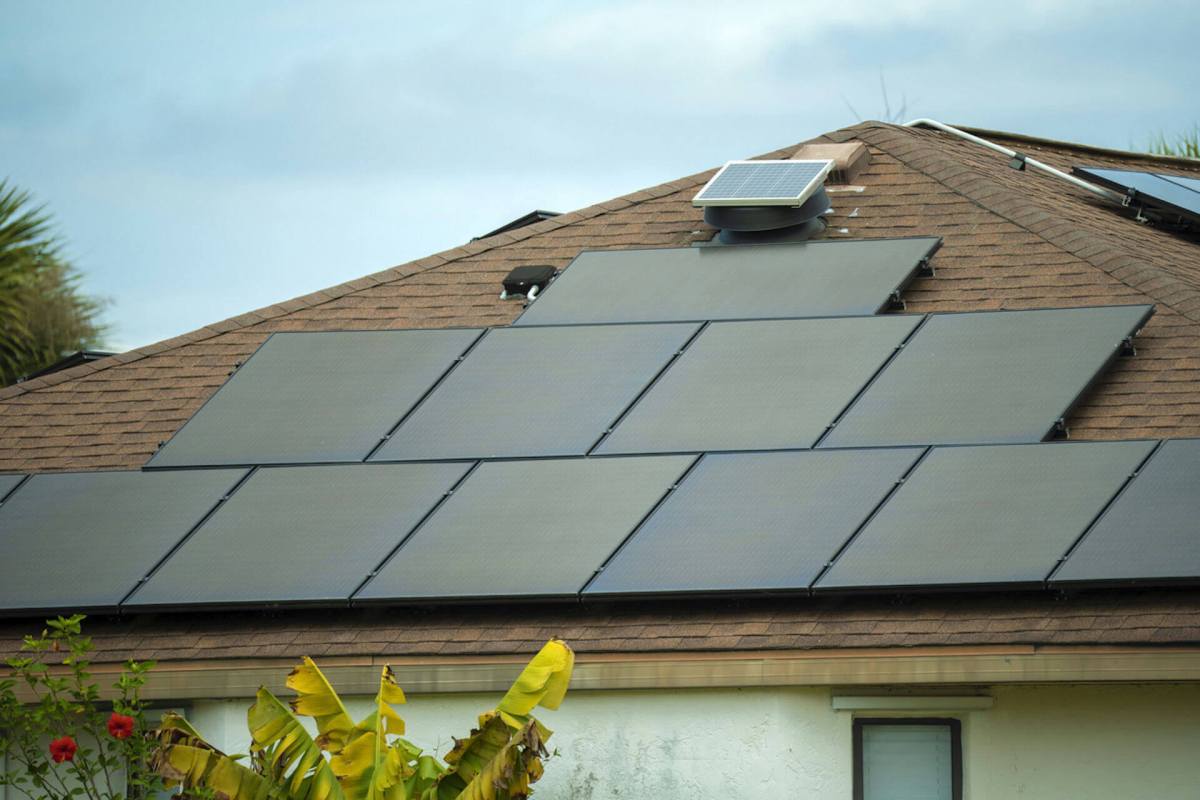
After a contentious year-long struggle, Virginia regulators delivered a resounding victory for solar-panel owners and advocates, striking down a power company's attempt to pay less for excess electricity that homeowners with solar panels provide to the grid.
Under the current rules, homeowners with solar panels receive a credit toward future energy use in an amount equal to the excess electricity they provide to the grid, which comes out to about 17.5 cents per kilowatt-hour, according to Cardinal News.
This system is known as "net metering."
While all of these regulatory details might make installing home solar seem unnecessarily complicated, EnergySage makes it simple with powerful but easy-to-use online tools that allow you to compare quotes from vetted local installers.
In August 2024, Appalachian Power began the process of changing its compensation rules, seeking to reimburse solar-panel users only for what is known as the "avoided cost," or the amount that the utility would pay to obtain that electricity from another source. Under the proposed rules, solar users would have received only about 5 cents per kilowatt-hour, a reduction of over 70%, per Cardinal News.
Appalachian Power sought to justify the drastic cuts by arguing that under the current system, which allowed solar-panel users to save these one-to-one credits for future use, homeowners with solar panels were unfairly shifting the cost of maintaining the power grid to other customers.
However, exactly one year and one day after Appalachian Power formally submitted its proposed changes, Virginia's State Corporation Commission struck down the utility company's plan, siding with Appalachian's opponents, according to the committee's final order.
These opponents had argued that Appalachian's proposal failed to take into account other financial benefits the utility received from home-solar users who provided excess electricity to the grid. For example, homeowners' solar-generated electricity has helped the utility meet its state-mandated clean-energy requirements, saving Appalachian the cost of purchasing clean-energy credits elsewhere, according to Cardinal News.
Save $10,000 on solar panels without even sharing your phone number Want to go solar but not sure who to trust? EnergySage has your back with free and transparent quotes from fully vetted providers that can help you save as much as $10k on installation. To get started, just answer a few questions about your home — no phone number required. Within a day or two, EnergySage will email you the best local options for your needs, and their expert advisers can help you compare quotes and pick a winner. |

In its order, the State Corporation Commission ordered Appalachian to draft new rules that keep the one-to-one ratio of energy credits, giving the company 90 days to do so.
As a consolation prize for Appalachian Power, the committee did place a 12-month cap on when homeowners can cash in their net-metering credits at the one-to-one ratio. If unused at the end of 12 months, Appalachian can pay customers for unused credits at a rate of only 5.7 cents per kilowatt hour, per Cardinal News.
|
Which of these factors is the biggest obstacle preventing you from getting solar panels? Click your choice to see results and speak your mind. |
 The upfront cost 💰
 Regardless, solar advocates heralded the order as a victory for the state and its transition to cleaner, renewable sources of energy.
"We are very pleased with the SCC's ruling, which maintains the overall structure and key features of net metering," said Lindsay Tomsheck of Baseline Solar Solutions, a solar installer, per Cardinal News. "It's a big win for Virginians and for solar, and will help keep the clean energy transition moving in the right direction."
More From EnergySage
💡Go deep on the latest news and trends shaping the residential solar landscape



The situation in Virginia mirrored an ongoing fight in California, where utility companies already made the shift to reimbursing solar users for only the avoided cost rather than at a one-to-one ratio.
The move, which environmental groups have challenged in court, led to an 82% reduction in grid connection requests, according to CalMatters.
Installing home solar panels can drop your electricity bill to practically zero while also reducing planet-heating pollution. If you'd like to learn more, EnergySage can help.
EnergySage offers a free mapping tool that makes it easy to see what tax credits and other incentives are available in your state, saving customers up to $10,000.
Installing electric appliances like heat pumps can take the cost savings of home solar panels to the next level. If you're not sure which heat pump is right for you, Mitsubishi offers free resources that can help answer your questions.
With federal tax credits for home solar expiring Dec. 31, 2025, you must act quickly to take advantage.

Join our free newsletter for good news and useful tips, and don't miss this cool list of easy ways to help yourself while helping the planet.
Cool Picks



