


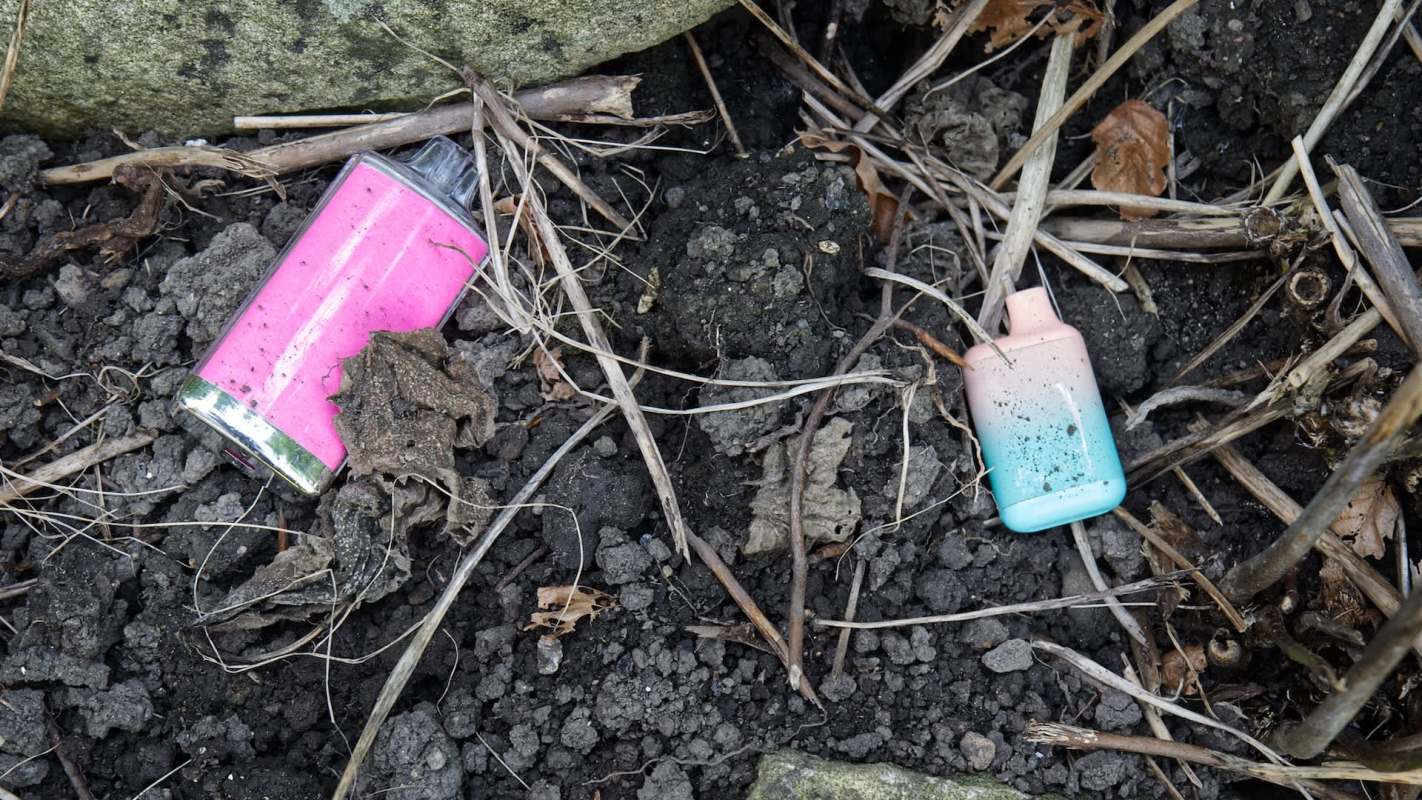
Waste companies in the United Kingdom are calling for shoppers to pay a refundable deposit of up to £5 (about $6.74) on vapes, arguing that millions are still being thrown away and are causing dangerous fires in garbage trucks and waste facilities, the BBC reported.
The push comes a year after the country banned disposable vapes — a move meant, in part, to address the growing safety and waste problem.
What's happening?
The Environmental Services Association, which represents waste companies, says current efforts to recycle vapes are falling short.
Its proposal would add a deposit to the price of a vape at the point of sale and refund that money when the used device is returned to a store or proper recycling facility.
Waste companies say the incentive needs to be large enough to change consumer behavior. Biffa, the U.K.'s largest waste company, has suggested a £5 deposit, though that would still require consultation if the plan moves forward.
The concern is the sheer scale of the problem. Material Focus says weekly vape disposals have fallen since the disposable ban, but only from 8.2 million to roughly 6 million.
TCD Picks » Quince Spotlight
💡These best-sellers from Quince deliver affordable, sustainable luxury for all




Waste operators say many of those devices still end up in household trash, where their lithium batteries can short-circuit when crushed.
Not everyone supports the proposal. Marcus Saxton, chairman of the Independent British Vape Trade Association, warned that a deposit could push some customers toward illicit sellers who ignore the rules and do not charge it.
Why is vape waste concerning?
When vapes are tossed into general waste, they do more than create clutter.
Their lithium batteries can ignite in garbage trucks and at waste-treatment plants, putting workers at risk, damaging equipment, and disrupting local waste services.
There is also a broader environmental cost. Disposable and pseudo-reusable vapes add to the growing stream of single-use plastics and toxic electronic waste, while improperly discarded batteries can leak harmful materials and waste valuable metals that could otherwise be recovered.
The issue also overlaps with public health concerns. Beyond the waste problem, vaping has raised alarms because nicotine products can contribute to addiction and other negative health outcomes, especially among young people.
The Local Government Association says the market has already adapted faster than regulations. Some companies now sell "reusable" vapes that closely resemble disposables in size and price but remain on shelves because they include USB ports and refillable tanks.
What's being done about vape waste?
Retailers are already supposed to offer take-back options for used vapes, and consumers can also bring them to recycling centers.
They should not be placed in normal bins, mixed recycling, or discarded as litter.
The government says it has already taken action by banning disposables and plans further steps to hold retailers accountable if they fail to provide vape recycling bins.
Meanwhile, the Local Government Association is calling for tighter enforcement and a crackdown on the reusable-vape loophole.
Waste companies say the current system is "underperforming" because many people have little reason to return used devices properly. They argue that if a vape still has value after use, more consumers will bring it back rather than throw it away.
"We want a consumer behavior change ... And we think an incentive is the way to do that," Carla Brian, public affairs and partnerships director at Biffa, told the BBC.

Get TCD's free newsletters for easy tips, smart advice, and a chance to earn $5,000 toward home upgrades. To see more stories like this one, change your Google preferences here.






