


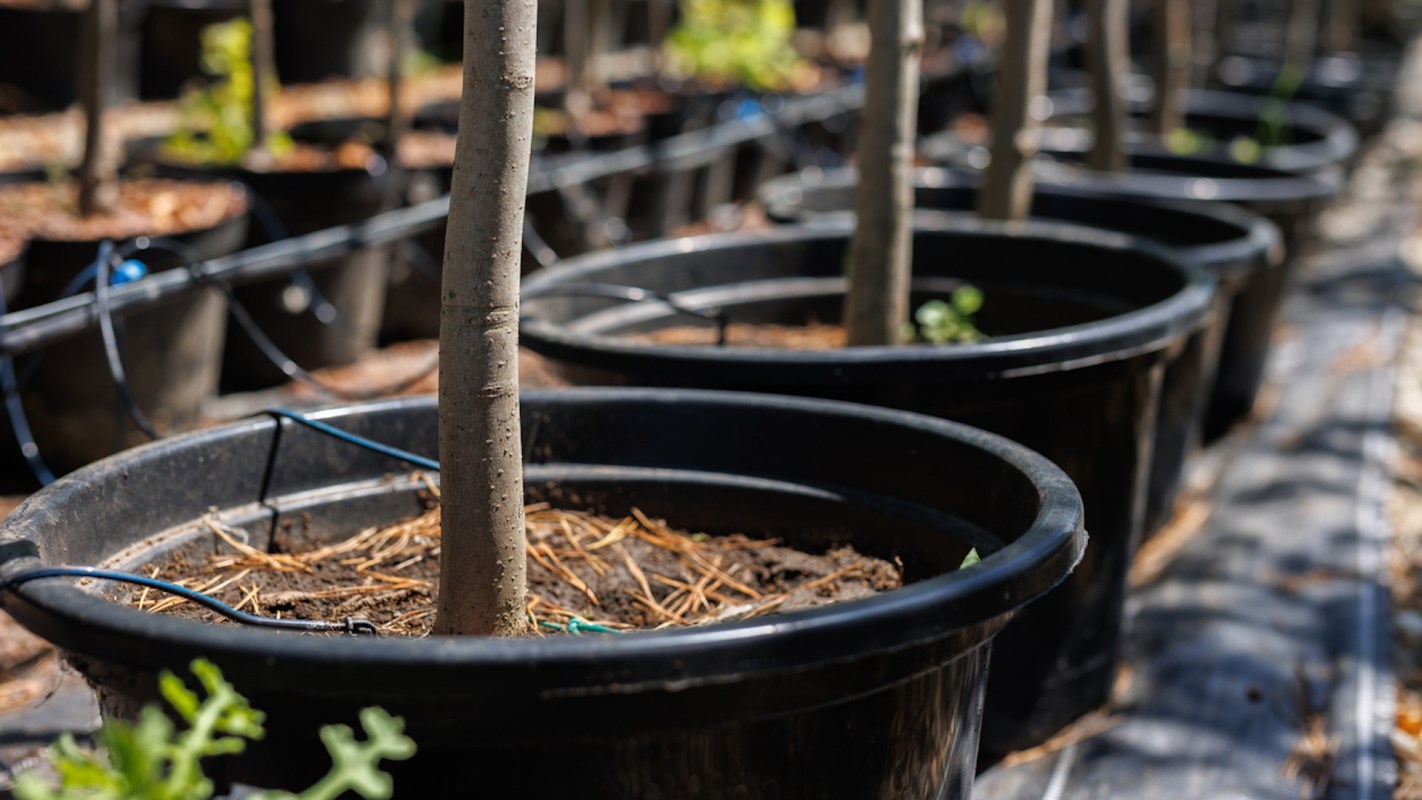
Virginians recently had the opportunity to safeguard their yards by trading in invasive trees for free native replacements. The state's Department of Forestry hosted a one-day "tree exchange" in early November, encouraging residents to swap out Callery pear trees, a fast-spreading invasive species, for up to three free native trees.
The Callery pear tree has become a hazard to ecosystems throughout the eastern and midwestern United States. The species was introduced initially as an inexpensive decorative element for its showy blooms, but the tree came to outcompete and displace native species along sidewalks and in backyards, where they now pose structural threats as well. According to the DOF, the tree is "structurally [weak] and prone to snapping and dropping heavy limbs after weather events."
The tree exchange took place at Hickory Hill Community Center in Richmond, where participants picked up replacement trees in two-gallon pots on a first-come, first-served basis. According to local news outlet WRIC ABC 8News, they were required to remove their Callery pears beforehand, with the DOF recommending working with a certified arborist for "removal and herbicide treatment to prevent regrowth." Photo documentation of the removed Callery pears could then be traded at the event for new native trees.
These kinds of local initiatives are excellent ways to raise awareness about the importance of mitigating the spread of invasive species and cultivating native ones instead. Nurturing native trees can reduce maintenance costs, improve property value, and cut down on yard work in the long run. Such trees tend to need less water and support the mutually beneficial pollinators essential to natural habitats and food supplies.
Events like this can demonstrate that the responsibility of sustaining biodiverse ecosystems isn't on any one resident alone. It's a city-wide responsibility that everyone can contribute to. Whether you're a farmer with dozens of acres or you live in a small apartment, everyone can get involved in growing a greener, healthier community.
|
Should the government be allowed to ban certain plants? Click your choice to see results and speak your mind. |
 Definitely 👍
💰Join TCD's exclusive Rewards Club to earn up to $5,000 toward clean upgrades that will help you slash your bills and future-proof your home.
TCD Picks » Quince Spotlight
💡These best-sellers from Quince deliver affordable, sustainable luxury for all











