


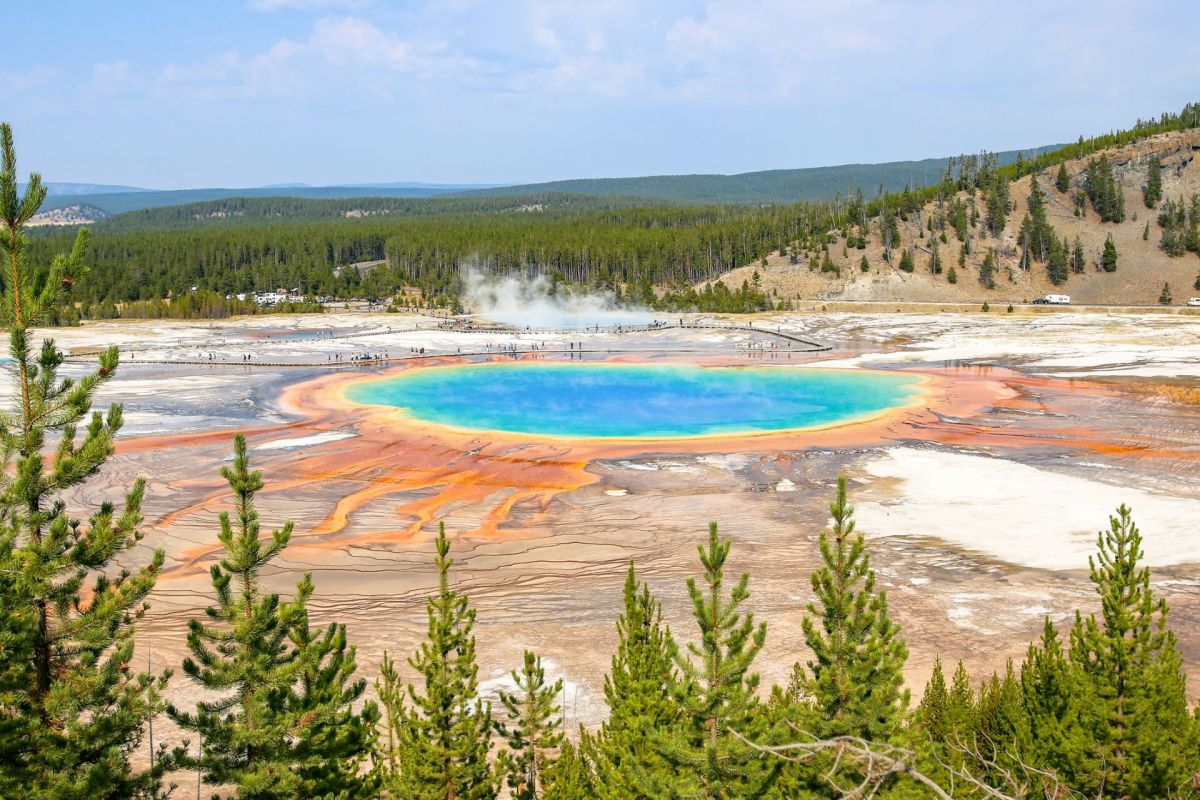
An ecological milestone has been unveiled at Yellowstone National Park following the finding of a new generation of overstory aspen trees for the first time in 80 years. This hopeful rebalance of the ecosystem comes three decades after wolves were reintroduced to the park.
"This is a remarkable case of ecological restoration," said Luke Painter, the study's lead author and ecology and conservation instructor at the Oregon State University College of Agricultural Sciences, per Phys.org. "Wolf reintroduction is yielding long-term ecological changes contributing to increased biodiversity and habitat diversity."
Due to the drop in wolf populations within the habitat, predation pressure drove elk populations to grow in the years since 1930. The wealth of elk meant excessive grazing of young aspen trees.
With the reintroduction of wolves in 1995 to prey on elk populations, researchers were able to rebalance the once healthy ecosystem, helping other populations that rely on aspen trees, like beavers and cavity-nesting birds.
In the study, recently published in Forest Ecology and Management, researchers found that a third of the 87 aspen trees examined "had large numbers of tall saplings throughout, a remarkable change from the 1990s when surveys found none at all," Painter explained, per Phys.org.
Indeed, Painter explained that the growing patterns of the trees indicate that aspen recovery happened due to a trophic cascade, instead of climate or site productivity. A trophic cascade occurs when the introduction or removal of keystone species causes a ripple effect, massively impacting the rest of the ecosystem. In this case, wolves acted as an impactful keystone species.
Painter still warned that increasing bison populations can also emerge as a threat to aspen in some areas, per Phys.org.
Still, due to the disappearance of wolves from Yellowstone in 1930, the ecosystem has been damaged. Now, hopeful changes showcase the impact of conservation efforts from researchers in driving a cleaner, safer future for wildlife and humans.
"The reintroduction of large carnivores has initiated a recovery process that had been shut down for decades," Painter said, per Phys.org.
|
Do you think America does a good job of protecting its natural beauty? Click your choice to see results and speak your mind. |
 Definitely 👍
Join our free newsletter for good news and useful tips, and don't miss this cool list of easy ways to help yourself while helping the planet.
TCD Picks » Quince Spotlight
💡These best-sellers from Quince deliver affordable, sustainable luxury for all




Cool Picks






