


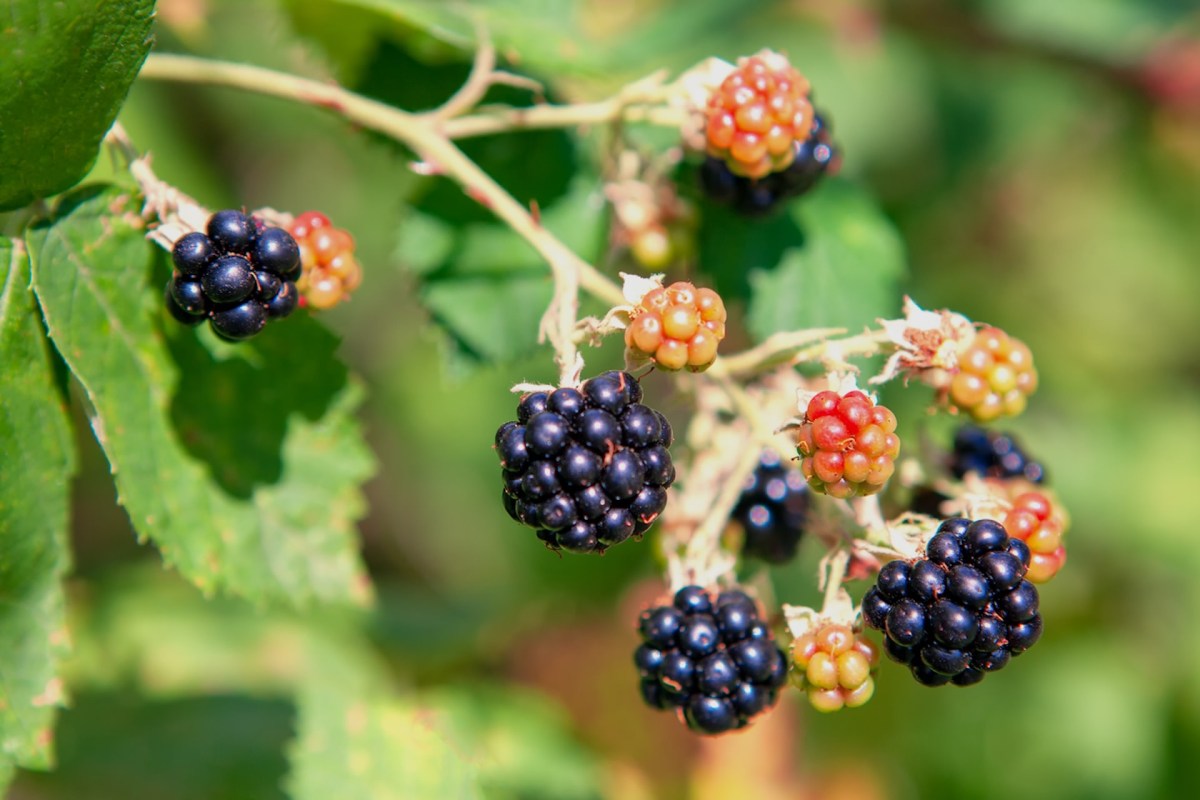
Himalayan blackberry bushes are a notorious invasive species on the West Coast. Luckily they are also completely edible and delicious, leading Washington state officials to promote a simple strategy for containing their spread: Everybody should forage and eat as many blackberries as they can, Axios reported.
"We will never run out of blackberries in the Pacific Northwest," Skye Pelliccia, an education specialist with the King County Noxious Weed Control Program, told Axios.
While foragers in Washington state are normally prohibited from taking more than 20% to 30% of whatever they find, those rules do not apply to Himalayan blackberries, which are native to Asia and represent "a notorious invasive species [that] costs millions of dollars for both control and in estimated impacts," according to the Washington State Noxious Weed Control Board.
Himalayan blackberry bushes spread quickly and aggressively, growing thick, impenetrable thickets that crowd out other wildlife. They also have thick, sharp thorns that make it difficult for people to remove.
Home gardeners on the West Coast have shared stories detailing how they managed to control blackberry plants on their property over multiple years of removal — but eradicating it in the wild is simply not in the cards. Instead, officials are encouraging people to remove as many berries (which contain the seeds through which the plants spread) as possible and transfer them into their bellies.
Blackberries aren't the only invasive species that officials are encouraging people to eat — eating invasive species is becoming an increasingly popular method of dealing with these troublesome plants and animals without using toxic chemicals or otherwise harmful treatments.
One example is the northern snakehead — an unappetizing-sounding but delicious fish considered invasive to the Maryland region. In an attempt to spur more people to remove and eat this fish, a campaign is underway to rename it "Chesapeake channa." Other examples of invasive plant species that people are encouraged to eat include kudzu, chicory, and wineberries.

💰Get TCD's free newsletters for easy tips to save more, waste less, and make smarter choices — and earn up to $5,000 toward clean upgrades in TCD's exclusive Rewards Club.
Cool Picks






