


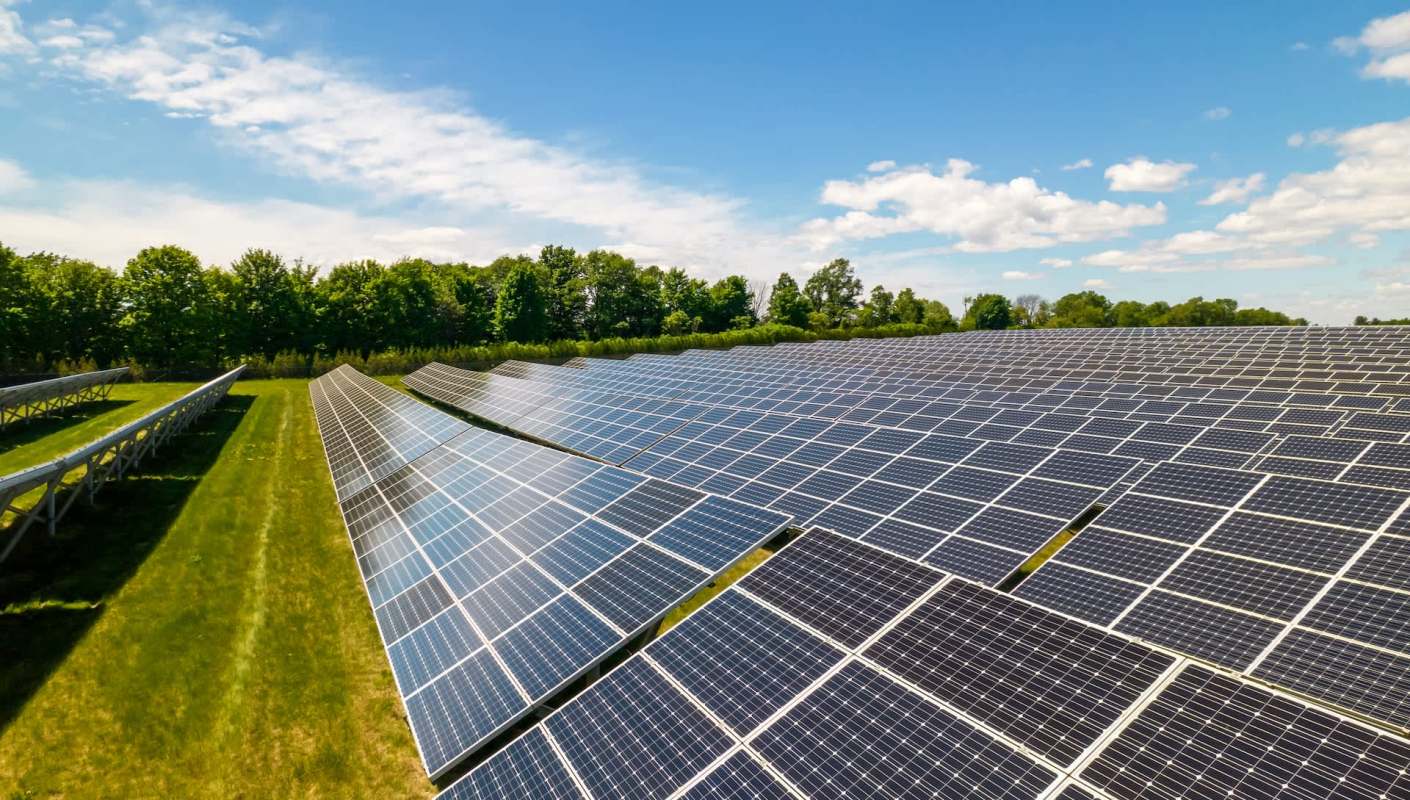
Spain-based solar cell researchers have advanced the ball in developing longer-lasting perovskite panels thanks to a unique additive.
While it's not a touchdown — commercial application — the team from IMDEA Nanociencia in Madrid has marked impressive performance benchmarks during testing, according to an institute news release.
IMDEA's latest offering hopefully brings what could be a breakthrough material closer to production, helping to expedite our shift to cleaner energy. The transition is crucial to limiting heat-trapping air pollution generated from burning dirty fuels for power. NASA links our planet's warming to extreme heat wave risks that could make some places uninhabitable. Research published by GeoHealth shows that the combination of foul air and high heat is becoming more deadly in certain places.
IMDEA's team said its research is promising.
"These new materials are very attractive for commercialization, as they offer much higher performance than commercial silicon solar cells," research lead, Professor Nazario Martín, said in the statement.
Perovskite is a family of crystalline materials that has the potential to convert sunlight into electricity at low cost and with high efficiency when part of a panel, the U.S. Department of Energy reported. But a short lifespan has been a hurdle.
TCD Picks » Quince Spotlight
💡These best-sellers from Quince deliver affordable, sustainable luxury for all




Common silicon-based panels can last for decades and average 20% efficiency, according to EnergySage, a trusted resource that helps homeowners compare quotes and find an installer for a rooftop array. Solar Magazine reported that perovskite cells have been recorded at a nearly 30% efficiency rate, but with only a couple of years of longevity.
IMDEA's performance estimates are more conservative. Its team lists average commercial panel performance at "barely" 18%. That's why its perovskite cell innovation, which notched a 25.8% mark, is impressive.
But the researchers tout that durability is an exciting finding. The team boosted longevity by adding a substance abbreviated as PTZ-Fl, from the spiro-phenothiazine compound family. PTZ-FI helps with hole transport, "an essential component of solar cells," according to the experts.
A nearly 4-square-inch module achieved a 22.1% efficiency, which was notable because the conversion rate tends to drop as panel size increases. Importantly, it retained 95% of its ability after 3,600 hours "under demanding conditions," the experts reported.
|
If you don't have solar panels on your home, which of these factors is the biggest barrier to installing them? Click your choice to see results and speak your mind. |
 Upfront costs 💰
 Experts in South Korea have made progress in making perovskite more resistant to moisture, which can destroy it. Other research includes panels that can generate power from sunlight on both sides, doubling the energy-creating surface area. Unique panels that combine perovskite and organic cells are also being developed.
Reuters reported that solar and other renewables are already the cheapest and fastest energy projects to develop. At home, they can limit or eliminate your utility bill. EnergySage can help you secure tax breaks before they expire on Dec. 31, saving up to $10,000 on upfront costs.
In the meantime, work at IMDEA and elsewhere continues to push the limits of emerging materials such as perovskites. The substance has remarkable potential, Martín said in the release.
"Perovskites also allow their chemical properties to be modified in a versatile way, which opens up a range of possibilities for complementing silicon and building the next generation of solar panels," the expert added.

Join our free newsletter for weekly updates on the latest innovations improving our lives and shaping our future, and don't miss this cool list of easy ways to help yourself while helping the planet.






