Few things anger experienced landscapers more than a tree with a mulch volcano surrounding it.
A post in the Certified Arborists Facebook group gained attention among its users for the horrible condition of a tree that had undergone decades of volcano mulching.
The post's author shared an image of the tree, showing off the awful condition it is now in.
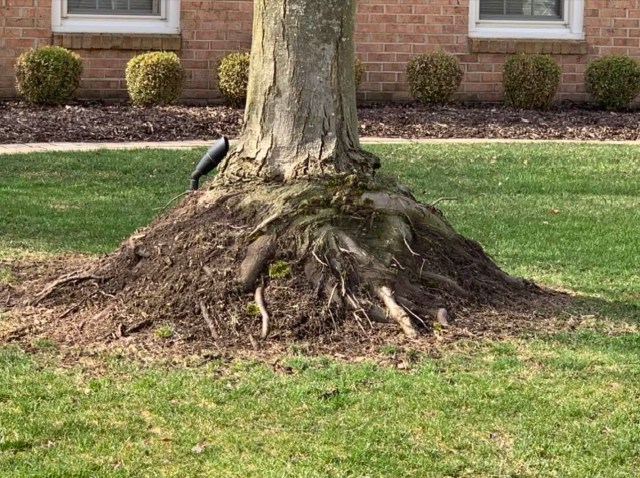
In the image, the tree appears to be sitting on top of a small mound of dirt. In the dirt mound, the tree's roots are protruding outwards and are exposed.
This strange deformity is a direct result of volcano mulching, which the original poster noted had been happening for 30 years.
Volcano mulching is the act of piling up mulch in a cone shape around the tree rather than evenly distributing a thin layer with space at the tree's base.
Decades of piling mulch into a towering cone might seem like a harmless shortcut to provide nutrients for the long term, but the effects add up quickly.
Volcano mulching can eventually expose tree roots, as seen in this Facebook post, because the thick, cone-shaped pile of mulch alters how the tree grows and the soil changes over time.
Financially, volcano mulching tends to require more bags of mulch than standard practices. This is money that could have stayed in the landscaper's pocket or gone to more plants or better landscaping care.
Also, when trees decay prematurely, homeowners or municipalities are left with costly removal and replacement bills that can cost hundreds or even thousands of dollars for each failing tree.
TCD Picks » Upway Spotlight
💡Upway makes it easy to find discounts of up to 60% on premium e-bike brands



|
What's the hardest thing about taking care of your yard? Click your choice to see results and speak your mind. |
 Mowing the lawn 🏡
 "Drives me nuts," a user from the Facebook group commented.
"The dumbest tree management activity ever," another user added.
The good news? The solution is simple and inexpensive. Spreading mulch into a flatter "donut" shape around the base of the tree, not using so much, and keeping it a few inches from the trunk will do the trick.
This not only saves money on materials and labor, but it also keeps trees healthy and attractive for years to come.
Additionally, following other landscaping best practices, such as switching to a natural lawn, is a great way to save time and money, protect the environment, and support native pollinators.

Join our free newsletter for easy tips to save more and waste less, and don't miss this cool list of easy ways to help yourself while helping the planet.
Cool Picks