


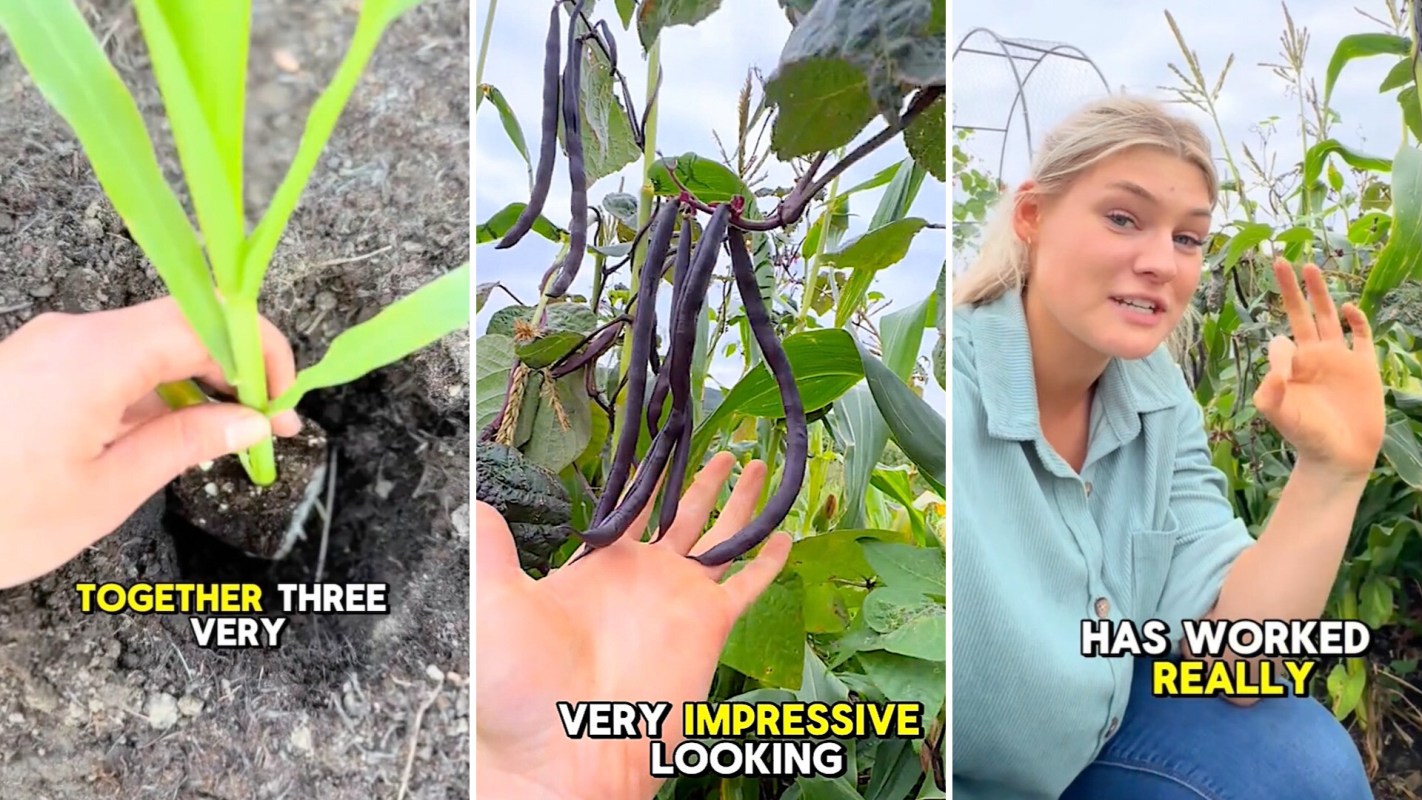
Expert gardener Chlo (@wildlychlo) had seen a lot of success in one section of her property, and was keen to show off what she had planted and how well it worked.
The scoop
"A few months ago, I planted together three very specific plants that would all help and support each other," she said at the beginning of her video.
@wildlychlo Companion planting at its finest 😍 I'll be doing a harvest video on this soon 🌽🫘🎃 The Three Sisters – sweetcorn, squash & beans – are the ultimate dream team. Corn gives beans a natural trellis, beans feed nitrogen back into the soil, and squash shades the ground to keep weeds down. They thrive together because they support each other (naw, soft gits) 💛 And that's the beauty of companion planting… it isn't just one neat trick, it's a whole WAY of growing 🌱 I've used the same principles all over my plot: planting flowers to attract pollinators, herbs to deter pests, and veggies side-by-side that actually help each other grow 🫶🏼 It's nature's blueprint for abundance – and it makes my allotment more resilient, more productive, and (bonus!) a lot more pwetty 🌸🐝 P.S I have a full 'companion planting guide' and it's pretty good. Comment the word 'companion' and I'll send you the link
♬ Married Life (From "Up") - Gina Luciani
She went on to describe how "The Three Sisters – sweetcorn, squash & beans – are the ultimate dream team." The beans used the corn stalks as a trellis while moving needed nitrogen into the soil. The squash grew comfortably with all of the room at ground level and kept weeds down. This relationship is what Chlo calls "companion planting at its finest."
The technique originates in the Americas going back nearly a thousand years, and plenty of farmers have continued to enjoy its benefits.
How it's helping
Companion planting is a proven method of managing pests and weeds without needing to resort to harmful chemical alternatives. Strong combinations like this one can also mitigate the need for fertilizer thanks to complementary nutrient exchange.
When applied to growing your own food, companion planting produces healthier final products without synthetic risks. Commercial fertilizers can include microplastics, which when ingested pose a range of new digestive, renal, immune, endocrine, circulatory, and reproductive risks.
What everyone's saying
Lots of Chlo's TikTok followers had tried growing the "Three Sisters" and were eager to share their experiences.
"Corn needs a bit longer to mature out but it works really well. Mixing the types of squashes is good when dealing with the glut you end up getting. Spaghetti squash worked well for me," said one community member.
"I'm in Scotland and I've got three sisters thriving at my allotment, first time doing it and so happy," said another.
|
What is the biggest reason you don't grow food at home? Click your choice to see results and speak your mind. |
 Not enough time ⏳
Join our free newsletter for easy tips to save more and waste less, and don't miss this cool list of easy ways to help yourself while helping the planet.
TCD Picks » Quince Spotlight
💡These best-sellers from Quince deliver affordable, sustainable luxury for all




Cool Picks






