


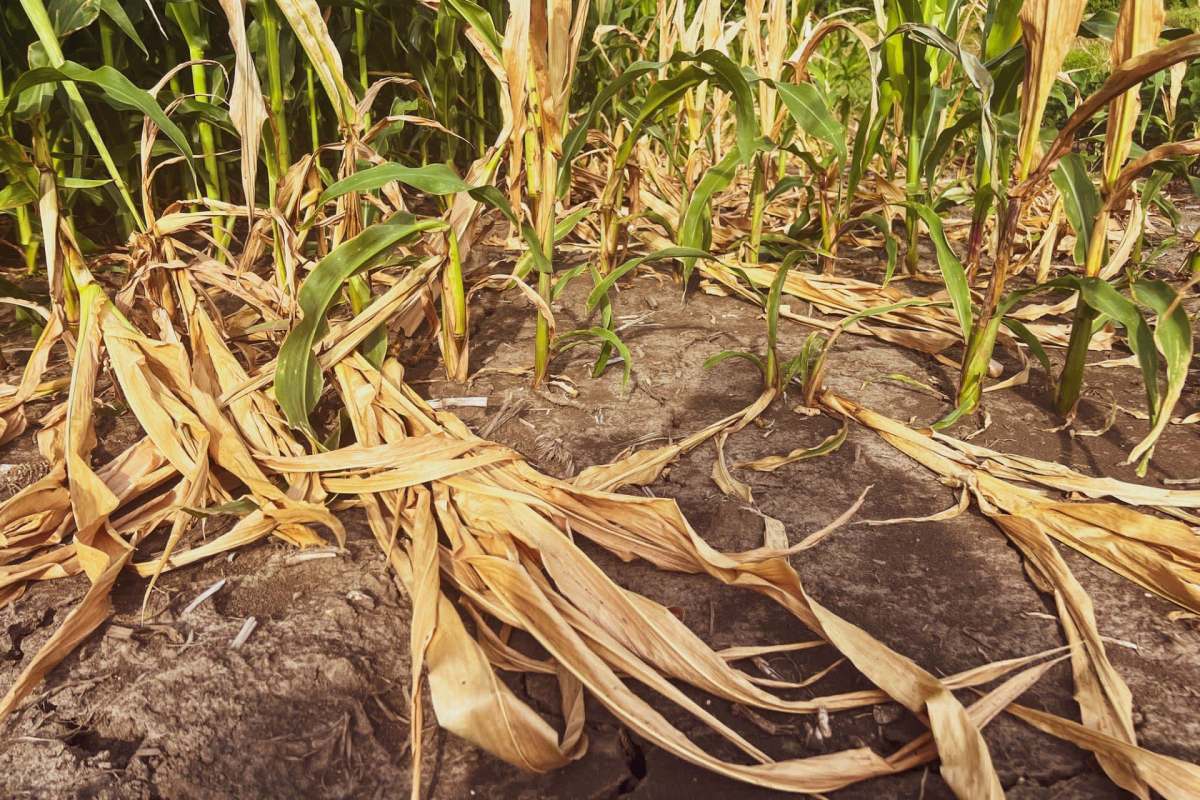
The world's fifth-most populous country is facing a massive agricultural crisis due to rising temperatures and extreme weather, as a columnist for Pakistan's English-language outlet The Nation recently emphasized.
What's happening?
News about dwindling yields and crop losses has become alarmingly common worldwide.
Pakistan borders India, and both countries have seen unpredictable weather and unseasonal rains that can devastate entire crops.
"Pakistan's water supply is largely dependent on glacial meltwater," noted the column in The Nation, and agricultural hubs rely on a predictable flow of it.
To make matters worse, sea level rise means that saltwater is intruding farther inland, in some cases compounding drought conditions and depressing freshwater levels.
Agriculture makes up nearly a quarter of Pakistan's gross domestic product and accounts for around 40% of the nation's employment, according to government statistics.
Meanwhile, another factor may be at work.
According to The Nation, El Niño inflicts "both catastrophic droughts and disastrous floods" on Pakistan's vital agricultural sector.
El Niño is a long-standing, naturally occurring cyclical pattern involving warming waters. While its direct relationship to global warming is still being studied, Imperial College London cited a recent study that found "current sea surface temperature extremes driven by El Niño have intensified by around 10% compared to pre-1960 levels."
Why are reduced crop yields in Pakistan so worrisome?
As The Nation indicated, a study published in the journal Environmental Challenges contained a dire prediction for the rate and scope of these climate-related fluctuations on Pakistan's crops.
TCD Picks » Quince Spotlight
💡These best-sellers from Quince deliver affordable, sustainable luxury for all




|
Do you worry about how much food you throw away? Click your choice to see results and speak your mind. |
 Definitely 😭
 "It is predicted that by 2040, as the temperature goes up, [Pakistan's] agricultural production will reduce by around 8%–10%," its authors wrote, citing a previous study.
Extreme weather and an unstable climate have wreaked havoc on crops in many places, with Pakistan among the hardest hit. However, a recent study found that global yields for wheat — a staple crop worldwide — have already decreased by 10%.
As for the United States, a recent report projected that Americans born today could live in a world where production capacity for staple crop yields is reduced by half. The report further calculated a net loss of 120 calories per person per day on average for every 1 degree Celsius (1.8 degrees Fahrenheit) rise in average global temperatures compared to preindustrial levels.
Diminished crop yields threaten food security worldwide, making basic sustenance scarcer and more expensive for everyone.
What's being done about climate-related crop losses?
Food policy experts commented on a related recent study, urging governments to intensify their efforts to adapt to and mitigate the impact of rising temperatures on global crops.
Scientists have continued to develop direct strategies, including strains of wheat resistant to drought. Individuals can grow some of their own food to build resilience against market fluctuations.
Those who cannot can take steps to fortify their pantries by making smart shopping choices and eating cleaner, greener food.

Join our free newsletter for good news and useful tips, and don't miss this cool list of easy ways to help yourself while helping the planet.
Cool Picks




