


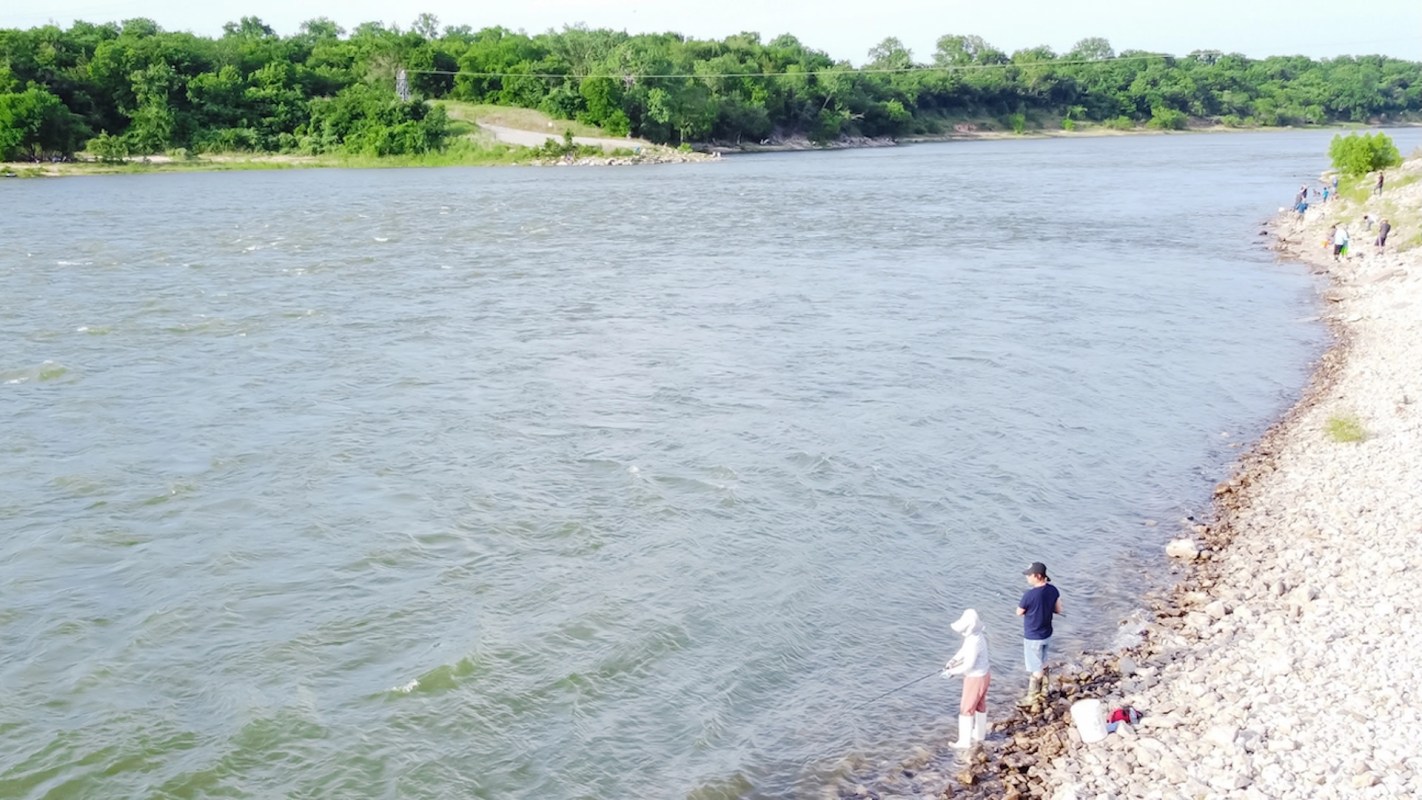
The wild west is returning to its roots as wildlife officials in Texas enlist anglers as bounty hunters to catch invasive black carp.
According to Crossroads Today, the expanded bounty program, now in 27 states, will pay fishers $100 for every invasive black carp they catch, up to 10 per month. The aim is to stop the destructive species before it becomes established in Texas waters and the Red River Basin ecosystem.
Black carp have not yet been documented in the Red River Basin, where the bounty applies, but are moving dangerously close, according to the U.S. Fish and Wildlife Service. Native to eastern Asia, the invasive fish was introduced to the U.S. decades ago and has spread through parts of the Mississippi River basin, causing serious ecological damage.
Black carp feed almost exclusively on mollusks, eating up to 4 pounds a day, including native mussels that play a critical role in filtering water and maintaining healthy river ecosystems. When they disappear, water quality suffers, affecting fishing, drinking water treatment costs, and local water recreation economies.
By encouraging early detection and elimination by bounty hunters, officials hope to avoid those consequences and save taxpayer dollars. Preventing an invasive species from taking hold is far cheaper than attempting to control it later, which can require years of public funding, chemical treatments, and habitat restoration.
The effort also puts money into the hands of local anglers, turning to the community for a solution. Anglers who catch a carp have been instructed to "humanely kill the fish" and follow the "Keep, Cool, Call" protocol by placing it on ice and reporting immediately to their state wildlife agency. The Fish and Wildlife Service has released identification guides and videos to help prevent carp misidentification.
One chef is even trying to convince locals to eat black carp, and the U.S. Army is spending billions to eliminate them in the Great Lakes.
Similar early-action bounty programs have proved effective at slowing invasive species elsewhere, such as a wild hog program in Florida, bounties on invasive plants in Arkansas, and a nutria catching initiative in Massachusetts.
Last August, Oklahoma and Arkansas launched their own bounty program for black carp.
|
Do you think America does a good job of protecting its natural beauty? Click your choice to see results and speak your mind. |
 Definitely 👍
 Local anglers online were excited about the program.
TCD Picks » Quince Spotlight
💡These best-sellers from Quince deliver affordable, sustainable luxury for all




"Anyone know anything about black carp farming? Asking for a friend," one joked on Reddit.
"Invasive species suck, but it's kinda cool I can help and my hobby may pay for itself," another said.

Get TCD's free newsletters for easy tips to save more, waste less, and make smarter choices — and earn up to $5,000 toward clean upgrades in TCD's exclusive Rewards Club.
Cool Picks





