


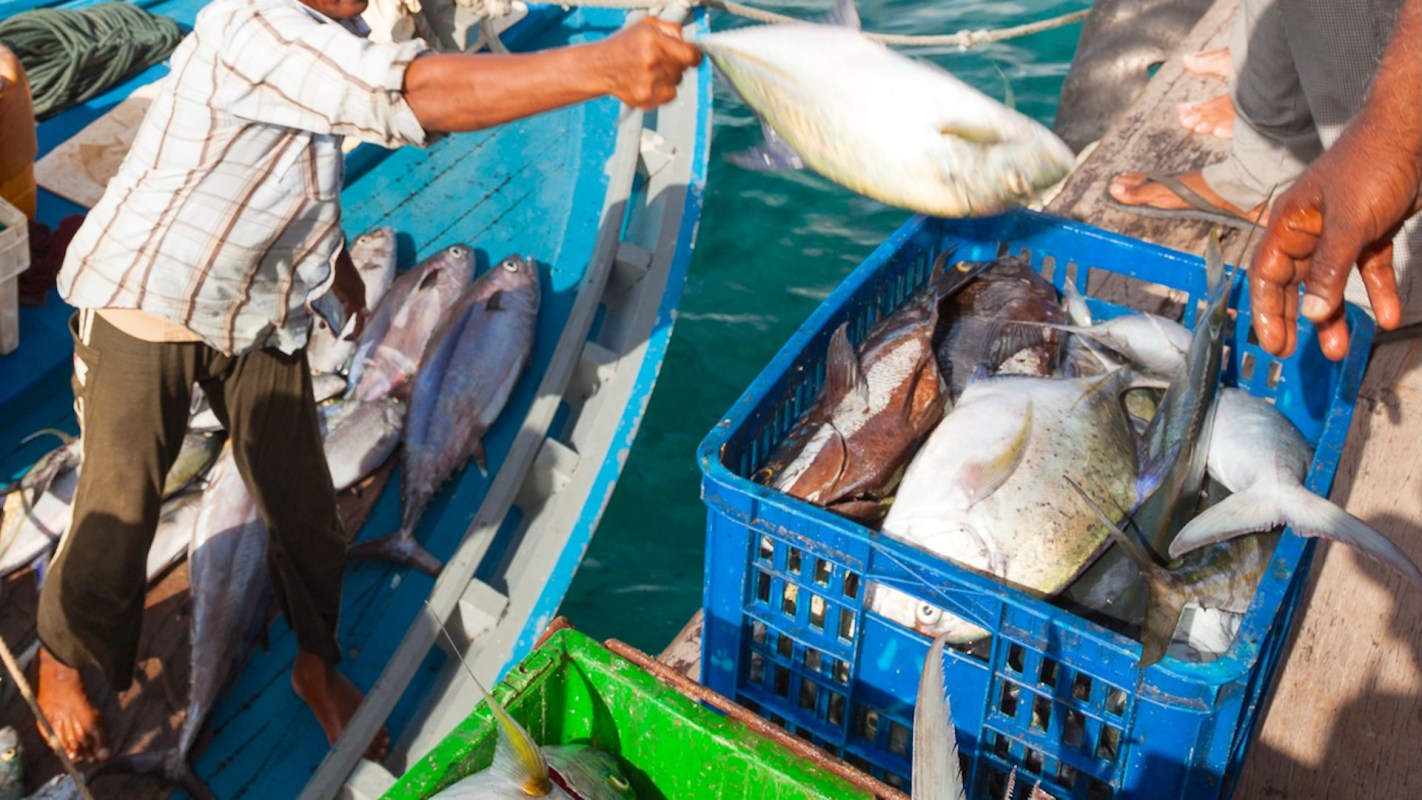
Although the modernization of the fishing industry has resulted in increased yields, the tried-and-true fishing practices of Maldivian fishers have helped keep their fisheries alive and well.
As reported by the Guardian, one of the most important resources in the Maldives is the skipjack tuna. Not only has the fish provided a major food source for the population, but it has also helped support the country's economy for centuries. And the 1,000-year tradition of the pole-and-line skipjack fishery has helped keep it that way.
Ibrahim Hamid, a boat captain from the Maldives, has spent 30 years fishing for skipjack tuna in the Indian Ocean. This has provided him with a world of experience in some of the best fishing practices that have stood the test of time in the region. While the nature of pole-and-line fishing limits fishers to how much they can catch in a single day, the practice is the backbone of the region's sustainability.
"The ocean is a really important aspect of who we are as people," Hamid told the Guardian. "If everybody uses this method of fishing, the amount of fish we get — and the income we generate — over time is far greater."
According to Hamid, the practices of the larger fishing operations are what can jeopardize the sustainability of the overall industry.
"Commercial fishing methods using large nets in waters around the world affect the tuna fisheries in the Maldives," said Hamid. "Tuna roams around all the ocean, and so if the fishing is bad in one region, if it is done unsustainably, it affects the fishing in the Maldives as well."
TCD Picks » Quince Spotlight
💡These best-sellers from Quince deliver affordable, sustainable luxury for all




Martin Purves, managing director of the International Pole and Line Foundation, explained the significant benefits of the traditional fishing practice. "Pole-and-line fishing for tuna is highly selective, with minimal bycatch," Purves said, per the Guardian.
Fishing bycatch can lead to population declines for nontarget species, such as marine mammals, turtles, and seabirds, while also disrupting ecosystems and larger fisheries. This can lead to economic losses for fishing operations and even be a driving force behind species facing extinction. Despite advancements in larger fishing practices, bycatch remains a significant threat to marine biodiversity and the long-term sustainability of fisheries worldwide.
Pole-and-line fishing's ability to prevent the threat of bycatch is something that Purves takes seriously.
"By promoting low-impact, one-by-one fisheries like pole and line and handline, the Maldives helps protect its marine ecosystems, bolster their resilience to climate change, and support the long-term livelihoods of coastal communities," Purves added, per the Guardian.
|
Which of these factors would most effectively motivate you to recycle old clothes and electronics?
Click your choice to see results and speak your mind. |
 Giving me money back 💰
Join our free newsletter for good news and useful tips, and don't miss this cool list of easy ways to help yourself while helping the planet.







