


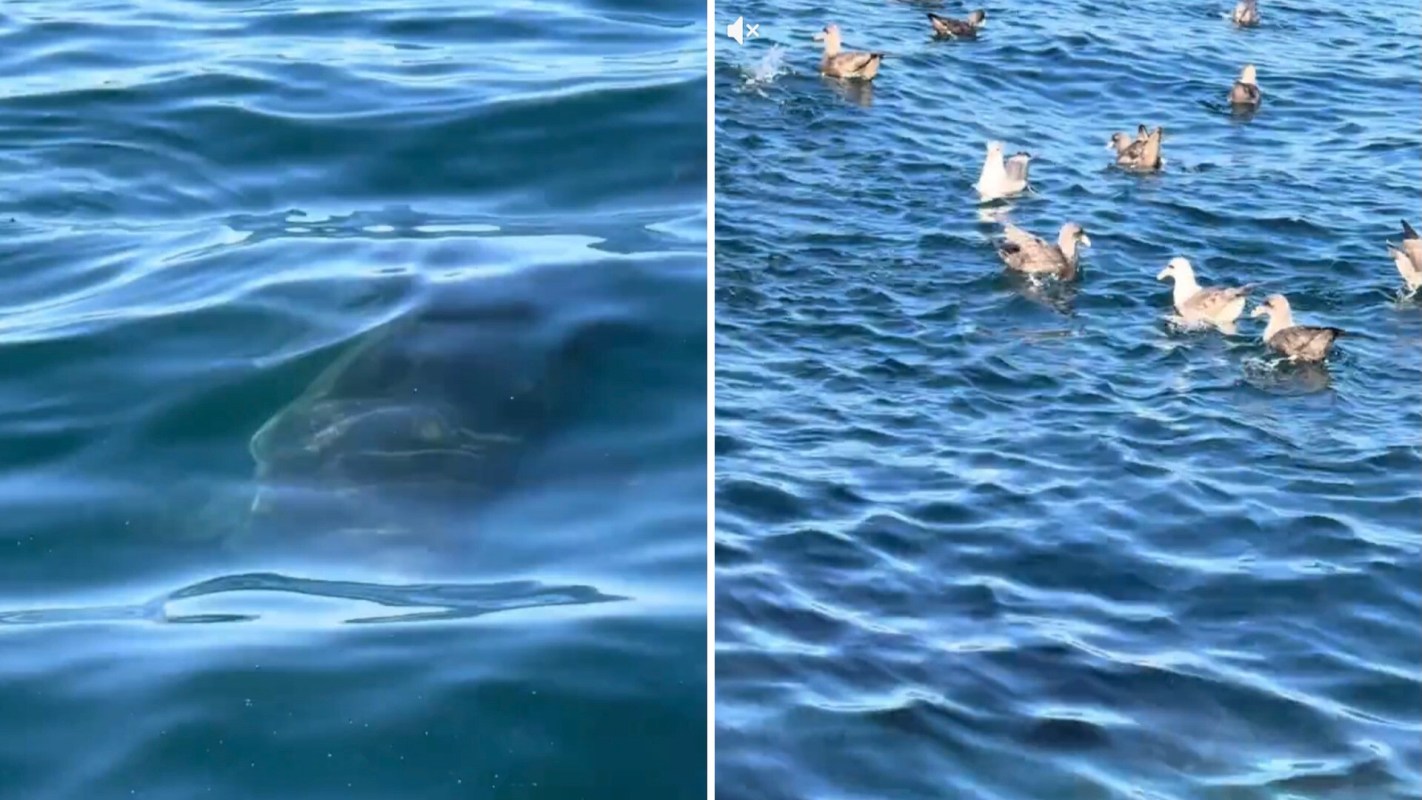
A TikToker captured the moment a white shark glided under his team's boat in the shallow waters of Monterey Bay — a type of encounter that scientists say is becoming increasingly common along California's coast.
What's happening?
Weekend Labs (@weekendlabs) showed the shark approaching and passing as someone says, "That's a little close." The animal is seemingly swimming toward a dead whale floating nearby.
The video sparked mixed reactions. Several commenters pointed out that the shark was focused on a natural food source — not the people above — while others said it was still unsettling to witness a large predator feeding so close.
@weekendlabs Great White in Monterey Bay #shark #california #nature #ocean #greatwhiteshark ♬ original sound - Weekend Labs
According to the California Department of Fish and Wildlife, white shark sightings tend to rise during warmer months. However, experts note that sightings can occur year-round, especially in productive ecosystems such as Monterey Bay.
Why is this concerning?
Experts emphasize that preference — not aggression — explains the growing presence of white sharks, particularly juveniles, in nearshore waters.
Research by California State University, Long Beach's Shark Lab shows that shallow coastal areas offer young sharks warm water, abundant prey, and relative protection from larger predators, making them ideal nursery habitats.
The same conditions, however, have drawn sharks to stay longer around beachfronts, according to scientific observations.
Since their migration coincides with beachgoing season, humans and these marine creatures often come into close proximity with each other.
As wildlife tourism increases, authorities continue to remind nature lovers to keep safe distances from such animals — partly because the creatures can react defensively when provoked or being protective of their offspring.
What's being done?
Researchers, conservation advocates, and officials are working together to improve public awareness about shark population trends.
TCD Picks » Quince Spotlight
💡These best-sellers from Quince deliver affordable, sustainable luxury for all




|
Do you think America does a good job of protecting its natural beauty? Click your choice to see results and speak your mind. |
 Definitely 👍
 Local agencies post safety tips on their websites, while the media share researcher insights to dispel common myths about shark activity.
Researchers at the University of Washington use drone technology to study interactions between sharks and pinnipeds (seals and sea lions) and accurately predict sharks' hunting seasons. They relay this information to lifeguards and beach managers, helping them issue timely advisories that support safer coexistence between people and marine life along shores.
Visitors can also play a role in protecting these ecosystems by exploring destinations closer to home. Choosing local spots reduces pressure on marine and coastal habitats that still offer memorable experiences.

Get TCD's free newsletters for easy tips to save more, waste less, and make smarter choices — and earn up to $5,000 toward clean upgrades in TCD's exclusive Rewards Club.
Cool Picks






