


Worsening droughts have been impacting everything from agriculture to wildlife habitats, recreation, and tourism worldwide.
However, people are finding hope in planet-nourishing rains that restore their ways of life and bring normalcy to their days again.
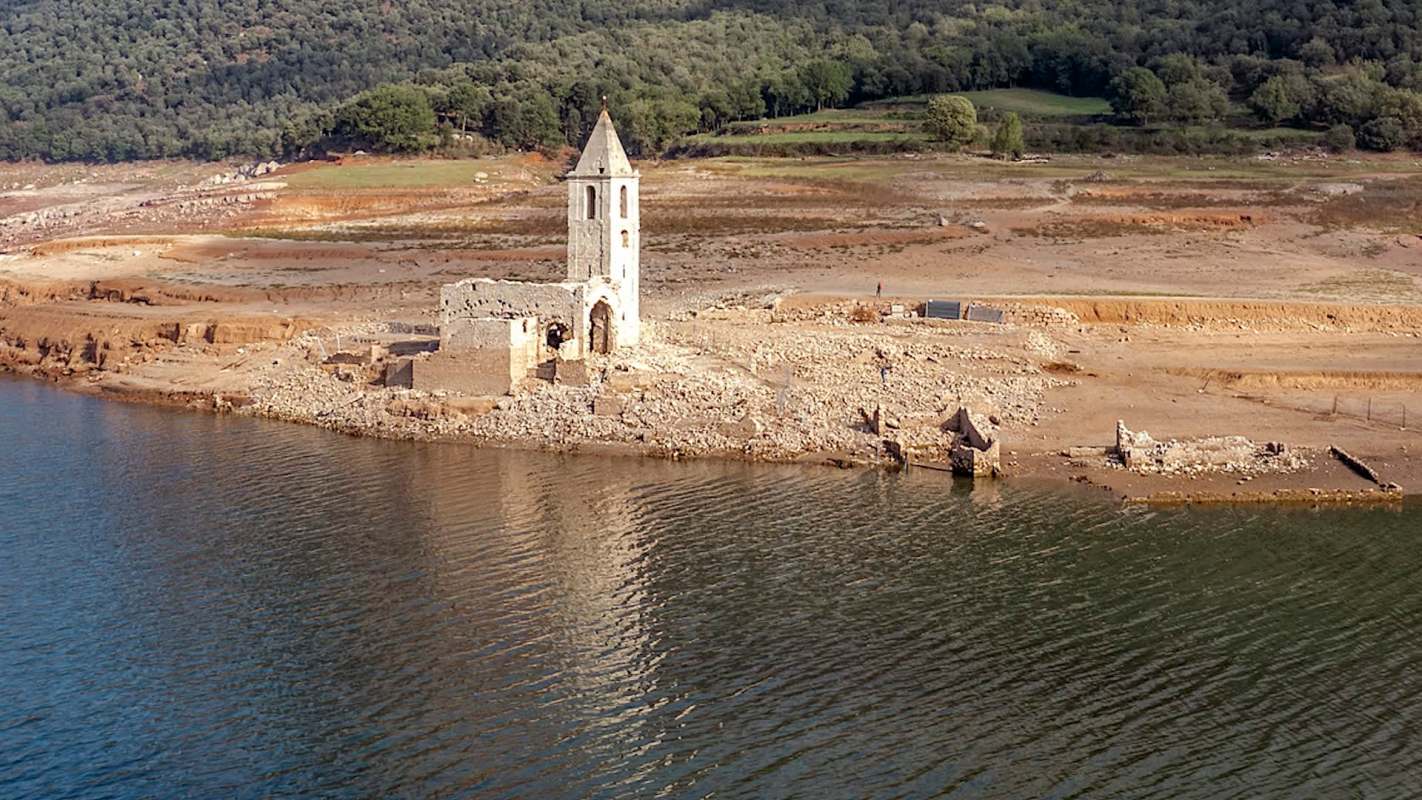
One inspiring story came from Catalonia, where the Sau reservoir received much-needed rains following one of the worst droughts in history.
As Catalan News reported, the Sau reservoir is now at 68% of its water capacity after months of being at its lowest capacity in history.
After a years-long drought in this region northeast of Spain, an influx of spring rain and snow finally filled the reservoir again. This was a welcome sight after such a long dry period.
Restoring rainwater to reservoirs is crucial because it helps support drinking water supplies, farming, and natural ecosystems. And in places like Catalonia, it also helps boost tourism to support the local economy.
TCD Picks » Quince Spotlight
💡These best-sellers from Quince deliver affordable, sustainable luxury for all




Dozens of visitors came to the Sau reservoir to see the water level rise because of its historical and cultural significance. An 11th-century church is sunken in the reservoir, which you can't typically access by foot after the spring rains.
People come to this area to photograph the sunken church, part of the drowned town of Sant Romà. Locals have nicknamed the church's bell tower the "water thermometer of Catalonia."
Local tourism authorities have seen a significant rise in tourists since the Catalan internal basins surpassed 60% of their capacity.
By visiting places with visible climate shifts firsthand, we can better understand our changing environment and the impacts of conservation efforts. Tourism can be a powerful tool for environmental conservation because it helps people feel connected to the land and water, inspiring them to take action and live by sustainable practices.
|
Should the government be allowed to restrict how much water we use? Click your choice to see results and speak your mind. |
 Definitely 💯
 Meanwhile, researchers are studying ways to predict and prepare for droughts using high-tech tools like AI. Cities are also investigating water recycling strategies to support their communities and find ways to adapt to a world with less frequent and reliable rains.
Upon seeing Catalonia's Sau reservoir, one visitor from Barcelona said, per Catalan News: "It is impressive how the reservoir has completely changed. I, personally, prefer to see it at full capacity as water is life."
A Roda de Ter man traveling with his family told the publication they visited "a while back to see the dry reservoir, and we are now back, as we believe it is important for our son to see the evidence and can understand climate change."

Join our free newsletter for good news and useful tips, and don't miss this cool list of easy ways to help yourself while helping the planet.







