


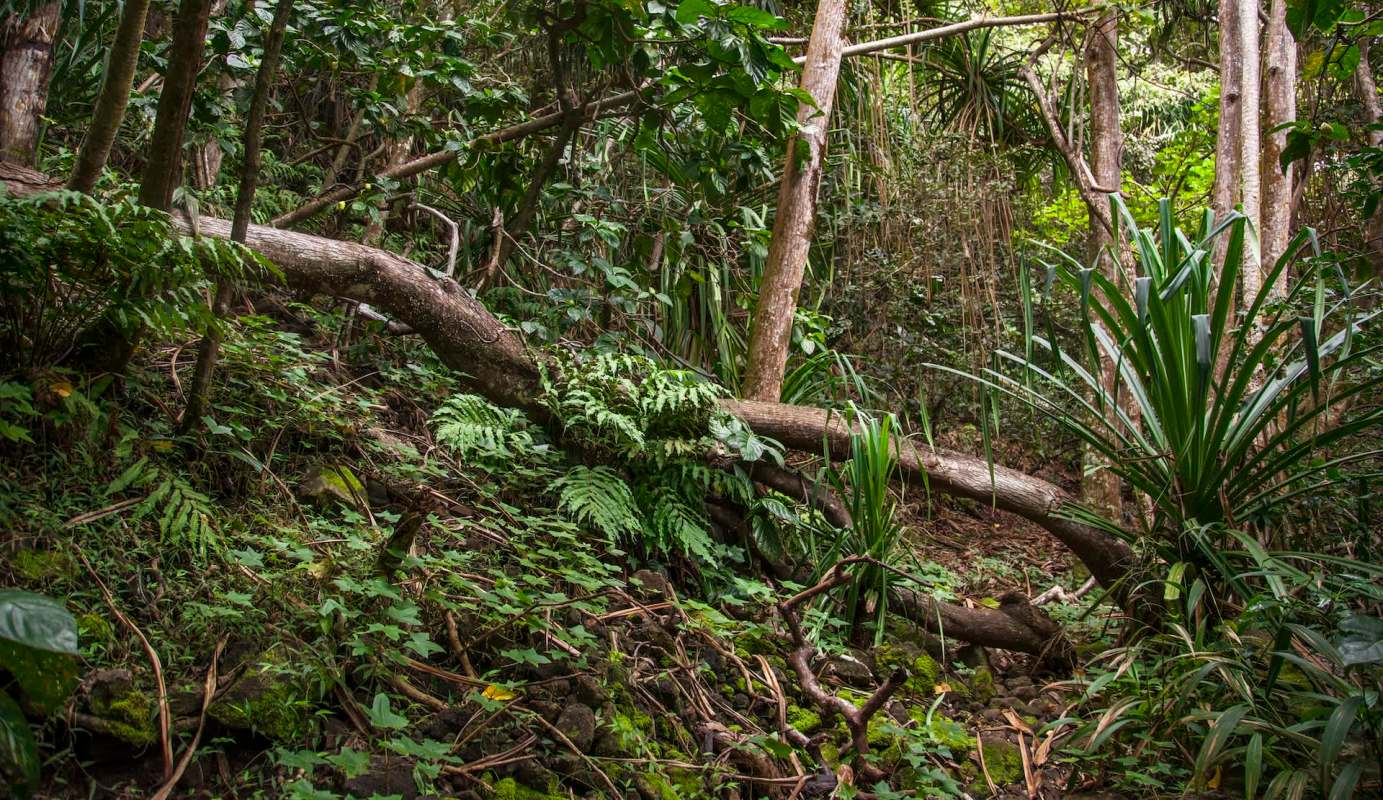
An unusual ecosystem in Hawaiʻi is baffling scientists. It's what the daughter of one researcher called a "freakosystem."
What's happening?
In Oʻahu, Hawaiʻi's third-largest island in terms of area, scientists have observed an unusual shift in the native landscape. Entire forests once filled with native plants and animals are now dominated by nonnative species, such as cinnamon and guava trees from Asia and South America as well as birds from Asia.
According to ecologist Corey Tarwater, who spoke with the BBC, "If you walk around any forest around Honolulu, there's not going to be one single native plant species there."
But what's interesting is that these "novel ecosystems," shaped by colonization, deforestation, species extinction, and invasive introductions, are actually self-sustaining. For example, birds that arrived only in the past century are now the sole distributors of seeds for Hawaiʻi's few remaining native plants.
Why are 'novel ecosystems' so concerning?
While some of these new ecosystems function in surprising and even beautiful ways, the reality is that Hawaiʻi has lost more species to extinction than any other state, as Vox reported. About two-thirds of Hawaiʻi's native bird species are already gone, and 87% of native plants are threatened, per the BBC.
These changes are not only happening in Hawaiʻi. Human activities have also fundamentally altered other ecosystems, and with rising global temperatures, some habitats are changing for good — and traditional conservation efforts aren't always effective.
TCD Picks » Quince Spotlight
💡These best-sellers from Quince deliver affordable, sustainable luxury for all




Tarwater and her colleagues say that in some areas cleared of invasive plants, birds no longer visit, leaving native plants without any species to pollinate them or spread their seeds.
"We like to think of Oʻahu as the cautionary tale," Tarwater said. "It's what you don't want to have happen."
What's being done about novel ecosystems?
Scientists including Tarwater and Jef Vizentin-Bugoni are getting creative since traditional conservation methods aren't working. They use speakers to play bird calls and attract fruit-eating birds to native plant areas so they'll disperse the seeds. They're also studying which nonnative plants are most harmful, such as those with long fruiting seasons or small seeds that spread easily.
"It's complex and depends on the goals of restoration," said Tarwater, per the BBC. While conservationists might focus on eradicating nonnative plants, it may not be that simple, and some ecosystems could be "unrestorable."
|
Do you think America has a plastic waste problem? Click your choice to see results and speak your mind. |
 Definitely 👍
 "If you're interested in conserving a native snail or some of these other species, that [nonnative plant] might be the habitat that they currently rely upon," she explained.
Other efforts to protect natural ecosystems include nature-based solutions, including regenerative agriculture and forest restoration, and even technology such as bioacoustic monitoring is helping protect biodiversity under pressure because of human activities.
You can help protect natural ecosystems by learning more about invasive species in your area, rewilding your yard with native plants (which also helps support pollinators and the food supply), and avoiding the spread of nonnative plants or animals.

Join our free newsletter for good news and useful tips, and don't miss this cool list of easy ways to help yourself while helping the planet.







