


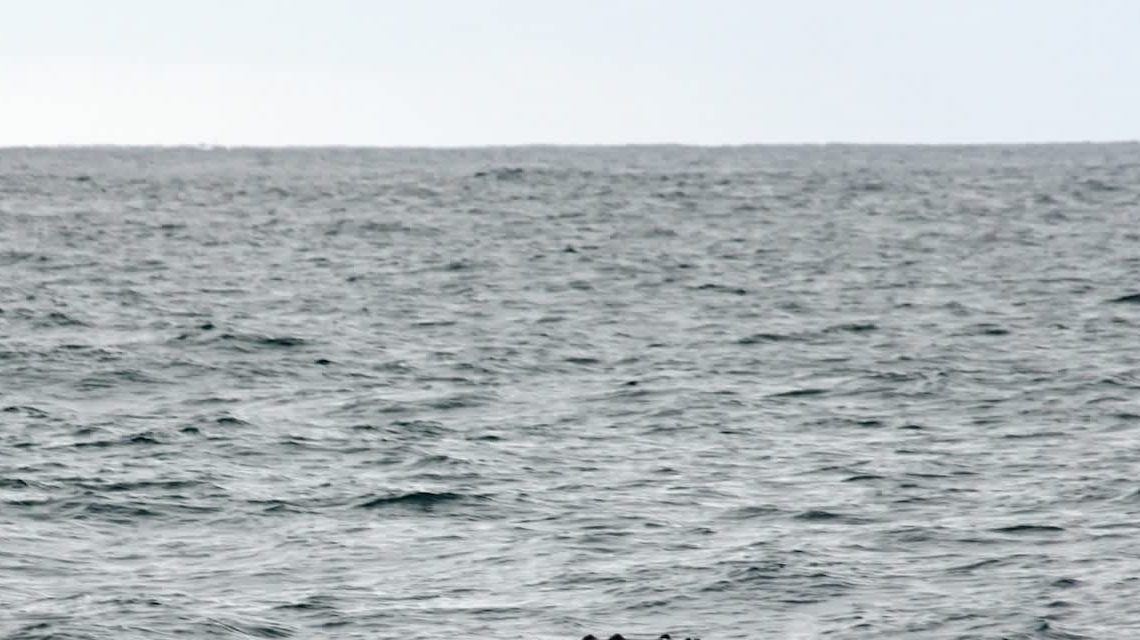
Researchers have found evidence of a rare whale species near the coast of Baja California, Mexico.
Details about the first-ever live sighting of a ginkgo-toothed beaked whale were published in the journal Marine Mammal Science.
Using a small arrow, the researchers collected a bit of skin tissue from a whale they had seen near their boat. They analyzed the sample to determine that the mammal was indeed the elusive creature.
Since 2020, Henderson and her colleagues from Mexico and the US had been tracking a group of whales producing a distinctive call, tagged as BW43, which they initially thought was Perrin's beaked #whale, another species that had never been seen in the wild. https://t.co/DRGnOyesA0
— UBC Oceans (also found at ubcoceans.bsky.social) (@UBCoceans) November 17, 2025
"I can't even describe the feeling because it was something that we had worked towards for so long," Elizabeth Henderson, a researcher at the U.S. military's Naval Information Warfare Center and lead author of the paper, told The Guardian.
Beaked whales, in general, are difficult to track. They are deep divers that only surface for air for a few minutes. There are quite a few types of beaked whales, but scientists have struggled to identify them.
"The Society for Marine Mammalogy has a list of 94 accepted species of cetaceans," Robert Pitman, a retired researcher at Oregon State University, told The Guardian.
"A quarter of those are beaked whales, but most people have never even heard of them. These are the largest, least-known animals left on the planet."
This research highlights the importance of tracking and conserving rare species. Preserving biodiversity across the world's ecosystems is critical for the health of our environment.
Thousands of wildlife species have become endangered due to human activity, which poses a threat to us too. When biodiversity is lost, there is an increased risk of new disease spread and unstable food supplies.
Now that scientists have a better idea of where the ginkgo-toothed beaked whale lives, they can better protect them.
TCD Picks » Quince Spotlight
💡These best-sellers from Quince deliver affordable, sustainable luxury for all




|
Do you think humans are doing enough to protect endangered animals? Click your choice to see results and speak your mind. |
 Definitely 👍
 The team explained that these animals are sensitive to military sonars. The signal can cause the mammals to ascend to the ocean surface too fast, causing fatal injury. It can also interfere with their foraging habits.
With a clearer picture of where these animals live, researchers can advise the military on what areas to avoid to protect the whales.
Further studies into the habits of these elusive whales will help conservationists preserve their habitats.

Get TCD's free newsletters for easy tips to save more, waste less, and make smarter choices — and earn up to $5,000 toward clean upgrades in TCD's exclusive Rewards Club.
Cool Picks




