


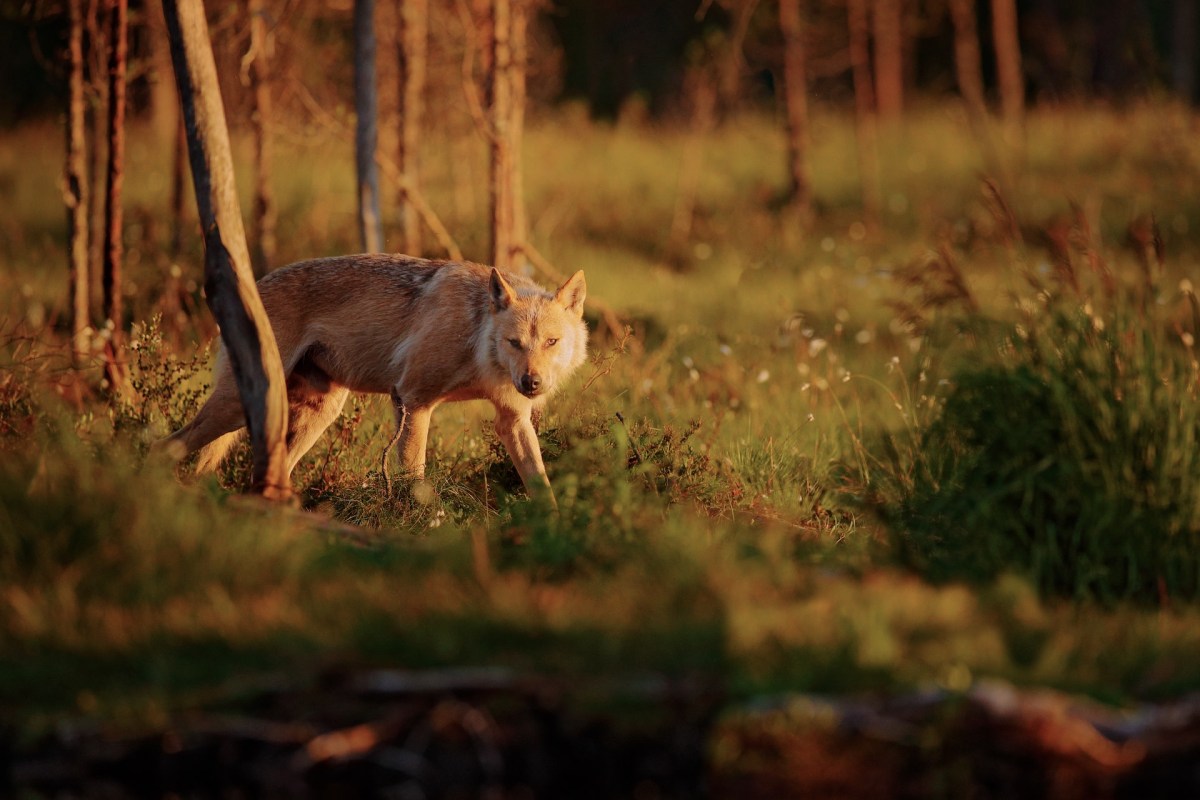
Residents in Finland are now on high alert after a rapid spike in wolf sightings has raised concerns over the animal's protected status.
What's happening?
As reported by YLE News, reports of wolf sightings in Finland have exploded in recent months. According to Olli Kursula, a game manager at the Finnish Wildlife Agency, these sightings are quickly piling up.
"The sightings have generally doubled compared to previous years," Kursula said.
Unfortunately for communities across the country, these sightings have not been confined to just one region.
YLE notes that there have been around 12,000 reported wolf sightings in the wild. But most concerning are the 4,000 sightings of wolves near residential properties. These sightings have been reported in Uusimaa, Satakunta, and Ostrobothnia.
Ostrobothnia, a region in western Finland, is known for its sprawling landscape, including coastal areas and vast plains. Because of this, the area is home to a wide variety of wildlife, including bears, lynxes, and wolves. While these animals are nothing new to the region, residents reported an alarming increase in wolf sightings.
TCD Picks » Quince Spotlight
💡These best-sellers from Quince deliver affordable, sustainable luxury for all




Juulia Piippo, a resident who owns a horse stable in South Ostrobothnia, explained the concerning nature of the recent sightings. "We've reported the visits to the emergency centre, as police have instructed. I think a pack lives nearby," Piippo told YLE.
Why is an increase in wolf sightings important?
For decades, wolf populations across the European Union were seeing a dramatic decrease. This was primarily due to human activities and habitat loss.
Human development, agriculture industries, deforestation, and resource shortages due to the climate crisis have greatly reduced the amount of suitable habitat available for wolves, limiting their access to prey and denning sites.
In order to give the species a fighting chance, the EU approved a directive to designate the wolf a "strictly protected" species in 1992. According to a report from the Council of the European Union, this action proved to be so wildly effective that the wolf population saw an increase from 11,193 in 2012 to 20,300 in 2023.
|
Do you worry about the quality of the air inside your home?
Click your choice to see results and speak your mind. |
 Yes — often 😬
 Because of the directive's success, the wolf population has now become a nuisance in many regions across the EU, especially in Finland. The Council of the EU estimated that wolves are able to kill at least "65,500 heads of livestock" in the EU every year. In addition, wolves are also encroaching on residential properties, raising the risk of potential attacks and injuries.
What's being done about the growing wolf population?
In order to combat the rapidly expanding wolf population, the EU approved a measure to downgrade the protection status of the wolf from "strictly protected" to "protected" in June. This will lower the restrictions put in place and will allow for regulated population control measures, including the hunting of wolves.
Sauli Härkönen, director for public administration functions at the Finnish Wildlife Agency, noted the difficulty of determining when a wolf sighting warrants intervention measures.
"Does it visit people's yards regularly or does it keep 100 to 200 metres away? It's also good to know whether the animal comes at night or during the day, and how it behaves when people are around," Härkönen explained to YLE. "Does it leave immediately, or does it stay and watch?"
While the number of wolf sightings continues to skyrocket across Finland, Härkönen noted that these reports are crucial to better understanding the behavior of the wolf.
"Doing that helps maintain situational awareness. Assessments are made as to whether special measures might be needed, based on those observations," added Härkönen.

Join our free newsletter for good news and useful tips, and don't miss this cool list of easy ways to help yourself while helping the planet.







