


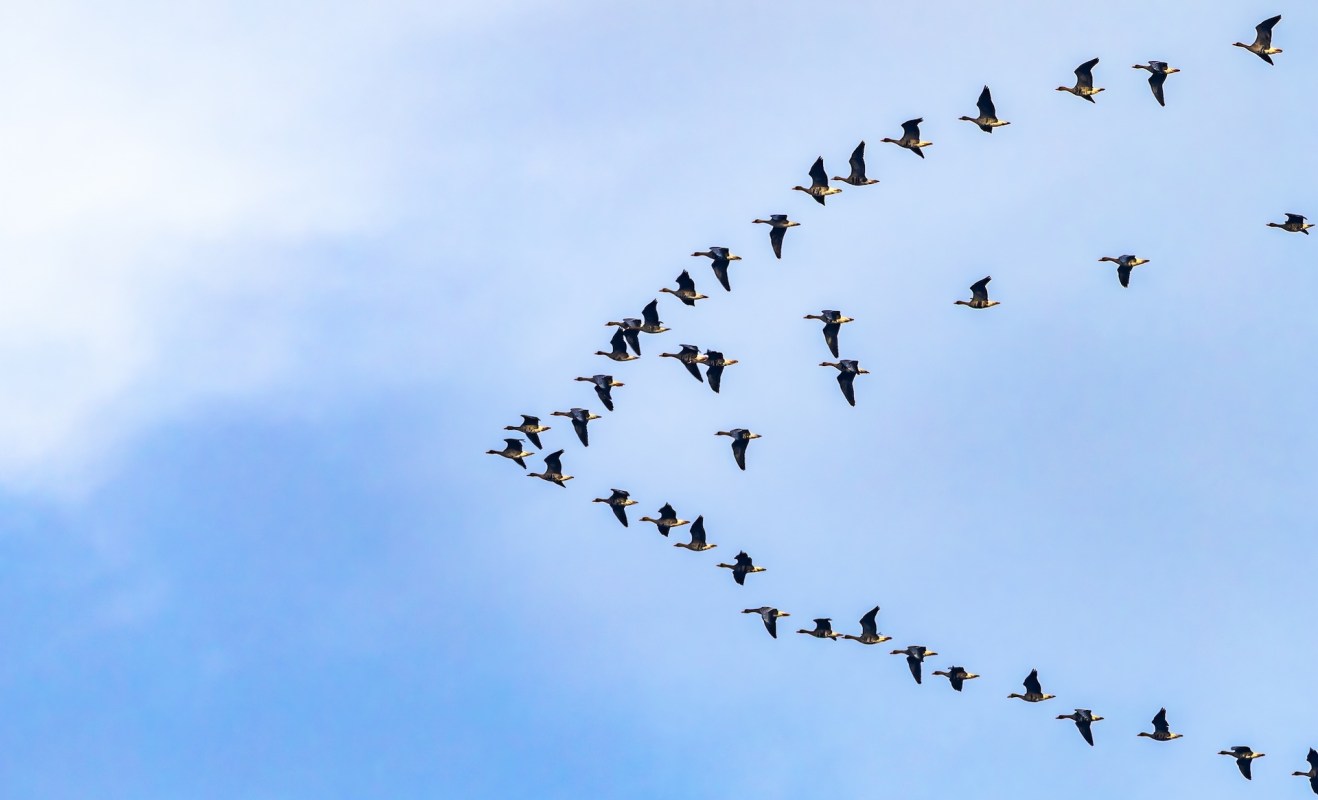
The good news is that Arctic-breeding birds are more resourceful than researchers thought. The bad news is that the current rate of Arctic warming is going to test their limits in the not-so-distant future.
What's happening?
A study in Nature Climate Change journal by scientists from the University of Amsterdam and the Netherlands Institute of Ecology shed light on how birds are matching the pace of warming temperatures during their spring migrations to the Arctic.
Researchers examined hundreds of migrations by five waterfowl species: brent geese, barnacle geese, white-fronted geese, pink-footed geese, and tundra swans. Leveraging GPS and body mass data, researchers found that the birds are reducing their feeding and resting times to arrive earlier at breeding sites.
One new discovery from the study was on the pre-migration fueling times. The researchers found that the barnacle and brent geese especially depend on them, which gives them more flexibility to adapt.
Another finding was the birds' ability to react to changes in the Arctic. The white-fronted goose and Bewick's swan were noticeably adaptive and able to shorten their trips, while other birds exhibited less flexibility.
Why are birds' migration tendencies important?
The news that birds are resourceful and already making changes on the fly is good to a point. The speed-up in their migratory habits, though, comes with potential dangers and limitations.
Birds rushing the process in less-than-ideal conditions might grapple with lower-quality food or disturbances. That would be detrimental for gathering the energy needed for their journey and could cost them later. Arriving under-fueled to the Arctic could lower breeding success and reduce population numbers.
Meanwhile, even if successful, these adjustments will only compensate for so long. The researchers estimated the birds' flexibility gives them an 18 to 28-year window as things stand.
"The clock is ticking if we look at the current rates of Arctic warming - this flexibility will only compensate for the advancing Arctic spring for a few more decades," warned the study's lead author, Hans Linssen, in a press release.
If these migratory birds don't arrive in time, they could miss out on a critical period to feast on insects and plants. They also face the risk of missing the best window to lay eggs and feed their young chicks ahead of their journey back.
TCD Picks » Upway Spotlight
💡Upway makes it easy to find discounts of up to 60% on premium e-bike brands





|
Do you think America does a good job of protecting its natural beauty? Click your choice to see results and speak your mind. |
 Definitely 👍
 What's being done about Arctic warming and birds' migration patterns?
The biggest thing humankind can collectively do is to try to curb the rate of temperature increases that are pushing migratory birds to the brink. Practical measures like reducing reliance on planet-heating dirty energy can make a big difference.
Continued research on these birds will also provide further insights and what we can do to optimize their habitats and environments. Linssen praised the "remarkable adaptability" of the birds, and pointed out that they could develop a new playbook.
"By mid-century, they may need to rely on other strategies - like shifting their wintering grounds or changing migration routes entirely - to avoid falling out of sync with the Arctic spring," Linssen concluded.

Get TCD's free newsletters for easy tips to save more, waste less, and make smarter choices — and earn up to $5,000 toward clean upgrades in TCD's exclusive Rewards Club.
Cool Picks






