


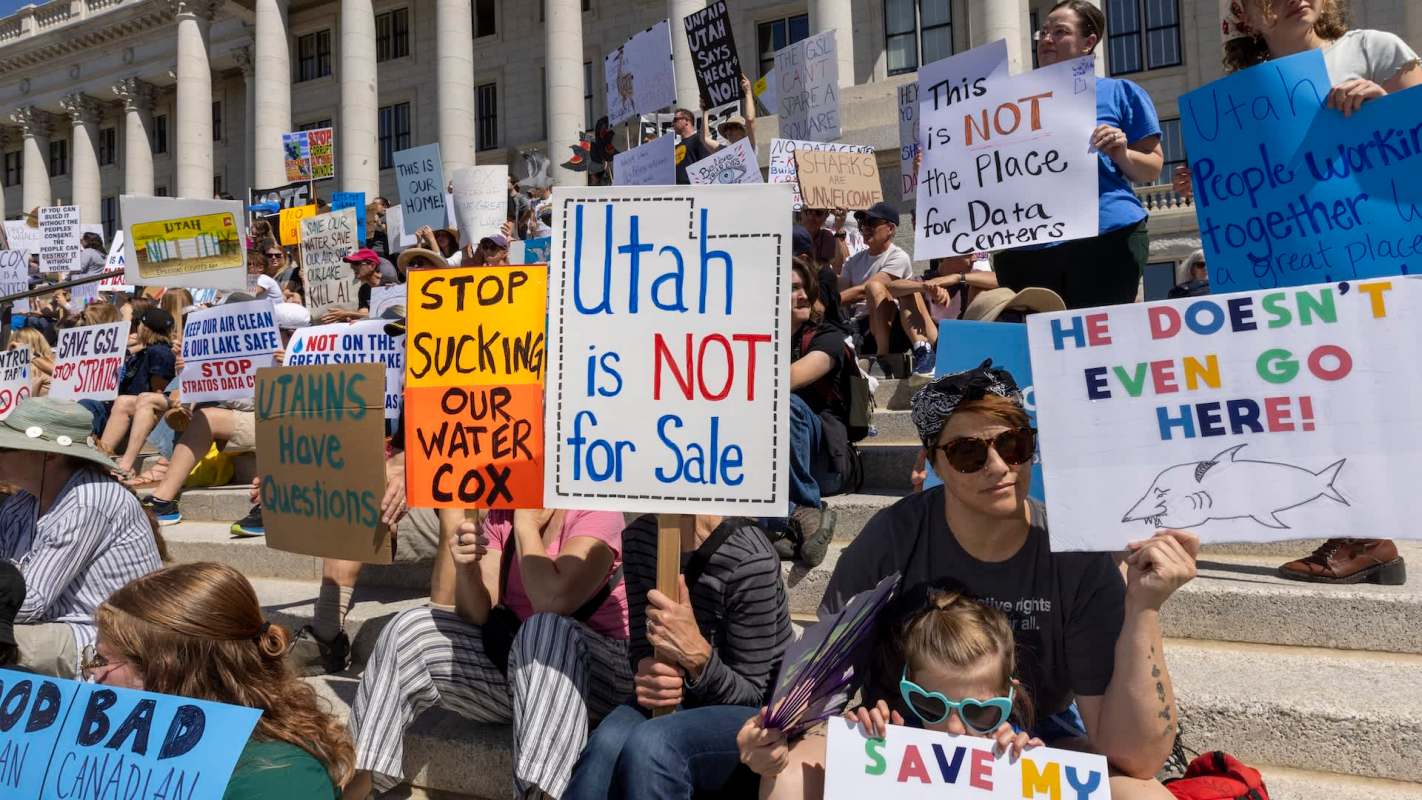
A proposed 40,000-acre data center campus in northern Utah continues to draw fierce resistance, as residents and environmental advocates question how it would be powered, as Grist reported.
The discourse centers on what the power source could mean for air quality, water supplies, and climate pollution near the Great Salt Lake.
What's happening?
After weeks of growing criticism, Grist detailed how Utah Gov. Spencer Cox is now trying to put some distance between himself and the original plan. He told The Salt Lake Tribune that the project will "never" run entirely on natural gas.
"The very first phase will be natural gas, but the other phases should not be," Cox said to the paper. "They should be nuclear, and they should be geothermal, and solar and other technology."
The planned development, known as the Stratos Project, was approved by Utah's Military Installation Development Authority, or MIDA, in Box Elder County.
As Grist noted, a MIDA official had previously said its power would come "100 percent" from the Ruby Pipeline, a major natural gas line that runs through the remote valley.
TCD Picks » Quince Spotlight
💡These best-sellers from Quince deliver affordable, sustainable luxury for all




That helped spark a wave of opposition. Protesters rallied at the state Capitol, nearly 4,000 letters challenged a related water-right filing, and more than 6,000 people signed a letter urging Cox to take stronger action to protect the Great Salt Lake, per Grist.
Now, the governor is pushing back on how the project was rolled out and the plans for its power.
He also criticized the approval process itself at a press event, saying "the process was not good" and that decisions like this should involve elected leaders and his office from the outset, per Grist.
Why does it matter?
One concern is the sheer scale of the proposal. Project backer Kevin O'Leary touts the site as one of the world's largest data centers. That doesn't come without a major environmental cost.
Climate scientist and analyst Logan Mitchell of Utah Clean Energy told Grist that a 9-gigawatt gas plant tied to the project could contribute 35 million metric tons of carbon pollution each year, per Grist. That would be enough to raise Utah's air pollution emissions by about 64%, according to the outlet.
Water is another major flashpoint. Grist reported that developers are seeking 13,000 acre-feet of water in Hansel Valley and nearby areas, land that is largely agricultural. That amount could serve more than 20,000 Utah households, Grist said, raising fresh concerns in a region already grappling with the shrinking Great Salt Lake.
The dispute also reflects the increasingly close connection between AI and the electric grid.
The data centers powering that technology are extremely energy-intensive, and in some cases water-intensive as well. That can mean more pollution, added strain on utilities, and higher energy costs.
What's being done?
Cox is signaling that the state is not brushing aside those concerns. While he has pushed for faster infrastructure development in the past, as Grist noted, he is now taking on a more cautious tone.
"It feels like the future is here," Cox said, per the outlet. "It's coming quicker than people asked for, and there are so many amazing things that can come from that future, and some pretty awful ones as well."

Get TCD's free newsletters for easy tips, smart advice, and a chance to earn $5,000 toward home upgrades. To see more stories like this one, change your Google preferences here.






