


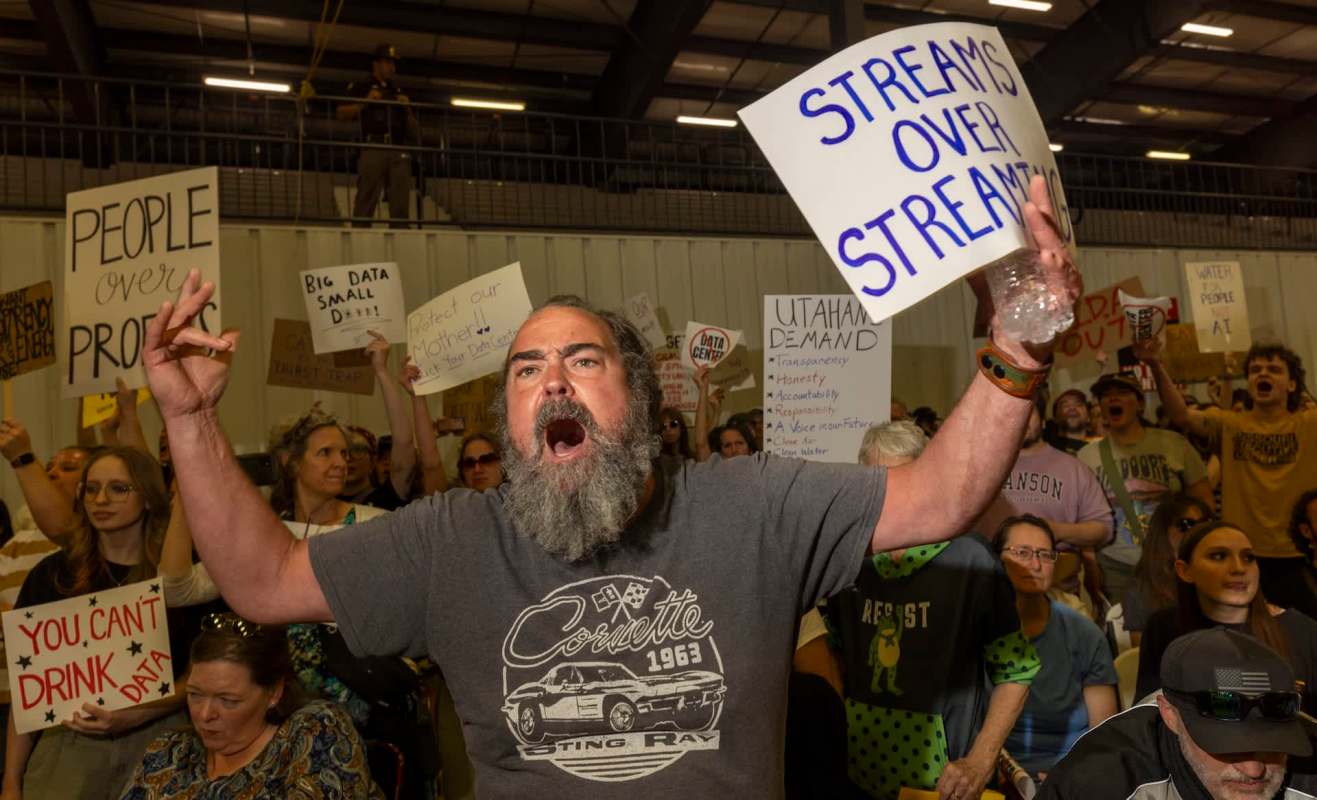
A massive "hyperscale" data center in Utah has been approved despite protests from residents.
As The Salt Lake Tribune reported, Box Elder County's three-member commission unanimously approved Stratos, a proposed 40,000-acre development in Hansel Valley.
That's roughly 2.5 times the size of Manhattan. The data campus is backed by Utah's Military Installation Development Authority and billionaire investor Kevin O'Leary.
The approval marks a significant step for one of the most hotly debated tech developments, and it comes at a time when communities across Utah, and the country at large, are already worried about water scarcity and pollution.
Public interest in the project vote was so high that officials relocated the meeting to the county fairgrounds in Tremonton. There, some 400 protesters booed officials and held signs that read, "No data center," "You can't drink data," "Don't sell us out," and "Save our water."
These hundreds of residents are concerned about how the proposed data campus could put water supplies, air quality, and the future of the Great Salt Lake at greater risk.
TCD Picks » Quince Spotlight
💡These best-sellers from Quince deliver affordable, sustainable luxury for all




"I do not want my children to have to move away from Salt Lake City because the Great Salt Lake has dried," said Emily Box, a resident of Logan, Utah, who traveled to voice her concerns about the project.
Commissioners said they reviewed more than 2,500 public comments submitted online and "considered all of them in our decision-making process." Even so, many residents left the meeting frustrated, arguing local leaders were pushing forward a project that could transform a largely rural area without meaningful community support.
"Our vote today had nothing to do with water or air quality," Commissioner Lee Perry remarked. "Those are not issues that the county has any control over," he added, noting the water rights tied to the project are held by private landowners.
According to MIDA, the first phase of the development could begin within months and would require 3 gigawatts of power. According to the Salt Lake Tribune, the entire state of Utah uses about 4 gigawatts.
At full buildout, the campus's projected demand will rise to 9 gigawatts.
Project leaders said that electricity would be generated on-site using natural gas tied to an existing pipeline in Hansel Valley.
Backers of the proposal have framed it as a national security project that could help pay for modern buildings at Hill Air Force Base, add jobs, and bolster the United States in the AI race.
MIDA executive director Paul Morris said the agency became involved following a federal effort to expand hyperscale data centers and strengthen power resiliency.
For nearby communities, though, the central concern remains water.
MIDA said the campus would use a water-recycling, closed-loop system, with demand more like a large office campus than a traditional industrial site. Opponents remain skeptical.
Developers have reportedly said they intend to buy roughly 3,000 acre-feet of water rights and also have about 10,000 acre-feet under contract near Snowville if necessary.
The tension in the room was captured by chants from the crowd, including "people over profits" and "we want water."
After the vote, resident Shane Jenkins told The Tribune the agreement felt "under the table" and was moving too quickly without real public input.
"It's sickening," he said.

Get TCD's free newsletters for easy tips, smart advice, and a chance to earn $5,000 toward home upgrades. To see more stories like this one, change your Google preferences here.






