


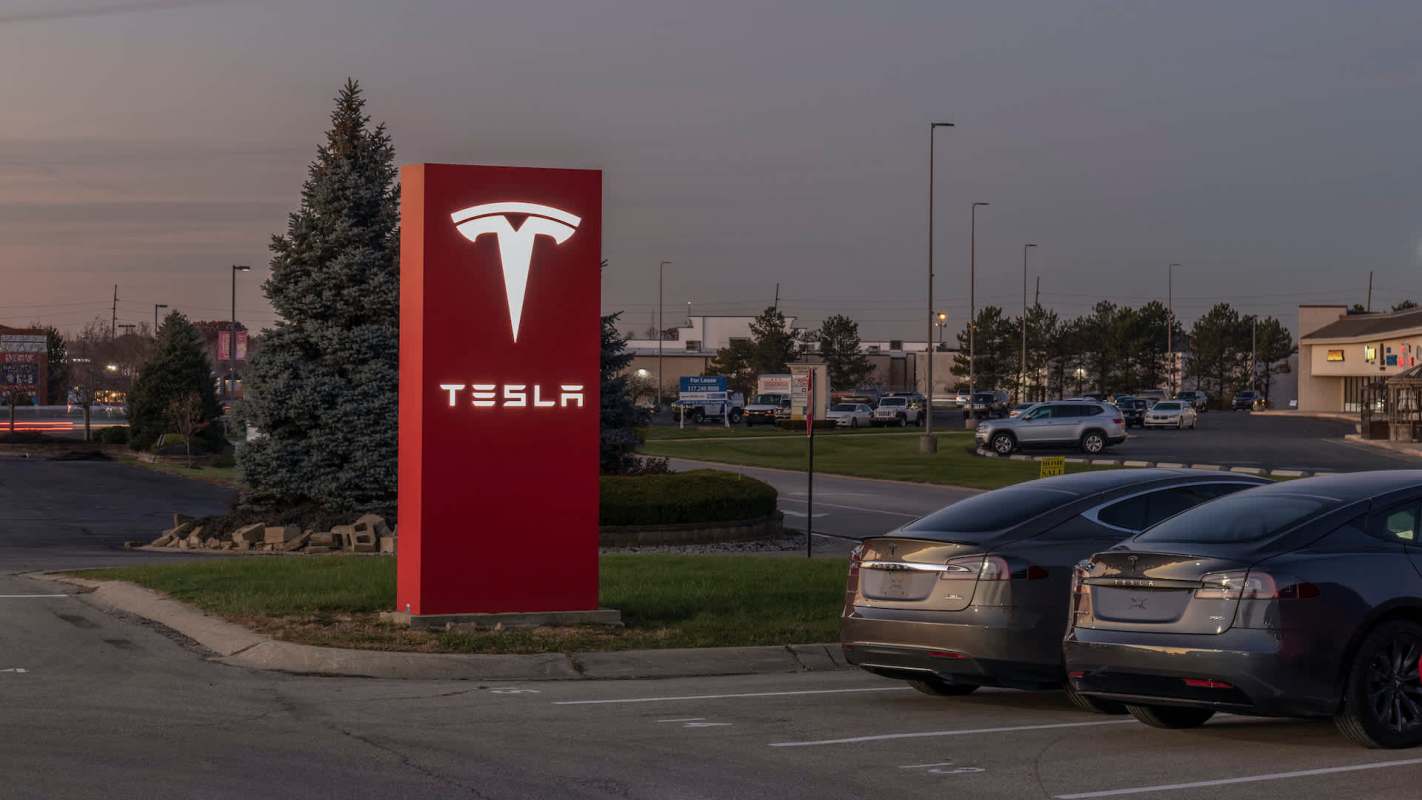
Tesla generates billions of dollars for the U.S. economy, and its auto business accounts for the bulk of its revenue and profits. However, analysis by Electrek suggests that it will be changing — and it's unclear whether both Tesla and consumers will come out on top.
What's happening?
Electrek's Fred Lambert wrote that Tesla's patent filings over the past 10 years reveal "two distinct peaks" indicative of the company's plan to pivot to AI and robotics.
The first came in 2018, when CEO Elon Musk was reportedly sleeping on the factory floor as Tesla was mired in "Model 3 Production Hell."
As Lambert previously highlighted, the Model 3 was "the true first high-volume electric car program" and the title of the top-selling EV in the world for multiple years in a row.
The second peak came in 2022, when AI hardware and software dominated Tesla's patent applications. The most recent patent data shows that around 40% of Tesla's patents are AI-related, with filings focused on neural network training, vision-only distance estimation, and data simulation.
Why is this important?
Tesla's sales slumped in 2025. Increased market competition was a contributing factor, as well as Tesla's reduced focus on automotive innovation. Musk also grew into an even more polarizing figure than he already was as he became more involved in politics.
For years, Tesla's EVs and Superchargers have been subject to vandalism. Many vandals are after the valuable copper in charging cables, but anti-EV sentiment also appears to play a role.
Myths persist that EVs are worse for the environment and less safe for drivers than gas-powered vehicles. However, data shows EVs produce less pollution over their lifecycles and must meet stringent safety standards. For its part, Tesla regularly earns top safety ratings, though several features on its vehicles have recently come under widely publicized scrutiny.
Ultimately, Musk's politics, social media feuds, and history of broken promises became too much for many consumers to overlook in 2025, and that impacted Tesla's bottom line.
What's being done about this?
Trust in Tesla dipped to new lows in 2025. Nonetheless, a record number of U.S. consumers chose to make their next car an EV last year, demonstrating just how far the EV market has come since Tesla sparked a wave of auto innovation back in the early 2000s.
TCD Picks » Quince Spotlight
💡These best-sellers from Quince deliver affordable, sustainable luxury for all




|
What do you think of Tesla and Elon Musk?
Click your choice to see results and speak your mind. |
 Elon is the man 🥰
 Meanwhile, Lambert suggested that Tesla's patent trends reveal "a little something" for everyone — whether they are bullish or bearish on the company's direction.
"Bears can feel vindicated that Tesla's shift to AI is indeed coming with less spending on automotive R&D [research and development]," Lambert wrote. "Bulls can now visualize Tesla's shift to AI through these patent application trends."
Ark Invest is one major shareholder that appears to be all-in on Musk's vision. For his part, Lambert said a shift away from electric transport influenced his decision to sell his Tesla stock.
Lambert highlighted one of Musk's posts on X criticizing a charitable donation from Dell in which Musk claimed, "There will be no poverty in the future and so no need to save money."
"Call me a skeptic, but my spidey sense always starts tingling when billionaires who buy elections start talking about utopias,'" Lambert wrote.
A commenter offered another reason why they weren't buying Tesla as an AI powerhouse: "Tesla has put more effort into hiring researchers in recent times. But [they] lag far, far behind the companies that have had a long term commitment to AI research."

Get TCD's free newsletters for easy tips to save more, waste less, and make smarter choices — and earn up to $5,000 toward clean upgrades in TCD's exclusive Rewards Club.
Cool Picks





