


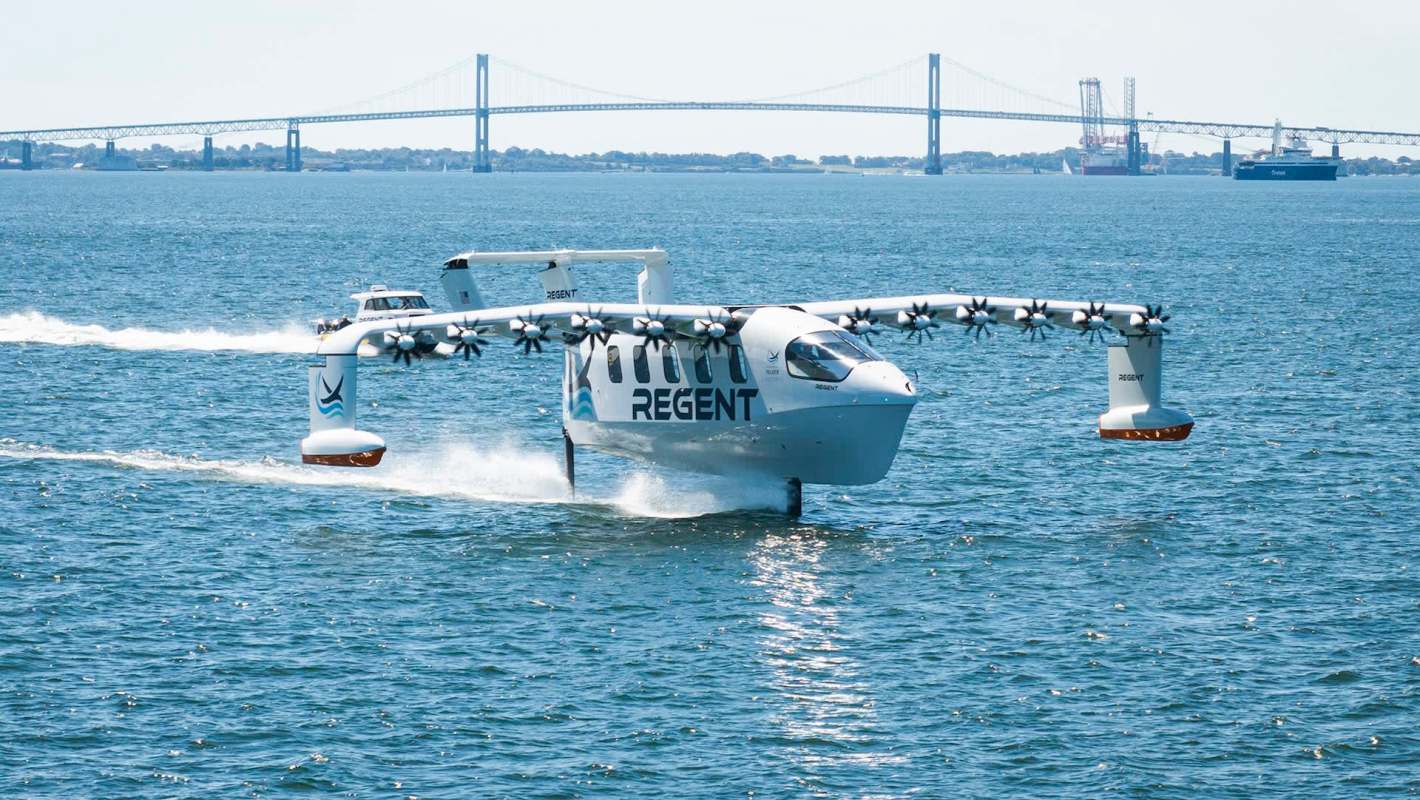
A prototype for Regent Craft's all-electric Viceroy seaglider was tested in Rhode Island's Narragansett Bay, where it showcased its hydrofoil capabilities.
As Boston.com reported, the Paladin, as this particular version is named, sped past sailboats and fishing trawlers in the area, making for an unusual sight.
The watercraft resembles an airplane, with a 65-foot wingspan equipped with 12 small propellers and a pontoon beneath each wingtip. With three modes — float, foil, and fly — it's designed to fly about 30 feet above the water, float on its hull, and glide along the surface on hydrofoils.
"We had this vision five years ago for a seaglider — something that is as fast as an aircraft and as easy to drive as a boat," CEO Billy Thalheimer told the outlet, following the successful hours-long test that he piloted.
The company is positioning Regent's Viceroy seaglider as a new method of coastal and military transportation, the report noted. It has already submitted a design basis agreement to the U.S. Coast Guard to advance its certification.
Thalheimer met co-founder Mike Klinker at the Massachusetts Institute of Technology, and they later worked together at Boeing before starting Regent in 2020. The hydrofoil testing phase began this summer following years of engineering research and development, according to the report.
The seaglider should be able to use existing dock infrastructure, including charging stations, to recharge its battery system, reducing the use of dirty fuels that are still heavily utilized in the maritime industry.
When burned, oil, gas, and coal release heat-trapping gases, which encourage the global temperature to rise. This leads to an increase in the strength and longevity of extreme weather events, melts ice caps, and causes disruption to ecosystems, among other issues.
Meanwhile, fuel leaks from water vessels can negatively impact aquatic habitats and contaminate water sources. Electric-powered transportation alternatives mitigate these issues.
When it gets farther away from land, the Paladin can switch to its hydrofoil system, allowing it to travel up to 50 miles per hour — similar to other hydrofoil craft — with reduced drag and increased efficiency.
TCD Picks » Quince Spotlight
💡These best-sellers from Quince deliver affordable, sustainable luxury for all




|
Would you ride in a floating airship?
Click your choice to see results and speak your mind. |
 Absolutely ✅
 A smaller model has already been tested and flown, but the 12-passenger Paladin prototype isn't expected to take flight until sometime this fall, when tests off the coast of Rhode Island are scheduled.
When airborne, it's projected to reach 180 miles per hour, with a range of about 180 miles from its electric battery system.
The Paladin can carry up to 12 passengers and two crew members. According to EE Power, Viceroy models have a payload of 3,500 pounds and can cruise along at 30 decibels quieter than an aircraft or helicopter.
That means less noise pollution for nearby residents and a zero-emissions alternative for short coastal trips. Boston.com added that it could potentially reduce the travel time between Rhode Island and New York City to just one hour, as opposed to a three-hour train ride.
Regent, which stands for regional electric ground effect nautical transport, already has financial backing from influential investors, including Mark Cuban.
The Paladin is another example of how innovative technology can make a huge difference in reducing transportation-related pollution.
On land, electric cars are a much cleaner option than vehicles powered by conventional internal combustion engines, and EVs can also save motorists on fuel and maintenance costs.
Charging at home is more affordable than using public chargers, and Qmerit can help drivers install Level 2 EV chargers by providing a free, instant installation estimate.
To further increase those savings, pair an EV charger with home solar panels. The technology can slash vehicle refueling costs and also reduce monthly energy bills.
EnergySage makes it easy to compare quotes from vetted local solar panel installers, helping customers save up to $10,000 on installation costs.

Join our free newsletter for weekly updates on the latest innovations improving our lives and shaping our future, and don't miss this cool list of easy ways to help yourself while helping the planet.
Cool Picks





