


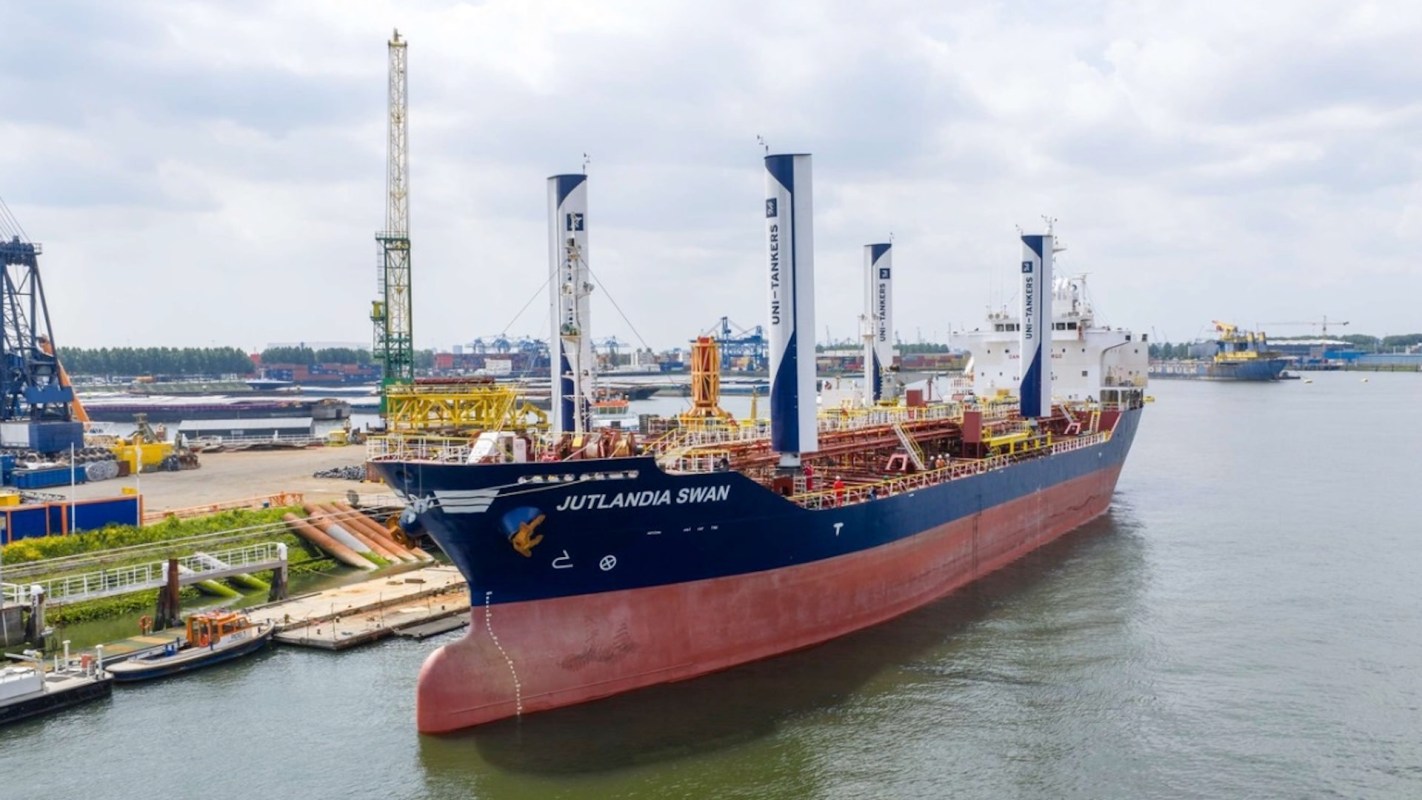
The shipping industry creates a surprisingly major amount of pollution each year, but in some areas, that's slowly changing.
Companies from around the globe are working to make the industry cleaner, more sustainable, and more efficient by turning to ancient techniques, modern technologies, and even asking the ocean itself for a helping hand.
1. Ships that can capture their own exhaust
London-based startup Seabound is tackling two problems at once. Together, cement production and the shipping industry produce around 11% of global carbon pollution every year. Seabound has retrofitted a ship that transports cement to capture its own exhaust and turn it into limestone, a key ingredient in cement.
Test runs have reportedly shown the system to capture 80% of the carbon and 90% of the sulfur released from the ship. This not only reduces the pollution created by the ship, but also the pollution created in the mining of limestone.
Read more →
2. A new kind of sailboat
VentoFoils are basically the opposite of sails. Rather than catch the wind to push the ship forward, they essentially grab it and pull. The suction wings use vents and internal fans to maximize thrust. They automatically measure wind speed and direction, and adjust accordingly to maximize efficiency.
Econowind, the company behind VentoFoils, reports that they can reduce fuel consumption by 10-30%. It's a fairly new technology, but it's catching on. Econowind had sold over 130 VentoFoils as of August 2025.
Read more →
3. Surfing currents with AI
It may seem like a simple concept, but the technology hasn't been attainable until now. A researcher from Sydney, Australia, has developed AI modeling to forecast ocean currents, allowing cargo ships to use the ocean's natural flow to traverse the vast expanse.
Most cargo ships are massive, capable of carrying thousands of 40-foot containers and burning tons of fuel per day. Taking advantage of the ocean's natural currents will significantly reduce fuel usage and pollution.
Read more →
4. Running on 'shore power'
Shore power systems allow docked ships to connect to the local power grid and turn off their auxiliary diesel engines while keeping onboard systems like lights, HVAC, and refrigeration running. This greatly reduces the fuel burned and the air and noise pollution created. Shore power has been used for decades, but it's about to get a glow-up.
Swiss company Cavotec recently signed an $8.75 million deal with a major shipping container company that will see new power systems transported around the world to be used for newly built container vessels.
Read more →
TCD Picks » Quince Spotlight
💡These best-sellers from Quince deliver affordable, sustainable luxury for all




|
Do you think the construction industry is too wasteful? Click your choice to see results and speak your mind. |
 Definitely 👍
 5. The sails of the future
While they are sails, they're not quite what you might imagine a pirate using to sail the seven seas in search of treasure. These sails are large, steel, and rectangular.
London's Union Maritime has outfitted its 114,000 deadweight-ton Brands Hatch tanker with 123-foot-tall rigid sails that are expected to cut fuel consumption by more than 1,320 tons a year. The company plans to eventually equip 34 ships with these modern-day sails.
Read more →

Get TCD's free newsletters for easy tips to save more, waste less, and make smarter choices — and earn up to $5,000 toward clean upgrades in TCD's exclusive Rewards Club.
Cool Picks





