


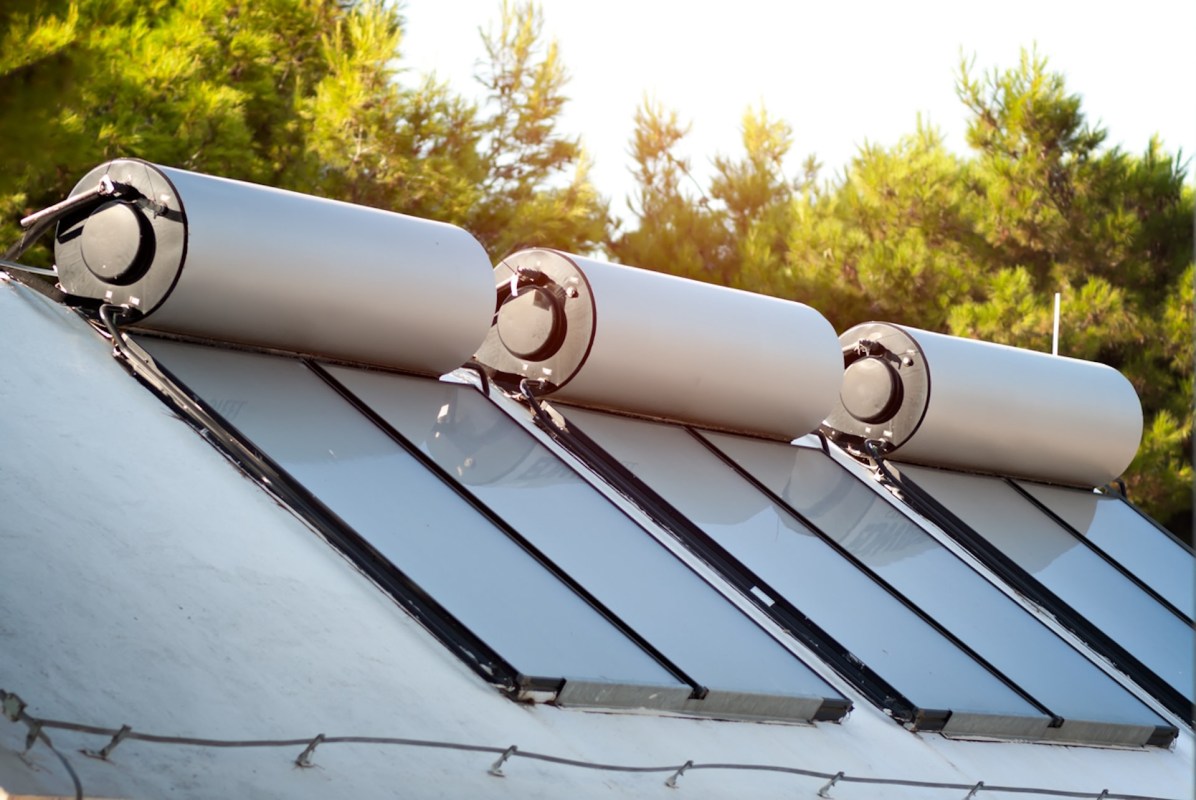
Solar rooftop panels, which convert energy from the sun into electricity, have grown massively in popularity over the last decade as people seek to find ways to reduce their contributions to planet-overheating pollution while saving money at the same time.
However, a similar technology, which converts energy from the sun into heat, isn't nearly as popular in the United States — but experts say it could be on the verge of a big breakthrough.
Solar thermal systems often use rows of vacuum-sealed glass tubes to capture the sun's energy and convert it into thermal energy, or heat. This type of system is most commonly used to heat water, though it could also be used for space heating.
According to Inside Climate News, at the end of 2021 there were 373,055 solar thermal systems in operation in the U.S. — less than one-tenth of the number of solar photovoltaic (solar panel) systems.
However, according to United Kingdom-based Naked Energy, which recently installed a solar thermal system on a dorm at Nebraska's Creighton University, more could be on the way thanks to clean energy incentives built into the Inflation Reduction Act, as ICN reported.
Per ICN, the Creighton University project was Naked Energy's first such undertaking in the U.S. The solar thermal system installed on the dorm's roof supplies heat for around 400 freshmen, reducing the building's need for natural gas, which is primarily methane — one of the most potent planet-overheating gases in existence, with heat-trapping effects up to 80 times stronger than carbon dioxide.
TCD Picks » Quince Spotlight
💡These best-sellers from Quince deliver affordable, sustainable luxury for all




By using solar thermal energy instead, Naked says, the building is avoiding 40 metric tons (about 44 tons) of pollution per year, equivalent to taking nine cars off the road, ICN reported.
Solar thermal systems are most viable in places that get a lot of sun — Cyprus and Greece are two of the per capita leaders, and one expert Inside Climate News spoke to views the technology as a "sleeping giant" for the U.S. market. If he's right, that could be a big win for the planet while also saving homeowners money in the long run

Join our free newsletter for easy tips to save more, waste less, and help yourself while helping the planet.






