


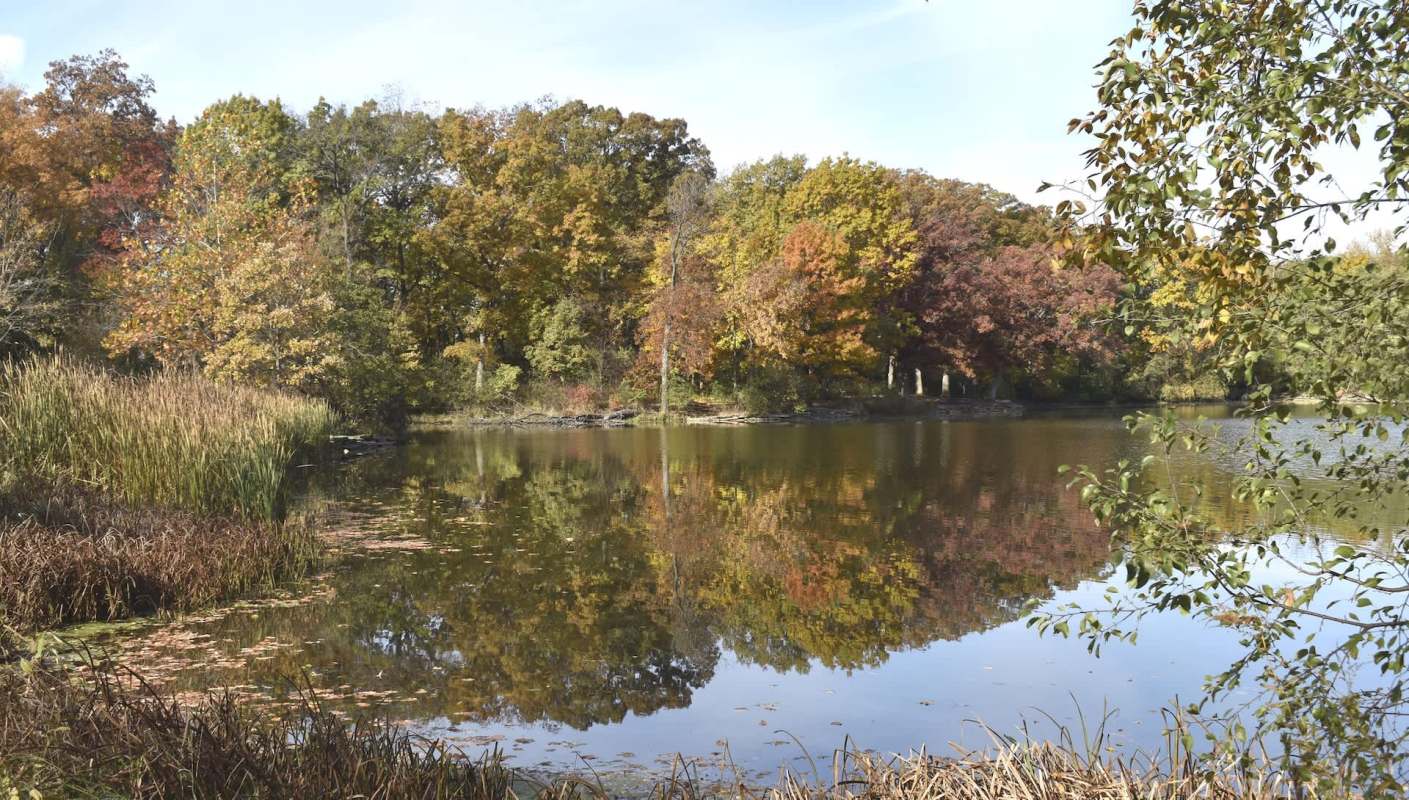
Local officials are taking decisive action to remove nonnative trees from parks with a program that begins in the fall of 2025.
Montgomery Parks comprises over 400 parks and approximately 37,000 acres of land across Maryland. The project aims to remove 461 nonnative trees and replace them with more sustainable native species. It will take five years to complete, as officials hope to improve the overall health of the parks and preserve their biodiversity, according to Montgomery Parks' official website.
Like many invasive plants in the United States, the trees in the parks were introduced for their aesthetic qualities.
"Many of these trees are attractive and were planted intentionally… however, their unchecked spread disrupts ecosystems by outcompeting native species that provide food and habitat for local wildlife, including insects, birds, and small mammals," Montgomery Parks plant health horticologist Andy Driscoll explained.
The tree species to be removed are the tree of heaven, Norway maple, Bradford pear, golden rain tree, and the amur corktree. The appealing names belie their destructive impact in North America. The tree of heaven was brought over from China, and this rapidly spreading, aggressive plant's impact has been anything but divine for local flora, per the Nature Conservancy.
The Norway maple harms the forest because its quick spread and immense size create shade that inhibits the growth of other plants. The Bradford pear, or Callery pear, certainly won't be missed owing to the foul odor it emits when flowering. It provides no nourishment for insects and crowds out less stinky and more productive plants.
The golden rain tree has been present in the United States since the 18th century. According to Gardenia, it was imported for its ornamental qualities, but its rapid spread crowds out native plants. Like the golden rain tree, the amur corktree is another invasive species from Asia. It's allelopathic, meaning it spreads chemicals into the soil that are toxic to other plants.
Prevention is usually the best course of action when it comes to managing invasive species, but in this case, the horse has long bolted. Fortunately, there are numerous examples of local communities collaborating to remove invasive plants. When all else fails, there are always goats eager to lend a hoof.
|
Do you think the government should ban gas-powered lawn tools? Click your choice to see results and speak your mind. |
 No way 🙅
Join our free newsletter for easy tips to save more and waste less, and don't miss this cool list of easy ways to help yourself while helping the planet.
Cool Picks






