


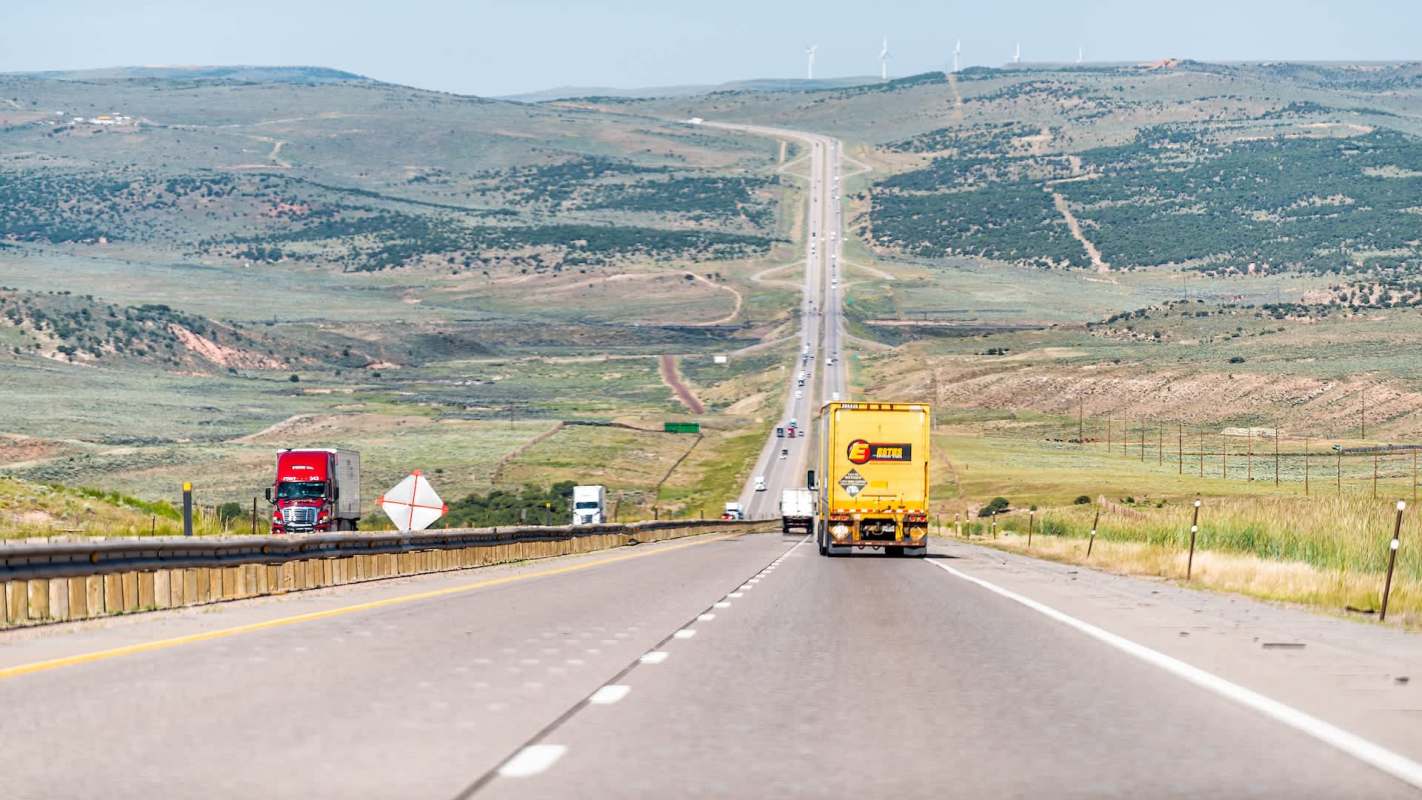
A clever solution deployed in Wyoming has proved that effective highway infrastructure needn't be costly or wholly human-made, AccuWeather reported.
Interstate 80 is the second-largest American interstate, stretching from New Jersey to California, and serves as Wyoming's most critical major road.
That stretch is one of the "windiest highways in the United States," AccuWeather noted; Wyoming is America's ninth-snowiest state.
As the outlet explained, officials in Wyoming took major cues from Mother Nature after a significant, 77-mile stretch of I-80 connecting Laramie and Walcott Junction opened in 1970.
Just three months later, they were forced to close the brand-new highway for 10 days when Wyoming's heavy snows created 16-foot drifts at 27 distinct junctures. High winds cratered visibility, making conditions far more dangerous.
According to the Federal Highway Administration, Wyoming's Department of Transportation immediately noticed that U.S. Route 30, the road supplanted by I-80, rarely closed amid similar conditions because snow fences protecting nearby railroad tracks kept it passable.
Snow fences are a form of natural infrastructure, or what one National Oceanic and Atmospheric Administration expert called "nature-based infrastructure," which combines natural elements such as trees, wetlands, or snow with human engineering, leveraging the powerful assets of local ecosystems.
Did you know a well-placed snow fence can store snow 350 feet away from the structure? In OUR WYOMING "SNOW FENCES," we...
Posted by Wyoming PBS on Thursday, December 18, 2025
By 1971, WYDOT had begun installing snow fences where the largest snowdrifts naturally accumulated, in what the FHA described as "pioneering research." As AccuWeather observed, the "payoff surprised even the people who built them."
Visibility in windy, snowy weather improved, accidents in winter conditions fell by 70%, and snow removal costs were halved because the fencing kept drifting snow off the asphalt.
In 2024, the American Association of State Highway and Transportation Officials profiled the state's efficient, nature-based infrastructure, which totaled 460 miles of fencing at the time.
TCD Picks » Quince Spotlight
💡These best-sellers from Quince deliver affordable, sustainable luxury for all




|
Which of these savings plans for rooftop solar panels would be most appealing for you?
Click your choice to see results and earn rewards to spend on home upgrades. |
 Save $1,000 this year 💸
 WYDOT maintenance technician Duard Dilday III told AASHTO that snow fences weren't merely effective — they also saved Wyoming taxpayers a shocking amount of money.
"For every $10 invested in a snow fence, that saves us about $100 in maintenance costs. We're not plowing the drifts off the road constantly; we're not using the equipment as much; and we're not paying the overtime," Dilday explained.
Wyoming's ongoing efforts have extended to living snow fences, strategic plantings made in collaboration with conservation districts and the Wyoming State Forestry Division.
Officials in nearby states lauded the concept, including Craig Bargfrede, a winter operations administrator for the Iowa Department of Transportation.
A snow fence "traps the snow so we don't have to clean it off the pavement. So obviously, it's an increase in safety for the public," Bargfrede told AccuWeather.

Get TCD's free newsletters for easy tips to save more, waste less, and make smarter choices — and earn up to $5,000 toward clean upgrades in TCD's exclusive Rewards Club.
Cool Picks





