


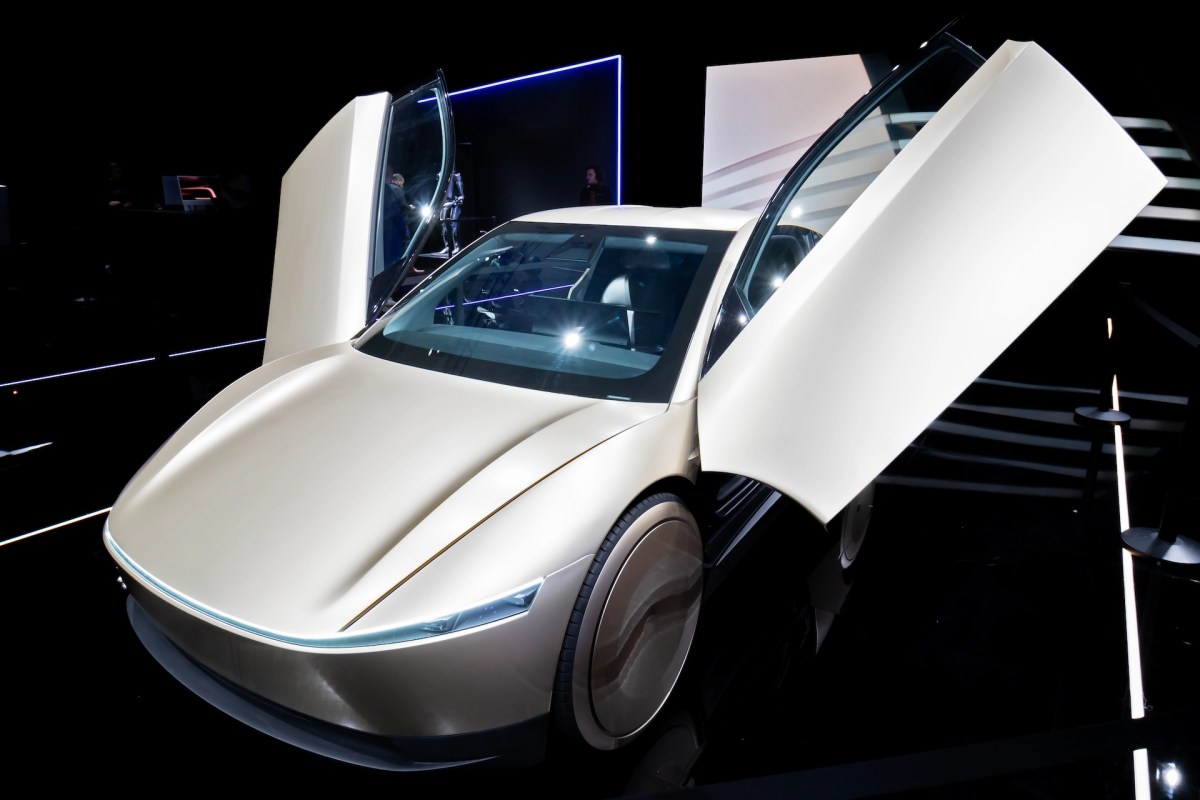
As Tesla continues to contend with slumping sales and an array of rival upstarts, the brand could certainly benefit from a boost.
In theory, the upcoming Cybercab could reignite consumer interest, but, as Forbes pointed out, the struggling automaker faces a significant hurdle in that respect.
What's happening?
Electric vehicle manufacturer Tesla has had an extremely rough 2025.
In October, the nonpartisan National Bureau of Economic Research published a working paper focused on the effect that CEO Elon Musk's involvement in American politics has had on the brand, estimating that his activity cost Tesla over a million sales in 2025 alone.
In 2019, Musk confidently declared that more than a million driverless Tesla robotaxis would be traversing American roads by 2020. When robotaxis finally debuted in mid-2025, the rollout was extremely limited and beset with missteps, deepening skepticism about self-driving Teslas.
When Musk first introduced the Cybercab concept in 2024, its purported low price and absence of a steering wheel and pedals promised a new level of EV technology.
In October, Tesla board chair Robyn Denholm backtracked, acknowledging that the Cybercab might need "a steering wheel and pedals" to meet current regulations.
But Musk re-reversed course on November 6, not long after shareholders approved his controversial, gargantuan compensation package, touting a Cybercab with no controls.
According to Forbes, there's a massive, National Highway Traffic Safety Administration-shaped hole in that plan.
While competitors like Zoox secured the necessary waivers to put autonomous vehicles on the road, Musk's grand plan appeared to overlook that make-or-break detail.
TCD Picks » Quince Spotlight
💡These best-sellers from Quince deliver affordable, sustainable luxury for all




|
Do you think the world is switching to EVs fast enough? Click your choice to see results and speak your mind. |
 Yes 👍
Yes 👍 "Tesla has not applied for any exemptions for the Cybercab," a NHTSA spokesperson confirmed. "Any company seeking to operate a noncompliant vehicle on public roads … must apply for and receive an exemption from NHTSA prior to operations."
Why is this concerning?
For a long time, Tesla effectively sold itself, with little competition and a corner on the EV market.
Times have changed, and as the NBER report evidenced, so has the public's view of Musk and his ambitious promises.
Although consumers who wish to make their next car an EV now have more choices, Tesla has been critical in establishing EV infrastructure, such as charging stations.
Tesla's successes and failures can color the broader EV market, and when consumers lose confidence in the brand, EV adoption and the environment can suffer. The NBER found that lower Tesla sales in 2025 negatively affected pollution-reduction targets.
Part of the Cybercab's allure is its proposed $30,000 price tag, and Tesla's continued wavering on this critical model isn't great for consumer confidence.
"We're not making a non-robotaxi model," Musk said on November 6, directly contradicting Denholm's assertion. "I think we've made it very clear that the future is autonomous."
What's being done about it?
Cybercab production is slated to begin in April, and it's unclear how Tesla plans to overcome this regulatory hurdle.
A former NHTSA official spoke to Forbes anonymously and said the failure to seek an exemption will be a massive liability when Cybercabs hit showrooms.
"As soon as the vehicle goes on public roads or is sold, NHTSA can do whatever it wants," the official explained. "At that point, absolutely something bad happens."

💰Get TCD's free newsletters for easy tips to save more, waste less, and make smarter choices — and earn up to $5,000 toward clean upgrades in TCD's exclusive Rewards Club.
Cool Picks




