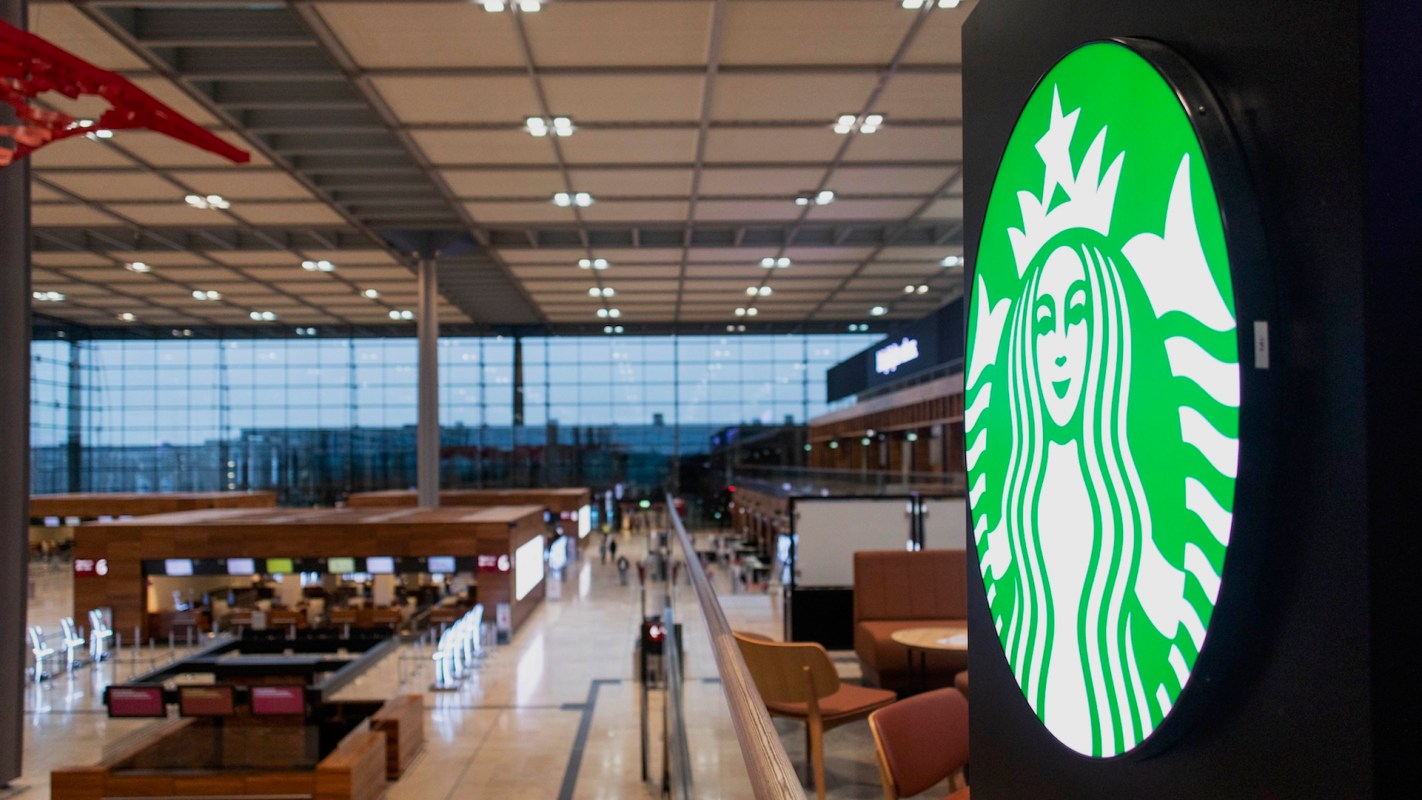
Starbucks has lifted its cap on CEO Brian Niccol's private jet usage, according to the BBC.
What's happening?
Niccol became CEO of Starbucks in September 2024.
Among the perks that came with the position, Niccol was allowed to take the job without having to relocate from California to Starbucks' headquarters in Seattle and was afforded a generous allowance for personal travel using Starbucks' Gulfstream G550 jets.
The company has said in the past that Niccol's job requires him to visit various locations and conferences throughout the year and that he thus is not working daily in Seattle. Further, the company later built a satellite office near his home in Newport Beach, California, with Niccol also purchasing a second home in the Seattle area, so that he would commute via jet less frequently.
But as the BBC report indicated, he is still using the jet plenty.
Niccol, who raked in $31 million in 2025, was granted $250,000 worth of private jet travel on the house as part of his overall compensation. Under that arrangement, Niccol was obligated to reimburse Starbucks for any use of their private planes if his yearly expenses exceeded a quarter-million dollars.
Perk up the winter blues with natural, hemp-derived gummies Camino's hemp-derived gummies naturally support balance and recovery without disrupting your routine, so you can enjoy reliable, consistent dosing without guesswork or habit-forming ingredients. Flavors like sparkling pear for social events and tropical-burst for recovery deliver a sophisticated, elevated taste experience — and orchard peach for balance offers everyday support for managing stress while staying clear-headed and elevated.
Learn more → |

In a new Securities and Exchange Commission filing, Starbucks disclosed that it lifted the $250,000 cap, allowing Niccol to use its private jets freely, citing an independent third-party security assessment.
"This change was driven by the security study's recommendation that Mr. Niccol use Company aircraft for all air travel, including personal travel, and the Company's ongoing monitoring of Mr. Niccol's security situation," the filing read in part.
The study purportedly identified "significant heightened security concerns, which included the existence of credible threat actors," and asserted that "enhanced personal security measures were necessary for Mr. Niccol's personal safety."
When Starbucks increased its weekly on-site corporate working requirements to four days a week this summer, a company spokesperson told Business Insider that, while the details of Niccol's living and working arrangements may sound fairly ostentatious, he isn't actually "commuting" via jet from home to headquarters often anymore and that most jet travel is for business trips.
TCD Picks » Upway Spotlight
💡Upway makes it easy to find discounts of up to 60% on premium e-bike brands
|
What's the most you'd pay per month to put solar panels on your roof if there was no down payment?
Click your choice to see results and speak your mind. |
 $200 or more 💰
 "Brian spends the majority of his time visiting stores across the country and around the world and working in Seattle where he has both a home and an office," a Starbucks spokesperson told Business Insider this summer.
"For when he is in California, he has access to one of our Starbucks offices — which will also be used by other Starbucks partners (employees) — with meeting space allowing him to use his time effectively and keep moving the business forward."
Why is this concerning?
Starbucks' decision to remove the cap on Niccol's private air travel was widely attributed to enhanced security following the 2024 death of UnitedHealthcare CEO Brian Thompson.
However, in August 2024 — four months before Thompson's demise — The Guardian reported that the then-incoming Starbucks CEO planned to commute to the office three times a week by private jet.
"It's paper straws and compostable cups for the masses, space travel and $600m weddings for their overlords," the paper pointed out, effectively accusing Starbucks of engaging in a form of greenwashing.
Niccol's known preference for commuting by private jet aside, a Jan. 30 New York Post article cast doubt on Starbucks' claim that unlimited private aviation privileges were simply a necessary safety precaution for the CEO.
Thompson's high-profile death "provided a unique opportunity to give boards air cover to capitulate to a CEO's desire to travel on a private jet," an anonymous board member of a publicly traded company told the Post, predicting the justification would likely spread.
While personal safety is important, it's worth noting that Thompson was shot on the streets of New York City outside a hotel, and public airports are among the safest places in the world, given the enhanced security and restricted transportation bottlenecks in and out. It stands to reason that a truly safer provision would be to reduce travel altogether and take meetings via video call more often.
In any case, private jet travel has an outsized impact on the planet, as the non-governmental organization Oxfam has long warned.
The group determined that it would take the average British citizen 11 years to "emit as much carbon" as a single private jet does traveling from London to New York and back again.
To make matters worse, Starbucks softened its sustainability positions in 2025, though the coffee giant still retains many environmentally friendly positions and practices, such as encouraging the use of reusable cups and mugs. The company maintains a sustainability website boasting several other initiatives, including the reduction of plastic in its single-use cups.
What's being done about it?
The unnamed board member who spoke with the Post predicted that Starbucks' decision would "backfire" and potentially anger investors, but not before other CEOs followed suit.
While Starbucks has taken steps to reduce its environmental impact, consumers can always vote with their dollars by supporting companies with the strongest environmental commitments and initiatives, or by buying coffee in bulk from sustainable brands to then brew at home — which typically saves money in the process.

Get TCD's free newsletters for easy tips to save more, waste less, and make smarter choices — and earn up to $5,000 toward clean upgrades in TCD's exclusive Rewards Club.
Cool Picks