


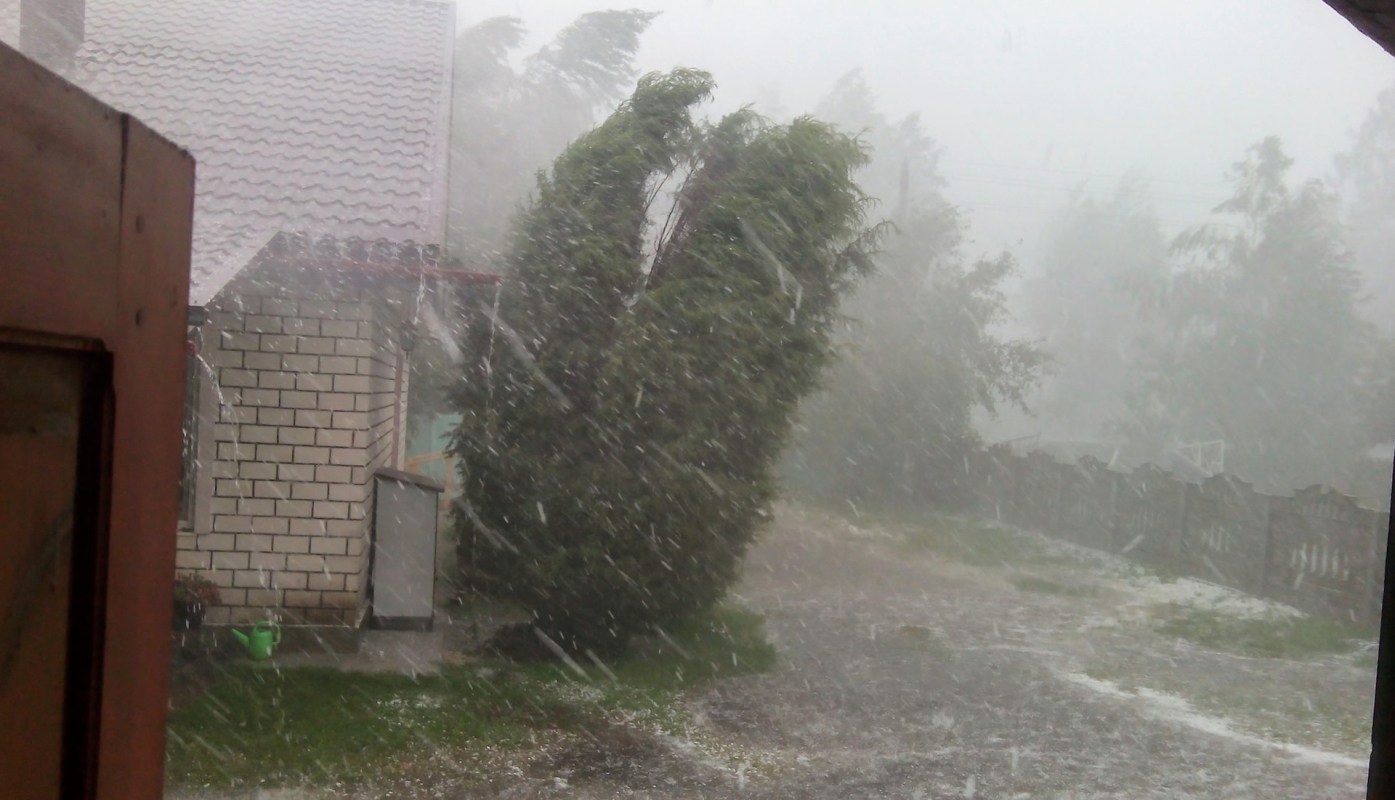
After Hurricane Helene tore through the southeastern U.S. in September 2024, numerous residents of Florida and Georgia were left with severely damaged homes and businesses. What many of them didn't realize is that the worst of their struggles was only beginning.
What's happening?
Local news station WRDW spoke with Kim Crouch, a resident of Augusta, whose home had been damaged by a giant tree during the storm.
"We can't get money from the insurance to fix what needs to be fixed," she told WRDW. "I didn't know it was going to be this complicated."
Like many, Crouch had assumed that her home insurance carrier would step in and cover the damage associated with the accident, which included a hole in the roof, a hole in the ceiling, and exposure to asbestos. The abatement alone cost $60,000.
Yet Crouch's insurer, State Farm, barely covered the tree removal cost — let alone the associated damages. What's even more frustrating is that her policy did cover asbestos removal "in cases involving accidental direct physical loss caused by peril like a windstorm."
However, the company remained stubborn even after Crouch pushed back, stating that they could only cover abatement for the two rooms directly damaged by the tree, but nothing more.
Shannon Frazier, the business owner contracted to abate the house, criticized the move.
"Now you've got hazardous condition in the house, and you're only going to do a partial abatement because she cannot afford an out of pocket to pay for what insurance won't cover," Frazier told WRDW. "I've got issues with that."
Why is a lack of insurance coverage so harmful?
Insurers are struggling to adjust their business models to the increasing frequency and severity of weather disasters, which are themselves being exacerbated by rising global temperatures.
With atmospheric temperatures much hotter, precipitation patterns change. Droughts are lasting longer, wildfires are burning hotter, hurricanes are bringing more intense winds and rains, and flash floods are surging higher than before. In short, it's becoming more and more costly to own a house — particularly in certain disaster-prone areas — and therefore it's even more costly to insure it.
TCD Picks » Quince Spotlight
💡These best-sellers from Quince deliver affordable, sustainable luxury for all




|
Do you have plans to significantly renovate your home? Click your choice to see results and speak your mind. |
 Yes — this year 👍
 Many insurers have increased their rates to offset the costs; others are scrutinizing the fine print to avoid making payouts. Some companies have dropped coverage in entire regions altogether.
What can be done to protect homeowners from paying so much?
Some homeowners are shoring up their homes with protections, like firewalls and reinforced windows. Scientists are also continually developing innovative solutions, including predictive disaster models and enhanced backup power systems.
Lawmakers are also looking at ways to supplement private insurance coverage. And while several states have managed to cover thousands of homeowners with state-funded insurance pools, these are generally viewed as unsustainable on a larger scale.
Instead, the best hope is to reduce the planet-warming pollution that is exacerbating the disasters in the first place. And in that effort, everyone can play a part — whether it's only buying from sustainable brands, upgrading to renewable energy and electric vehicles, and voting for pro-environmental candidates at the polls.

Join our free newsletter for good news and useful tips, and don't miss this cool list of easy ways to help yourself while helping the planet.
Cool Picks





