


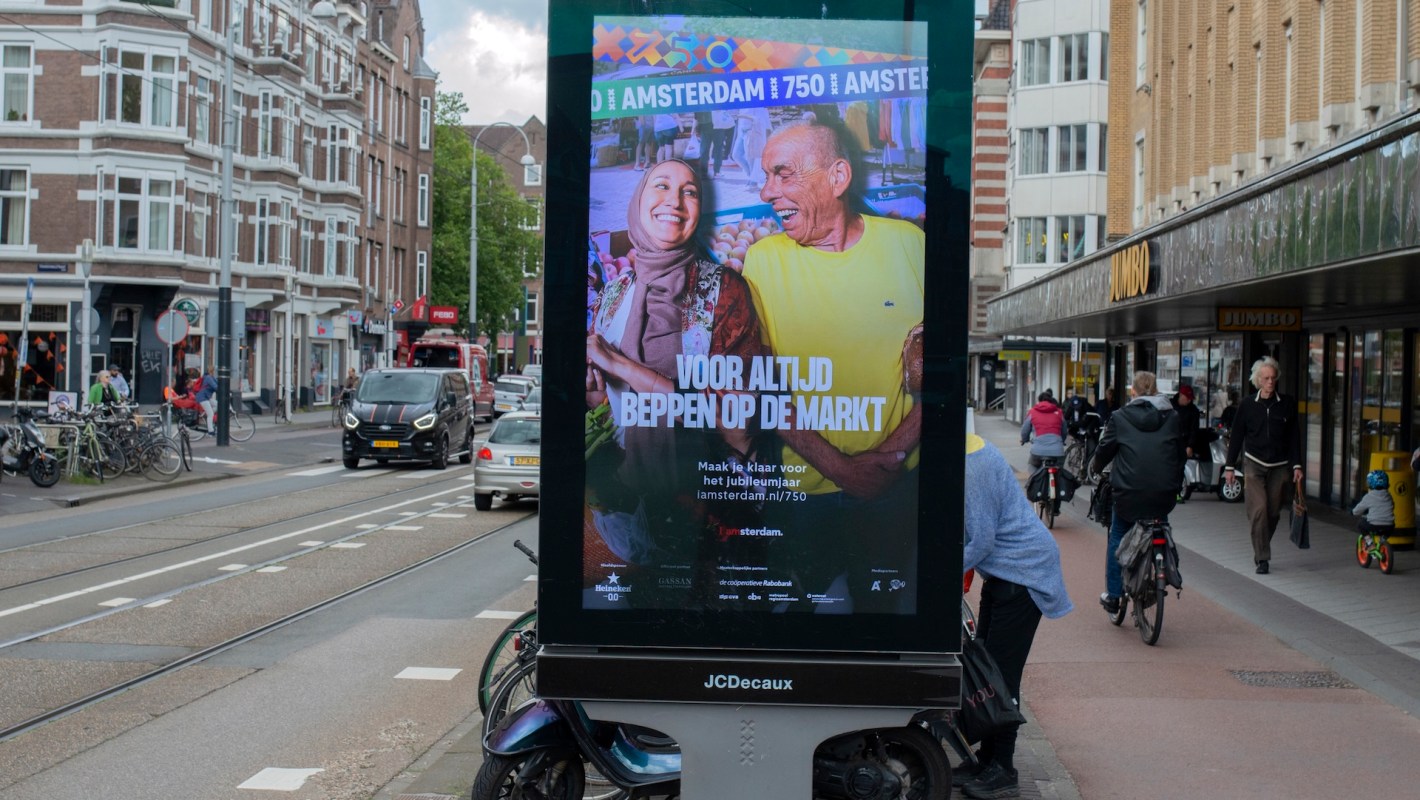
Amsterdam is changing what commuters see on their way to work — and the city hopes it will also change what they crave.
In a world-first move for a capital city, Amsterdam has banned public advertisements for meat, cars, and airlines, removing them from billboards, tram shelters, and metro stations, according to the BBC.
The policy, which took effect May 1, is designed to bring the city's advertising spaces in line with its climate goals.
"The climate crisis is very urgent," said Anneke Veenhoff of the GreenLeft Party, per the BBC. "I mean, if you want to be leading in climate policies and you rent out your walls to exactly the opposite, then what are you doing?"
City officials aim to reach carbon neutrality by 2050 and cut residents' meat consumption in half over the same period — changes that could reduce air pollution, improve public health, and even curb impulse spending.
At one of Amsterdam's busiest tram stops, posters that once promoted chicken nuggets, SUVs, and cheap getaways have been replaced with ads for the Rijksmuseum and a piano concert.
TCD Picks » Quince Spotlight
💡These best-sellers from Quince deliver affordable, sustainable luxury for all




"Everybody can just make their own decisions, but actually we are trying to get the big companies not to tell us all the time what we need to eat and buy," said Anke Bakker of the Party for the Animals, per the BBC. "In a way, we're giving people more freedom because they can make their own choice, right?"
For consumers, the effects may be subtle but meaningful.
Public spaces help shape social norms, and repeated exposure can influence what feels normal to buy, eat, or aspire to. Reducing that pressure could make it easier for people to make choices that are better for their wallets and long-term health.
Joreintje Mackenbach, an epidemiologist, said the ban creates a "fantastic natural experiment," per the BBC, pointing to evidence that London's ban on junk food ads on public transit (reported here by the Guardian) led to reduced purchases of unhealthy products.
Amsterdam is not acting alone. Haarlem, Utrecht, and Nijmegen have also restricted meat advertising, reflecting a broader trend of cities limiting such promotions.
"I think, and I hope, that big polluting companies will be extra scared. And maybe will rethink the kind of products they are selling," activist Hannah Prins said, per the BBC. "I think you can really see that change is possible."

Get TCD's free newsletters for easy tips, smart advice, and a chance to earn $5,000 toward home upgrades. To see more stories like this one, change your Google preferences here.






