


Tesla's loss is shaping up to be a gain for consumers looking to make their homes more resilient amid an increasingly chaotic American energy landscape.
Although increasingly partisan rancor dominated the news cycle in 2025 and so far this year, a surprisingly mundane "kitchen table" issue remained consistently in the headlines.
On Thursday, Politico's E&E News reported that sharply rising energy costs were "set to dominate state politics" in the lead-up to November's midterm elections.
As the outlet noted, electricity prices began skyrocketing in 2025 and continue to rise; New York Focus cited a staggering 39% increase for some ratepayers last year. But unbearable costs are only part of a problem attributed primarily to an influx of new, power-hungry data centers.
Americans faced a higher rate of power outages in 2024 than at any time in the previous decade, and in July, the Department of Energy issued an alarming warning: Blackouts "could increase by 100 times in 2030" if grid capacity isn't expanded dramatically.
Cole Ashman, an engineer who collaborated on Tesla's Powerwall and SPAN's Smart Electrical Panel, founded Pila Energy to make energy resilience accessible and affordable.
While Tesla dabbles in everything from electric vehicles and solar panels to batteries and robots, Pila Energy is laser-focused on perfecting a shockingly inexpensive home battery backup.
Battery backups aren't totally new, but the release of Tesla's Powerwall in 2015 popularized the technology. In recent years, extreme weather has become an escalating concern, prompting more households to invest in backup power.
Save $10,000 on solar panels without even sharing your phone number Want to go solar but not sure who to trust? EnergySage has your back with free and transparent quotes from fully vetted providers in your area. To get started, just answer a few questions about your home — no phone number required. Within a day or two, EnergySage will email you the best options for your needs, and their expert advisers can help you compare quotes and pick a winner. Solar panels can save you more than $50k over their 25-year lifespan, and EnergySage can help you save as much as $10k on installation. Which begs the question — isn't that worth an email or two? |

A reliable home battery backup system can be a literal lifesaver, particularly in areas with frequent blackouts. Pila's system allows users to bank power for emergencies and, with or without solar panels, can cut costs by storing off-peak energy purchased at lower rates.
However, the cost of traditional generators or modern battery backups can be incredibly prohibitive — the latter can cost up to $20,000 and require professional installation and permits, which could easily double the initial equipment expense.
|
Do you have a backup power system at your home? Click your choice to see results and speak your mind. |
 Not at all 🙅
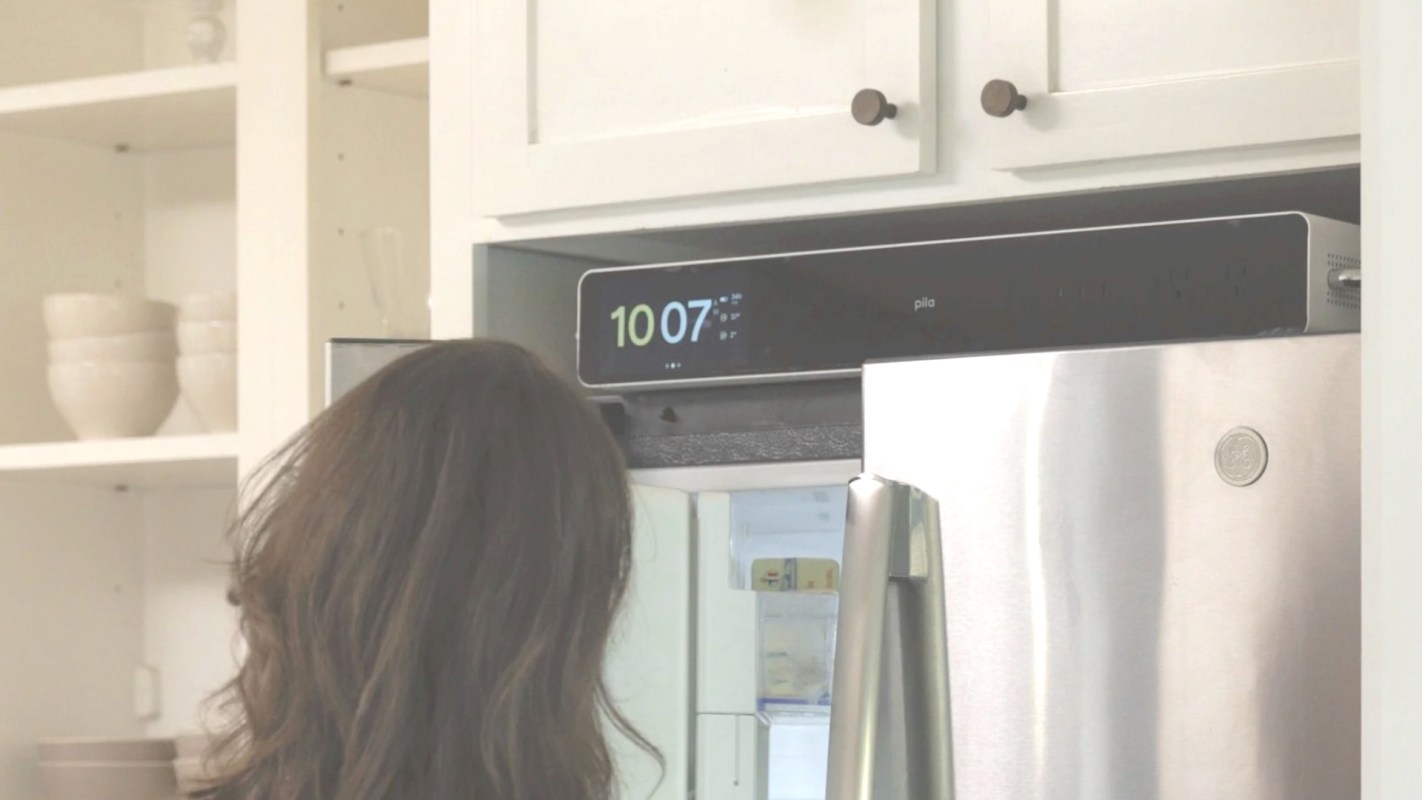
 Pila developed the world's first mesh home battery, a sleek, slim, sophisticated device that could easily be mistaken for a high-end laptop. Like mesh Wi-Fi systems, Pila batteries can form a network of power nodes to broaden their range.
Moreover, Pila's innovation — which is easy to pack for a move — works for renters and homeowners alike, allowing users to preserve power with a single battery and reducing costs.
Unlike standard home battery backups, Pila's first-of-its-kind offering is plug-and-play and requires no electrician. Ease of use is a consistent theme, with extensive smart-home integration options, but the pricing is truly revolutionary.
Pila's Mesh Home Battery is expected to ship early this year, and preordering for $99 locks in a $1,299 price. A single battery can power a refrigerator for 32 hours, but Ashman emphasized the importance of resilience amid increasing blackouts.
"If power goes out, [Pila's Mesh Home Battery] will automatically disconnect from your home and turn that kitchen area or your den … into an island of power," the founder explained.

Get TCD's free newsletters for easy tips to save more, waste less, and make smarter choices — and earn up to $5,000 toward clean upgrades in TCD's exclusive Rewards Club.






