


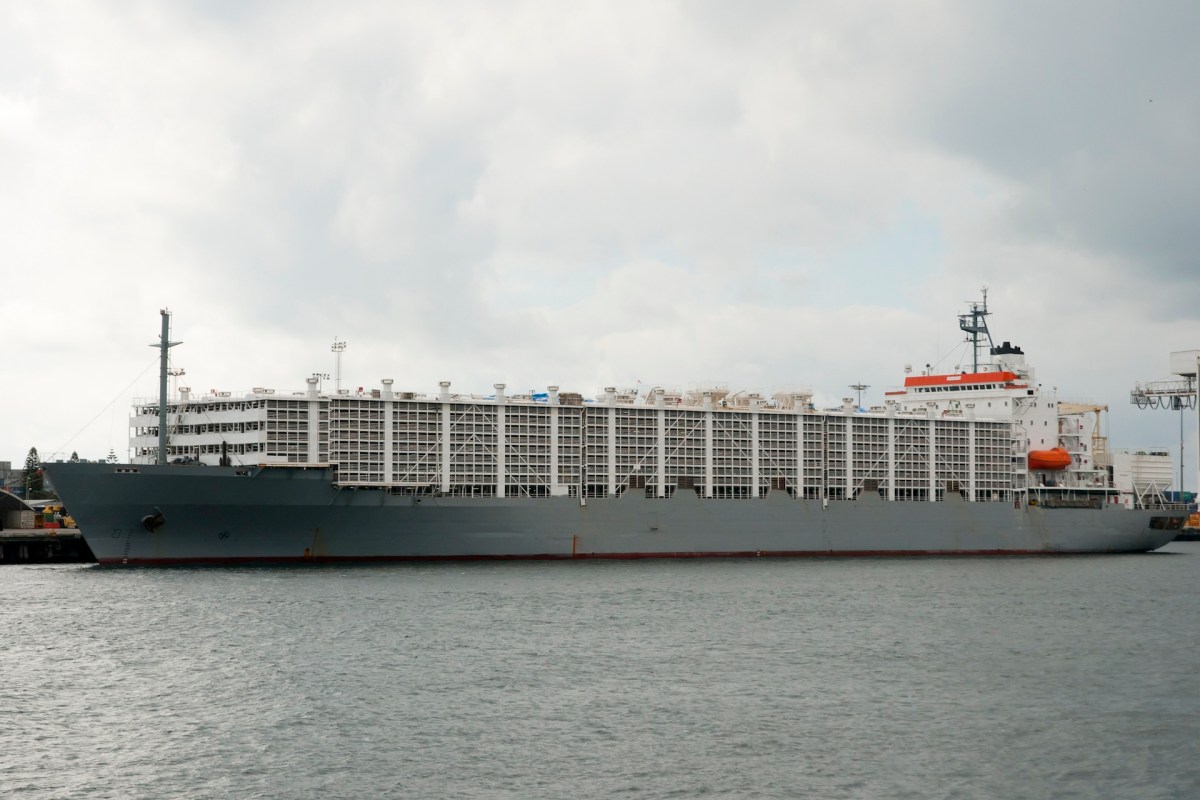
Nearly 3,000 cows were trapped aboard a livestock vessel stranded at sea for months on end, prompting calls for systemic reform and putting the dangers of global live animal exporting in the spotlight.
What's happening?
Per a recent piece by World Animal Protection, the Spiridon II departed Uruguay for Turkey carrying 2,900 cows — with roughly half of them pregnant. Administrative problems prevented the ship from unloading its cargo, forcing a 30-day return voyage that extended the trip over two months.
Reports indicate that 58 cows died during the ordeal, while approximately 140 pregnant cows gave birth or miscarried. Around 50 calves reportedly survived aboard the ship, though the fate of 90 others was unknown at the time of publication.
"What is happening aboard the Spiridon II is not an accident — it is the result of an intensive animal production system that ignores the basic truth that animals are sentient beings," said Ricardo Mora, campaign strategist at World Animal Protection.
"This tragedy must be a turning point."
There have recently been similar disasters, including MV Baijah in 2025 and MV Gulf Livestock 1 in 2020 — pointing to ongoing issues across the industry.
TCD Picks » Quince Spotlight
💡These best-sellers from Quince deliver affordable, sustainable luxury for all




Why is animal export concerning?
The live export system is delaying progress toward more humane food production that better protects workers, animals, communities, and the planet's health. Ships transferring live animals face double the risk of total loss compared to standard vessels.
Long-distance animal transport can lead to the spread of infectious diseases and antimicrobial resistance across borders, threatening public health worldwide.
Additionally, cruelly confining animals aboard unstable vessels denies them the ability to express natural behaviors and exposes them to extreme temperatures, inadequate food, dehydration, and disease.
What's being done about live animal exports?
Australia has legislated an end to live sheep exports by sea, acknowledging the suffering caused by extended trips in extreme conditions. According to World Animal Protection, in 2024, the U.K. became the first European nation to ban all live exports for slaughter and fattening.
For their part, World Animal Protection advocates for transitioning toward plant-based protein sources to support more humane food systems. Consumers can also do their part by choosing products from local farms that adhere to transparent welfare standards.
|
Do you think the construction industry is too wasteful? Click your choice to see results and speak your mind. |
 Definitely 👍
Get TCD's free newsletters for easy tips to save more, waste less, and make smarter choices — and earn up to $5,000 toward clean upgrades in TCD's exclusive Rewards Club.







