


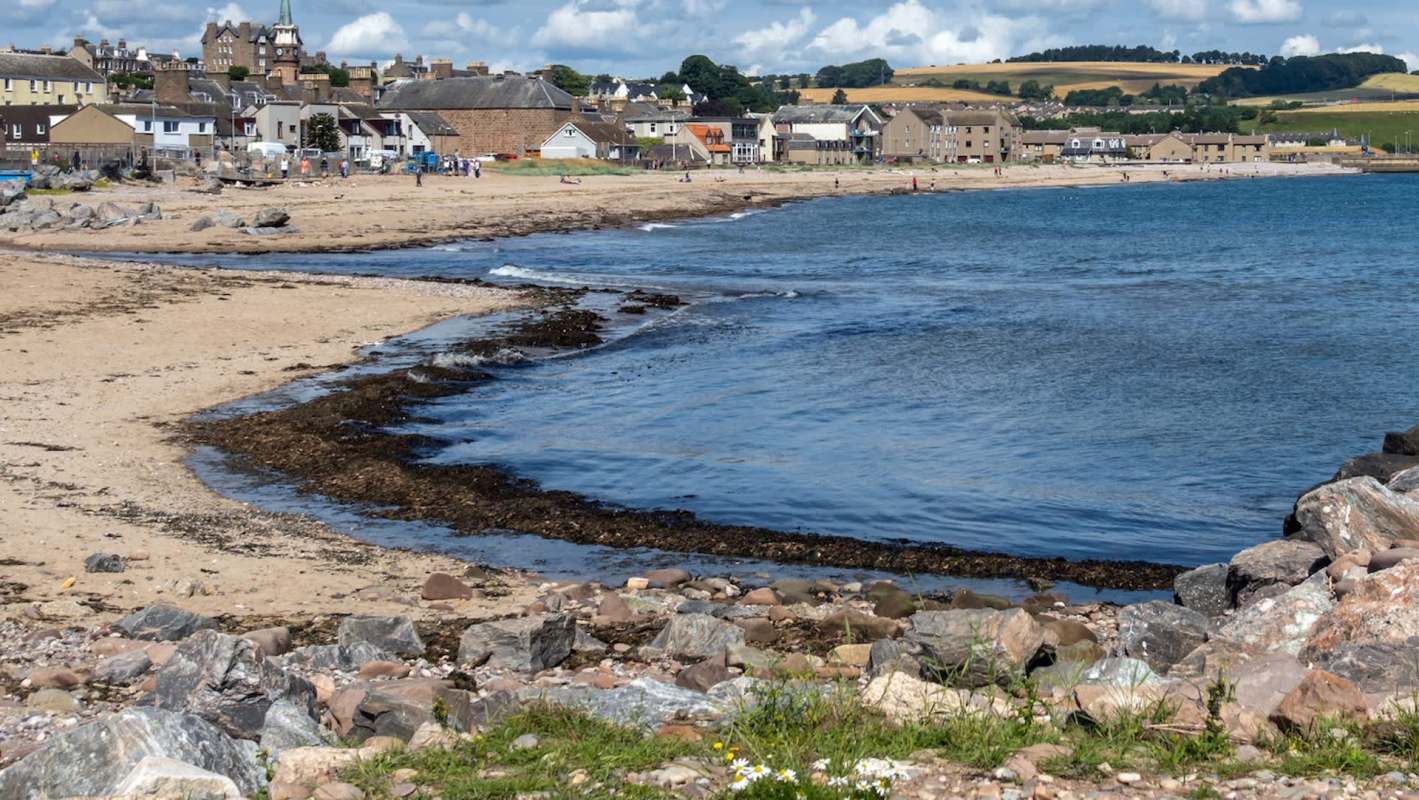
Pieces of a seldom-seen creature from the North Sea's twilight zone have been found on a beach near Aberdeenshire, Scotland, according to the BBC.
The discovery spotlights that our understanding of the seas' depths and the creatures in it remains murky.
A deep-sea creature measuring 11 feet washed up on a Scotland beach — and the shocking part? It only had seven arms! 😱👇
Posted by Philippine Queenology on Friday, December 12, 2025
What's happening?
The sucker-laden remains belong to a blob-like, seven-armed octopus that lives at depths of up to 3,900 feet. Females can be large, weighing 165 pounds, but males are much smaller, the Monterey Bay Aquarium Research Institute reported.
Strangely, one of the male's seven appendages also serves as a reproductive organ, the BBC added.
East Grampian Coastal Partnership marine biologist Lauren Smith called the species — ID'd as Haliphron atlanticus in biology books — "remarkable" and "incredibly rare."
"These were something we clearly hadn't seen before, with a large diameter and big suckers — far too big for the common curled octopus we see around the shore here," Forvie National Nature Reserve manager Catriona Reid added in the story.
TCD Picks » Quince Spotlight
💡These best-sellers from Quince deliver affordable, sustainable luxury for all




The arms were found on the reserve.
Why is the sighting important?
Experts interviewed by the BBC aren't sure why the octopus pieces rose from the creature's dim dwelling layer and washed ashore. It could have died and been pushed by currents or caught by fishing rigging. Often, rare sightings are random occurrences with no clear cause.
But in some cases, the appearances can be a signal that something is amiss. So-called doomsday fish sometimes turn up before disasters such as earthquakes. As a result, the oarfish is considered a bad omen by many.
But researchers don't have to look very deep to see some problems happening in our oceans that can impact most sea creatures and even humans. The National Oceanic and Atmospheric Administration reported that our seas absorb 91% of the planet's excess heat, contributing to rising coastlines, fishery changes, and coral bleaching.
|
Do you think we still have a lot to learn from ancient cultures? Click your choice to see results and speak your mind. |
 Definitely 👍
 Dying reefs lower fish harvests, reduce food supplies, and lower economic value for an industry crucial to millions of people in the Philippines and elsewhere, nonprofit Oceana reported.
What's being done to help?
The octopus arms have been frozen and preserved for future analysis, according to the BBC. Better understanding the species can help researchers learn more about how human activity is impacting it.
On land, trail cameras have become powerful tools in helping experts observe animals, often capturing rare creatures. Some are rebounding after being endangered, while others are an expanding threat. Staying informed about endangered and invasive species can help you find ways to make an impact, even at home. A rewilded yard can be a boon for challenged pollinators, for example.
And sometimes, as is the case with the octopus arms, evidence emerges from unlikely places.
"The discovery highlights both the scientific value of community wildlife reporting and the enduring mysteries of the deep ocean," Smith said in the BBC's report.

Get TCD's free newsletters for easy tips to save more, waste less, and make smarter choices — and earn up to $5,000 toward clean upgrades in TCD's exclusive Rewards Club.







