


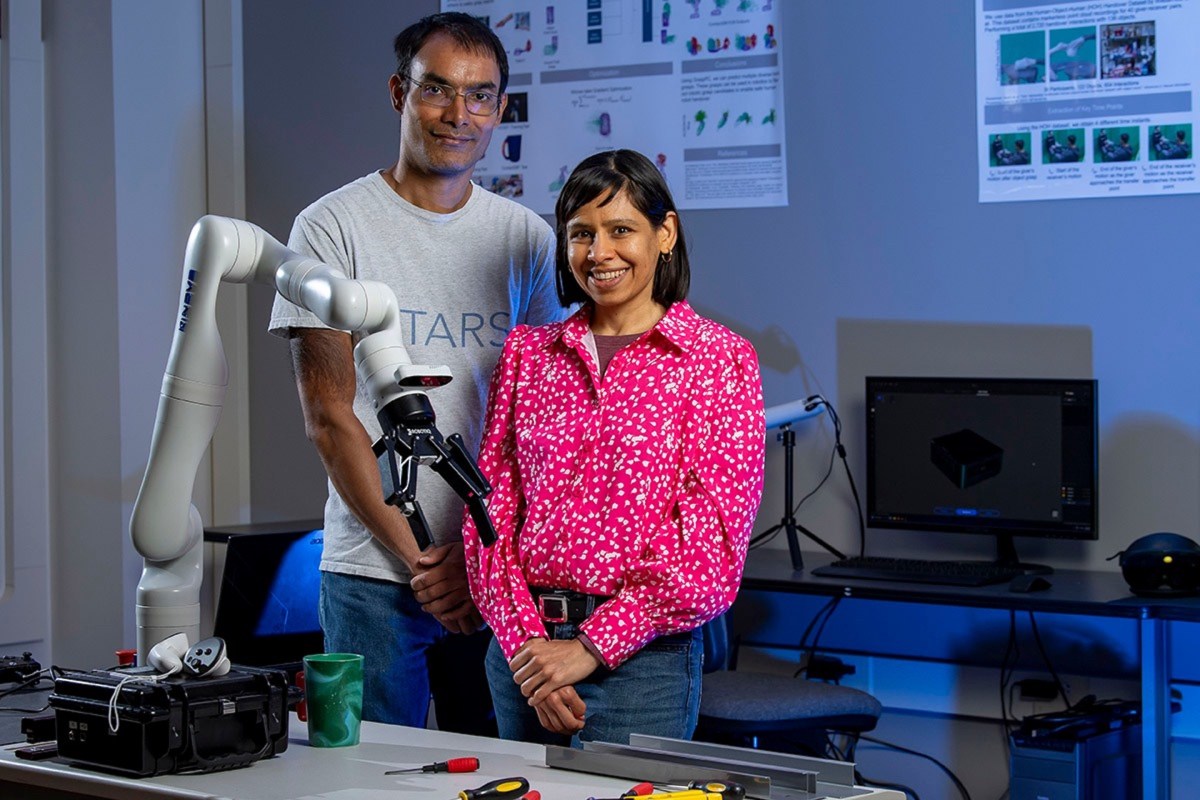
Can humans and robots work together?
Two Wright State University researchers are betting on this partnership to transform how scrap metal is recycled into new products, and the National Science Foundation has awarded the project nearly $3 million to get it off the ground.
Natasha Banerjee and Sean Banerjee, associate professors in the Department of Computer Science and Engineering at Wright State, are heading up the effort, with four other institutions on board to develop a "recyclofacturing" system, a university report explained.
"When a washer or refrigerator breaks down, we take it to a metal recycling facility, where traditionally they're shredded on-site into scrap that gets shipped overseas for processing," said Natasha Banerjee.
"What we propose is that if large portions of those are intact and usable, workers on-site at the recycling plant can make small products from them. Why not fabricate on-site, keeping manufacturing in the U.S. and in the local community?"
The United States is the largest exporter of steel scrap in the world, according to steel industry analyst MEPS International. In 2024, it exported around 16.4 million tons to other countries.
TCD Picks » Quince Spotlight
💡These best-sellers from Quince deliver affordable, sustainable luxury for all




In addition, research shows that only around 21% of all residential recyclable materials are actually being recycled, with 79% heading into landfills, which are notorious for planet-warming methane pollution.
The project aims to bolster domestic manufacturing by equipping facilities with advanced technologies such as artificial intelligence and human-robot collaboration, the report noted.
According to Natasha Banerjee, they're looking to focus "on the ways robots can help people so that people can maintain their autonomy. If humans and robots can collaborate, there'll be a successful outcome."
At these facilities, workers would be trained as "recyclofacturers" using AI-driven design tools, virtual reality headsets, and collaborative robots to help with assembly and welding, according to Wright State's report.
|
Do you worry about robots taking away our jobs?
Click your choice to see results and speak your mind. |
 Absolutely 💯
 "We're driving new research in using technology that's Gen Z-friendly to assist recycling plant workers in refabrication," Natasha Banerjee added.
This NSF grant dovetails with the introduction of the bipartisan CIRCLE Act by congressional representatives Tom Suozzi and Bill Fitzpatrick that seeks to boost investment in an advanced recycling infrastructure across the country.
Harnessing waste metal through investment in advanced recycling technologies, as well as building adjacent manufacturing facilities like the Banerjee research group proposes, could strengthen domestic supply chains and keep waste from piling up and polluting the environment.
According to the Environmental Protection Agency's Recycling Economic Information study in 2020, the recycling industry provided 681,000 jobs, along with billions in wages and tax revenue, not to mention the eco-friendly nature of reducing waste and strengthening a circular economy.
"Millions of pounds of recyclable material are landfilled or incinerated every year just because of system inefficiencies and insufficient infrastructure," Suozzi said in a Sustainability Magazine report.
"Expanding the recycling system is a commonsense fix for both the recycling industry and the environment."

Join our free newsletter for weekly updates on the latest innovations improving our lives and shaping our future, and don't miss this cool list of easy ways to help yourself while helping the planet.






