


Induction stoves may have once been dismissed as a clunky alternative to gas cookers, but they are suddenly one of the most popular kitchen appliances.
One Redditor had a question about them while apartment hunting, admitting they used to rule out places with induction stoves because YouTube cooking channels swore by gas, especially for cooking with a wok.
Now, after seeing induction stoves pop up in more kitchens, they asked if the tide has turned.
"Induction stoves were not taken seriously for the longest time," they observed.
TCD Picks » Induction Cooking
💡Discover the induction option that’s just right for your needs and your home


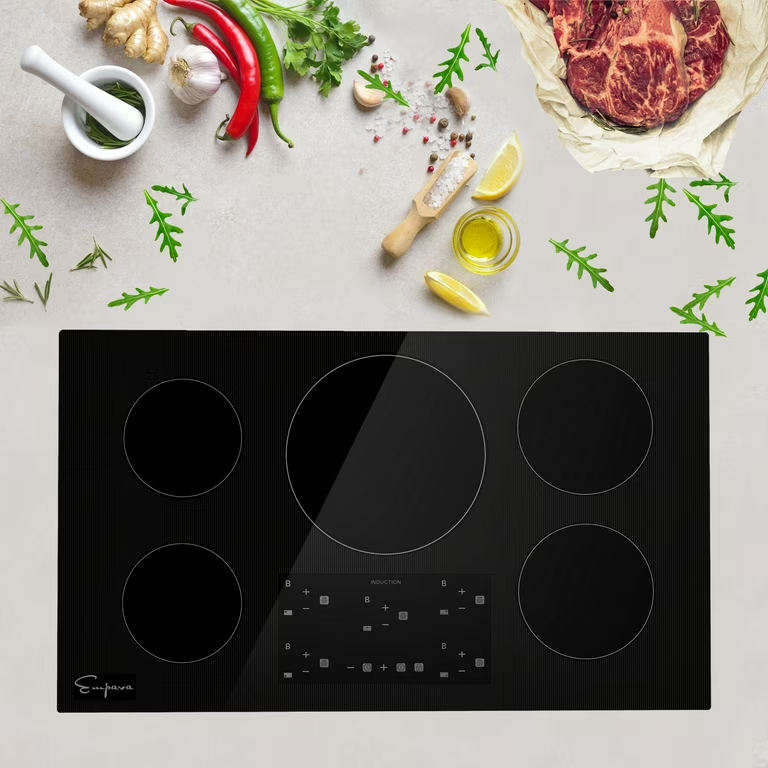

Induction stoves are increasingly seen as a cleaner, more efficient way to cook compared to gas or electric coil stoves. They heat pans directly using electromagnets, which keeps kitchens cooler, cuts down on energy bills, and allows for lightning-fast temperature control.
While many federal tax incentives for green upgrades are set to expire at the end of 2025, the rebate program is also helping homeowners save, and it will continue until 2031 or funds run out. With the Inflation Reduction Act, households can get up to $840 off the cost of a new induction range.
Ultimately, taking advantage sooner rather than later could mean hundreds in savings on a full induction upgrade. And for renters or those not ready to swap out a full appliance, plug-in induction burners are widely available and start at just $50.
In the Reddit thread, one commenter predicted, "Once people learn more about them and the prices start to drop, they'll become more popular. I think they're as good as gas and much more efficient than conventional coil and glass top stoves."
Save $10,000 on solar panels without even sharing your phone number Want to go solar but not sure who to trust? EnergySage has your back with free and transparent quotes from fully vetted providers in your area. To get started, just answer a few questions about your home — no phone number required. Within a day or two, EnergySage will email you the best options for your needs, and their expert advisers can help you compare quotes and pick a winner. Solar panels can save you more than $50k over their 25-year lifespan, and EnergySage can help you save as much as $10k on installation. Which begs the question — isn't that worth an email or two? |

For some, the appeal of induction is about safety and peace of mind. Unlike gas, induction eliminates worries about whether a burner was left on and avoids the nitrogen dioxide emissions that come from open flames.
"I live in France, where almost every home has an induction," one commenter wrote. "They completely avoid ever having to worry about 'did I leave the gas on?' (which is a constant fear of mine)."
|
What factor would make you most likely to get an induction stove? Click your choice to see results and speak your mind. |
 Energy savings 💰
 For others, induction is all about the speed, efficiency, and the simple fact that cleanup is much easier.
Commenters who've tried both gas and induction sang praises about induction.
"We went from gas to induction back to gas, and can't wait to go back to induction," one wrote. "No heat, easier, more consistent and faster heat control, and much easier clean up."
With more stories like these surfacing, induction seems to be making the leap from niche to mainstream. For homeowners, renters, or anyone in between, the timing to make the switch may never be better.

Join our free newsletter for easy tips to save more and waste less, and don't miss this cool list of easy ways to help yourself while helping the planet.






