


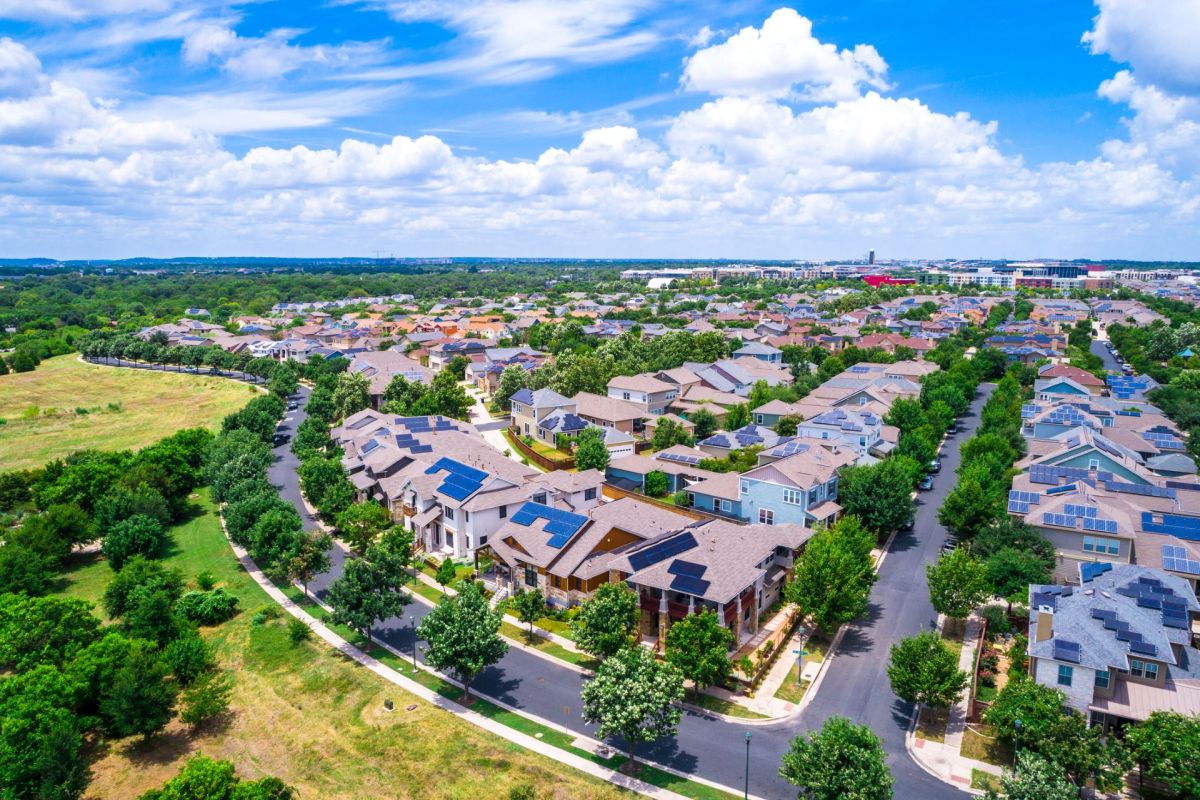
A growing community in Austin, Texas, is tapping into geothermal energy to provide its residents with heating and cooling that is said to provide up to $2,000 in utility bill savings each year.
Whisper Valley is filled with modern homes, quiet streets, and rooftops outfitted with solar panels, while underneath lies a hidden network of pipes and man-made reservoirs that tap into the Earth's natural warmth, according to a report by the Texas Tribune.
When it's completed, this community should consist of around 7,500 homes, three schools, and various commercial spaces that are all able to connect to the geothermal energy network run by EcoSmart Solutions.
Local resident Michael Wilt, who has lived in the community since its first phase six years ago, told the Tribune that he has never seen energy bills over $70 during the summer months, although this doesn't include the $60 monthly fee.
"It absolutely works better than the HVAC system I had in the house that I was renting before purchasing the house," Wilt said. "The geothermal system was definitely part of the appeal, but really it was kind of the entire 'agrihood' feeling of the whole development."
Although geothermal only accounts for around 1% of global energy demand, it holds potential for meeting 15% of global electricity demand growth by 2050, the International Energy Agency explained.
TCD Picks » Quince Spotlight
💡These best-sellers from Quince deliver affordable, sustainable luxury for all




As that technology improves and costs drop, geothermal energy's technical potential earns it a spot that's second only to solar power among renewable sources, and according to the IEA, it could meet global electricity demand 140 times over.
Most geothermal projects are concentrated in a few countries with easily accessible and high-quality resources, such as the United States, Iceland, and Italy.
However, the IEA said that advancements in geothermal technology are opening up opportunities in more regions across the world.
Techniques such as horizontal drilling and hydraulic fracturing that were adapted from the oil and gas industry are now helping to advance this clean energy resource.
|
Would you be more likely to get an EV if it helped cut your energy costs? Click your choice to see results and speak your mind. |
 Big time 👍
 "Today, with the advances in modern drilling, we are now able to tap into that heat almost anywhere," Drew Nelson, vice president of programs, policy, and strategy at the Houston-based Project Innerspace, told the Tribune.
"As more projects are implemented, costs will continue to come down," he added.
The Whisper Valley homes that are connected to the geothermal network use heat pumps that work by moving heat around in an energy-efficient way instead of burning through energy to change internal temperatures, as radiators and air conditioners do.
Although the costs are still high – it costs around $40,000 per home to install heat pumps and connect to the network – the Whisper Valley community is paving the way for future geothermal projects that help reduce planet-warming emissions.
"We can't keep doing the same things," Michael Thurman, one of the community's developers, told the outlet in regards to lowering emissions and leaning into more sustainable energy sources.
"This isn't tough to do, but you have to have core values that make you want to do it."

Join our free newsletter for weekly updates on the latest innovations improving our lives and shaping our future, and don't miss this cool list of easy ways to help yourself while helping the planet.






