


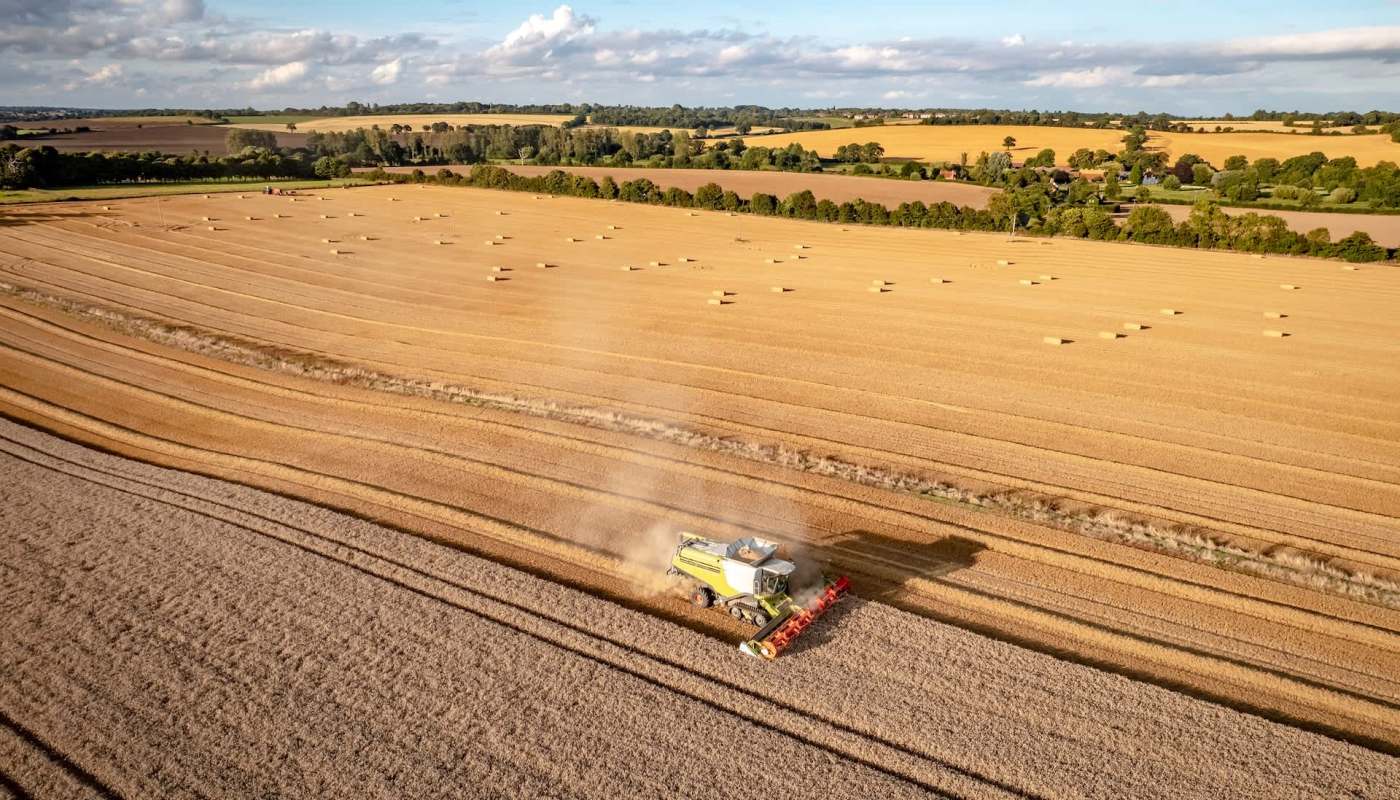
British farmers lost over £800 million ($1 billion) worth of crops in 2025 after scorching temperatures and dry conditions decimated their harvests, The Guardian reported.
What's happening?
The 2025 growing season was among the worst years for U.K. grain production in recent memory.
Spring temperatures soared to historic highs as rainfall nearly vanished, creating dry conditions across the country.
Yields for wheat, oats, barley, and two other staple crops fell 20% compared to the ten-year norm. England saw its second-poorest harvest since record-keeping began in 1984.
"This has been another torrid year for many farmers in the U.K., with the pendulum swinging from too wet to too hot and dry," said Tom Lancaster at the Energy and Climate Intelligence Unit.
"British farmers have once again been left counting the costs of climate change, with four-fifths now concerned about their ability to make a living due to the fast-changing climate," he added.
Since 2020, the country has endured three of its five poorest harvests on record.
Flooding in the winter of 2019-2020 and again in 2023-2024 prevented farmers from planting; scorching summers later destroyed what they managed to plant.
Why are harvest failures concerning?
When crops fail overseas, prices rise everywhere.
Food items affected by weather extremes are already climbing at four times the rate of other groceries.
TCD Picks » Upway Spotlight
💡Upway makes it easy to find discounts of up to 60% on premium e-bike brands




|
Do you think America does a good job of protecting its natural beauty? Click your choice to see results and speak your mind. |
 Definitely 👍
 Prices for coffee, chocolate, milk, beef, and butter jumped roughly 15.6% on average over the past year, compared to an increase of just 2.8% for everything else.
This pattern reaches far outside Britain. Coffee prices spiked after dry spells hit Brazil and Vietnam, and cocoa prices climbed amid intense heat in West Africa.
Since 2020, UK farmers alone have lost over £2 billion ($2.5 billion) to weather extremes.
Many now question whether investing in new plantings is worthwhile, given the unpredictability of yields and income.
American farmers are facing similar pressures as unpredictable weather makes planting decisions increasingly risky.
What's being done about harvest failures?
Farmers are adopting practices that may help soil withstand floods and dry spells.
Sowing cover crops during cooler months builds organic matter in the ground, which helps fields hold moisture when rain is scarce and absorb excess water during storms or floods.
You can support agricultural resilience by buying from local farmers when possible and backing policies that fund adaptation programs. Reducing food waste at home also eases pressure on strained food systems.
Choosing plant-forward meals a few times per week can help decrease demand for vulnerable livestock and grain supplies, a change that keeps more money in your pocket when prices fluctuate.

Get TCD's free newsletters for easy tips to save more, waste less, and make smarter choices — and earn up to $5,000 toward clean upgrades in TCD's exclusive Rewards Club.
Cool Picks




