


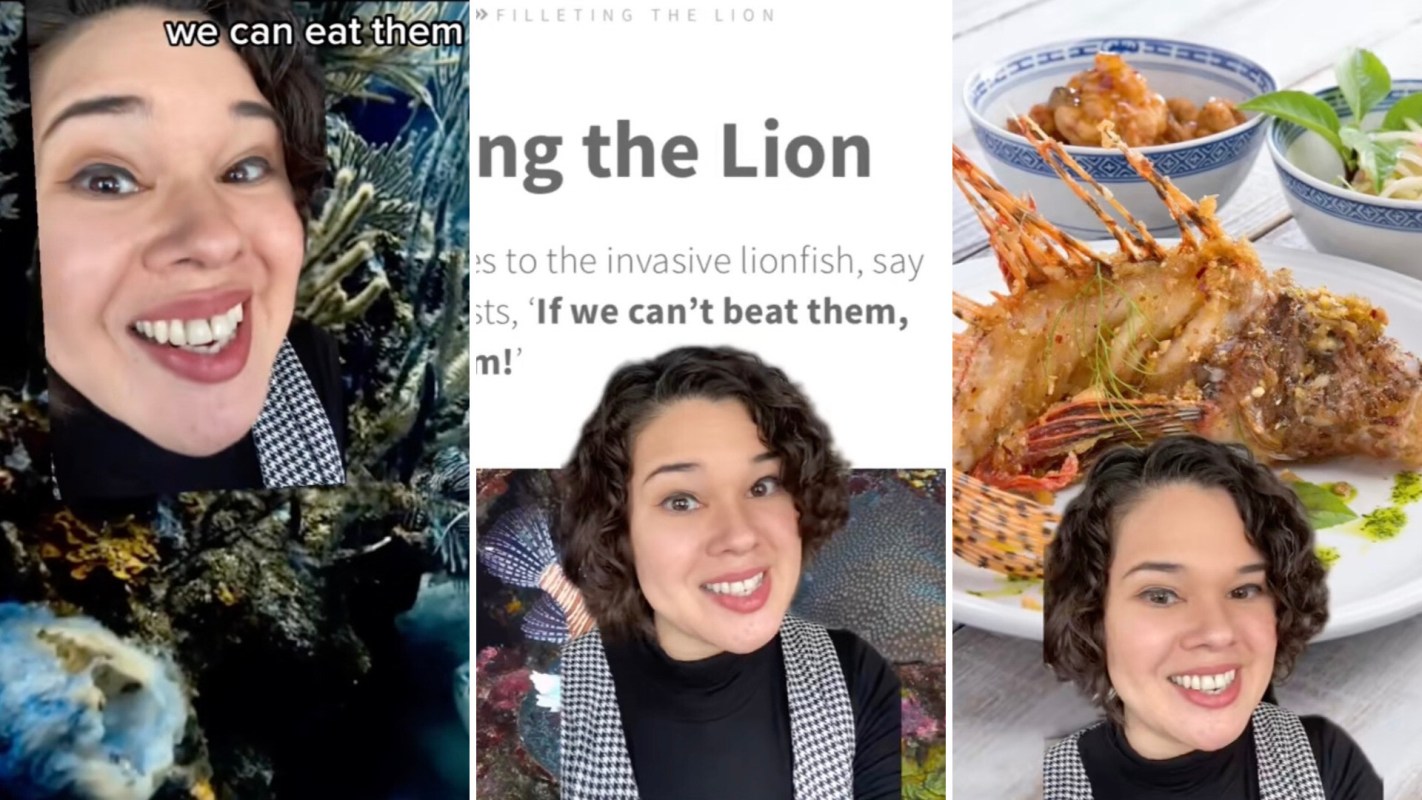
A growing number of chefs, scientists, and ocean lovers are rallying around an unexpected — and surprisingly delicious — solution to a major ecological problem: eating invasive lionfish.
In a TikTok from food writer Kae Lani Palmisano (@kaelanisays), she explains that something as simple as choosing a different entrée can help restore balance to marine ecosystems.
@kaelanisays #stitch with @vagabondartist nurse sharks aren't the only ones who can eat these bad boys! Humans are battling this invasive species by EATING IT! #infotainment #edutainment #foodculture #wildfood ♬ original sound - Kae Lani Palmisano
The short video explains how lionfish, originally native to the South Pacific and Indian Oceans, have taken over huge stretches of the Atlantic.
With no natural predators in these waters, the fish have exploded in number and begun wiping out native species along the Caribbean, Gulf of Mexico, and U.S. East Coast.
But, as the National Oceanic and Atmospheric Administration said: "If you can't beat them, let's eat them."
The species' venomous spines can be safely removed, leaving behind mild, flaky, perfectly edible meat that chefs around the country are now embracing. Some restaurants, like GW Fins in New Orleans, have even started featuring whole fried lionfish as a specialty dish.
Lionfish have become one of the most destructive invasive species in Atlantic waters. They are overrunning coral reefs and devouring native fish populations that coastal communities depend on for food, tourism, and ecological stability.
Finding ways for communities to reduce invasive populations makes the issue feel empowering rather than overwhelming. It's a great way to bring people together around something enjoyable and familiar: food.
Other regions have embraced similar strategies with great success.
Officials have encouraged residents to catch and eat snakehead fish, a famously invasive species now considered surprisingly tasty. Meanwhile, efforts to rebrand Asian carp and promote it as a sustainable seafood option have opened up new markets.
TCD Picks » Quince Spotlight
💡These best-sellers from Quince deliver affordable, sustainable luxury for all




|
Would you buy juice or yogurt made with bruised or misshapen fruit?
Click your choice to see results and speak your mind. |
 If I couldn't tell the difference 🤔
 In Maryland, officials actively urge residents to "bring home as many [blue catfish] as you want" to help protect native crabs and rockfish. These community-driven approaches show how small, everyday choices can make a meaningful ecological impact.
Commenters quickly embraced the advice.
"This is awesome," said one commenter. "Thanks for helping raise awareness. And yes, they are delicious!"
"When I lived in Orlando the local Whole Foods did presentations on how to prep and cook them," shared another.
"What a great way to eat fish in a sustainable way!" said a third.

Get TCD's free newsletters for easy tips to save more, waste less, and make smarter choices — and earn up to $5,000 toward clean upgrades in TCD's exclusive Rewards Club.
Cool Picks




