


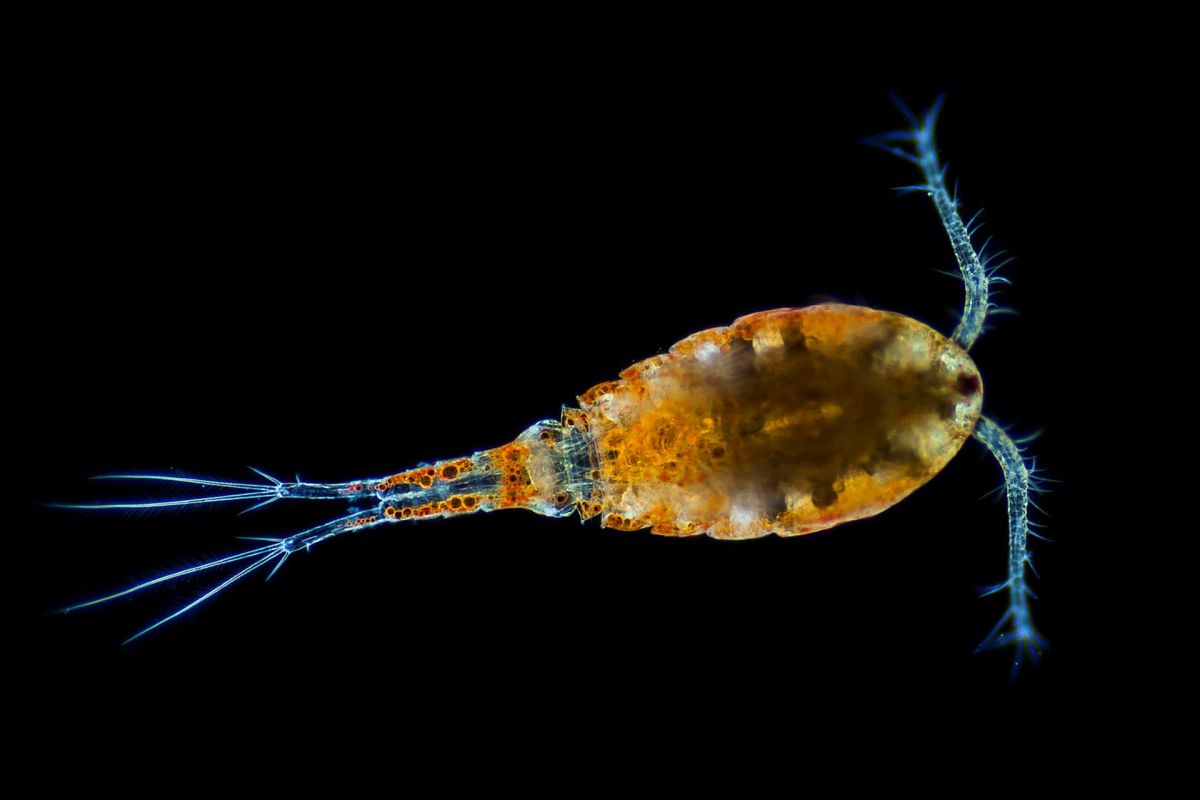
Some of the most powerful animals in the oceans may not inspire awe, but our dinner plates would look a lot different without them.
Now, research published in the American Journal of Physiology-Regulatory, Integrative and Comparative Physiology suggests that the future could be inching closer.
What's happening?
Zooplankton are a group of animals that live in oceans, lakes, and ponds.
As the National Oceanic and Atmospheric Administration and Environmental Protection Agency note, many zooplankton are microscopic, but they pack a punch. They provide vital ecosystem services, recycling nutrients, controlling harmful algal blooms, and maintaining the food web.
Norwegian University of Science and Technology researchers investigated how climate-related environmental stressors, such as warming ocean temperatures, are impacting Calanus finmarchicus copepods, a species of zooplankton that does best in the Atlantic's cold waters.
Perhaps not unexpectedly, they observed the copepods had begun migrating north. Notably, however, they found that males showed a greater stress response than females when exposed to heat and chemical-induced oxidative stress, which can cause DNA and cellular damage.
Why is this important?
Sidonie Rousseau is a Ph.D. student at NTNU's department of biology and has been monitoring C. finmarchicus as part of her doctoral research. In a university release provided to Phys.org, she explained that the species requires more energy to survive at higher ocean temperatures. This, in turn, affects reproduction and survival rates during the winter.
As it stands, females outnumber the males. If males are more vulnerable to oxidative stress, as the study suggests, they could face even higher mortality rates than they already are. This could threaten ecosystem stability, thereby reducing the availability of seafood for the billions of people who rely on it as a significant source of protein.
"Males also use their energy differently than females. For example, they swim more actively and therefore use energy more rapidly. When exposed to oxidative stress, they may run out of energy sooner and die more quickly than the females," said Rousseau.
What does this mean for the future?
While a 24/7 media cycle can make it seem as though researchers are raising alarm bells every time they publish a new study, it's worth investigating critical climate issues to understand how compounding stressors can snowball into bigger problems. This empowers us to adapt to or even reverse troublesome trends, from biodiversity loss to rising sea levels and Arctic ice melt.
TCD Picks » Quince Spotlight
💡These best-sellers from Quince deliver affordable, sustainable luxury for all




"Although our results do not suggest that the Calanus finmarchicus stock is in immediate danger of collapse, they show that the species is vulnerable to rising temperatures, and that this risk may be greater when multiple environmental stress factors occur simultaneously," Rousseau said, per Phys.org.
|
Which of these savings plans for rooftop solar panels would be most appealing for you?
Click your choice to see results and earn rewards to spend on home upgrades. |
 Save $1,000 this year 💸
Get TCD's free newsletters for easy tips to save more, waste less, and make smarter choices — and earn up to $5,000 toward clean upgrades in TCD's exclusive Rewards Club.
Cool Picks




