


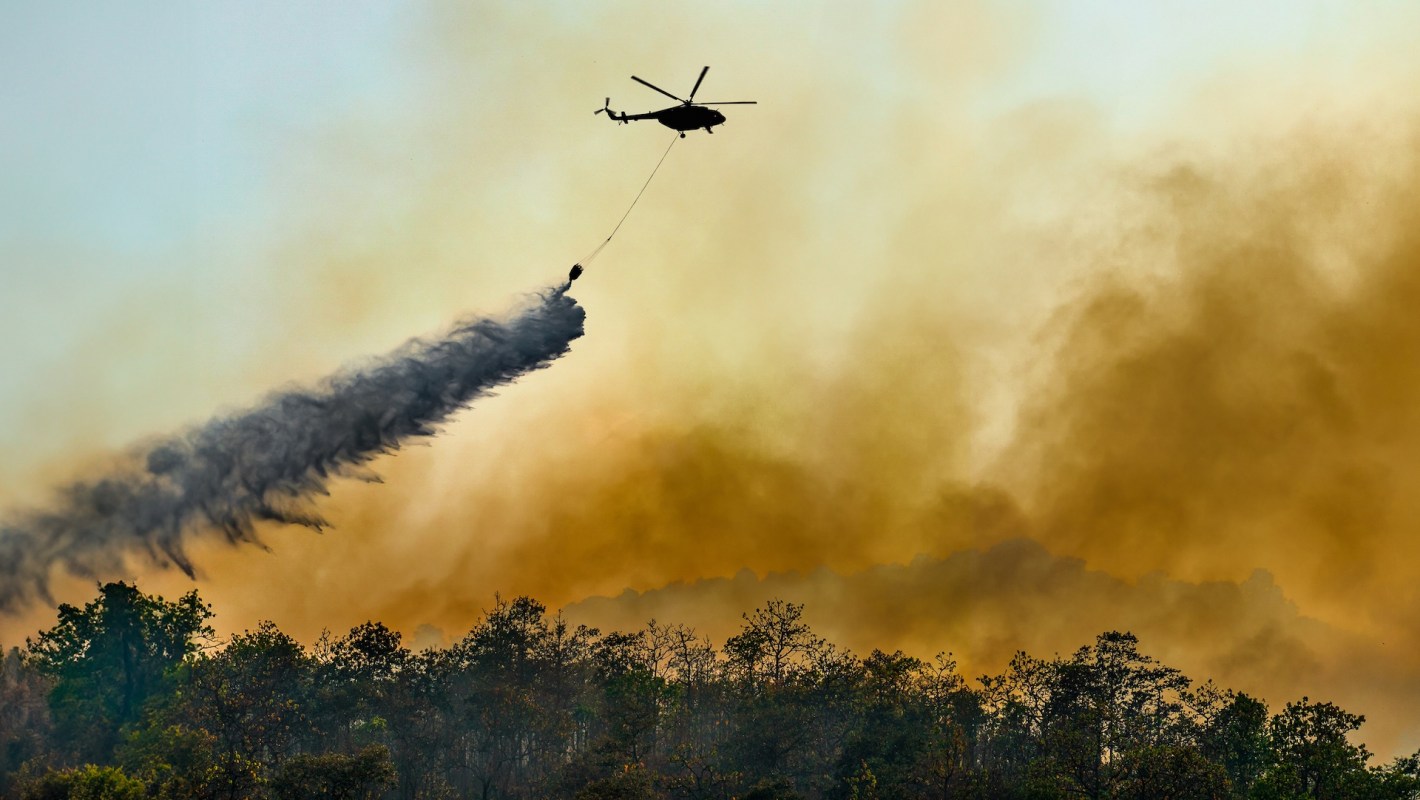
A new wildfire forecast has put the entire western United States on high alert, with projections showing every state in the region facing above-average fire risk this summer, according to Grist.
What's happening?
The latest outlook from the National Interagency Coordination Center reveals a dramatic shift in wildfire danger compared to just a month ago.
Maps released in early March showed only a small pocket of elevated risk in the Southwest. Updated projections now paint a much broader picture, with high-risk conditions stretching across the Southwest, Rockies, Pacific Northwest, and into Northern California.
"We're probably not going to be in great shape this year," said Matthew Hurteau, director of the Center for Fire Resilient Ecosystems and Society at the University of New Mexico, per Grist.
An ongoing snow drought and an early-season heat wave have left large parts of the West dry far earlier than normal. In some areas, snow melted four to six weeks earlier than any previously recorded timeline.
Why is this concerning?
More frequent and intense wildfires threaten homes, businesses, and critical infrastructure, often forcing evacuations and putting lives at risk.
Smoke from these fires can travel for hundreds of miles, worsening air quality and increasing health risks, especially for children, older adults, and people with respiratory conditions.
The economic impact is also significant. In fire-prone areas, insurance premiums have surged, and some homeowners are losing coverage altogether. Businesses can be forced to shut down, while communities suffer financially as tourism and daily life are disrupted.
What sets this year apart is the unprecedented scale. Fire crews typically rely on shifting resources between regions. However, when large swaths of the West face high risk at the same time, that strategy becomes far less effective, leaving crews stretched thin during peak fire season.
The trend is difficult to ignore. Warmer temperatures, prolonged dry periods, and shifting weather patterns are creating conditions where fires can start earlier, spread faster, and burn longer.
TCD Picks » Quince Spotlight
💡These best-sellers from Quince deliver affordable, sustainable luxury for all




|
Which of these savings plans for rooftop solar panels would be most appealing for you?
Click your choice to see results and earn rewards to spend on home upgrades. |
 Save $1,000 this year 💸
 What's being done about it?
Experts say a wetter-than-expected spring could still ease fire risk in some regions, as rainfall helps prevent vegetation from drying out too quickly.
"I'm sure that's what all the fire people are hoping for too, because that would be nice," said Hurteau, per Grist. "But hope is not a great strategy."
As wildfire seasons grow longer and more unpredictable, proactive awareness and preparation are becoming more critical than ever.

Get TCD's free newsletters for easy tips to save more, waste less, and make smarter choices — and earn up to $5,000 toward clean upgrades in TCD's exclusive Rewards Club.
Cool Picks




