


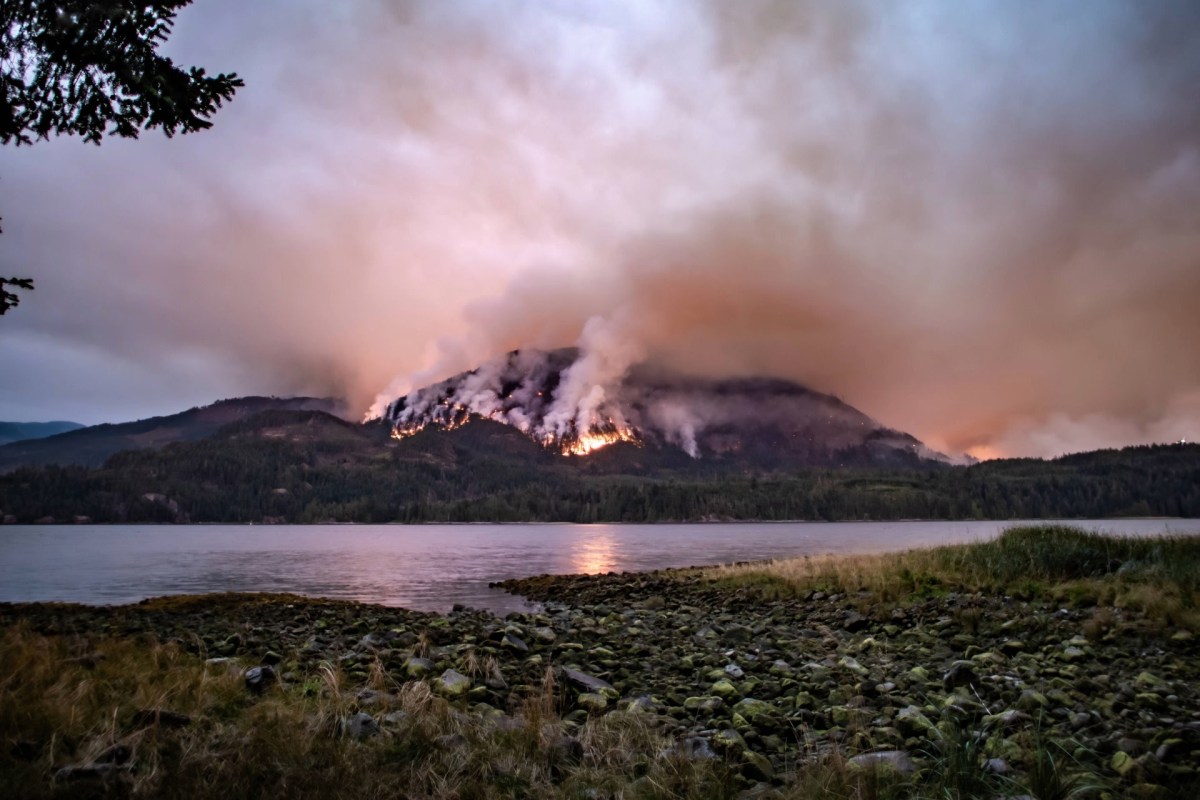
After a momentary respite from much-needed rain, officials have warned that wildfire smoke in British Columbia will again be increasing as temperatures warm in the coming days, the Keremeos Review reported.
As one fire has been placed under control, officials have shifted resources toward Port Alberni to combat the still-raging Mount Underwood fire.
"Our long-term objective is full containment of this incident in all areas where it is safe to do so to avoid any potential challenges down the line," said Karley Desrosiers, fire information officer for BC Wildfire Service, according to the Keremeos Review.
"Summer is kind of winding down but we want to be able to leave this area confident that this fire is not going to pose any issues or risks to the community," she continued.
What's happening?
Despite the recent rainfall, the Mount Underwood fire has burned 3,600 hectares (roughly 8,900 acres) and knocked out power to about 500 customers, according to Global News.
Workers for BC Hydro have been racing to replace about 20 kilometers (12.4 miles) of power line and 56 power poles. Despite these efforts, the customers might not see their power restored until August 30, Global News reported.
About 60 BC Hydro personnel were onsite working to restore power to the remote areas.
Meanwhile, the BC Wildfire Service had 160 firefighters combating the Mount Underwood blaze, an effort that has been made much more challenging due to the rugged, inaccessible terrain, according to Global News.
In response to the blaze, officials have issued two evacuation orders and three evacuation alerts, which remain in effect but are subject to regular review.
"We are in a position to be reevaluating the evacuations and alerts and from our perspectives, we make those recommendations that the risk has reduced," said Desrosiers, the fire information officer, according to Global News.
TCD Picks » Quince Spotlight
💡These best-sellers from Quince deliver affordable, sustainable luxury for all




Why are there so many wildfires this summer?
As global temperatures rise, many areas have seen the high heat, drought, and winds that make for prime conditions for wildfires to spark and spread.
The result has been more frequent wildfires and fires of greater intensity, according to the University of Washington.
"The increase in fire activity over the last several decades has been fairly profound in many regions of the world," said Brian Harvey of UW.
"From the early 1980s to just before the end of the century, there was one year where the U.S. exceeded six million acres burned," he continued. "Since the year 2000, there have now been 13 such years."
With global temperatures projected to continue their cataclysmic rise, experts expect the number and severity of wildfires to continue to increase, as well.
What's being done about wildfires?
To mitigate the current threat from wildfires, governments can invest more resources in forest management and firefighting capabilities. Meanwhile, those looking to protect themselves and their families from the dangers of wildfire-smoke exposure can wear N95 masks and invest in air purifiers for their homes.
However, the only way to reduce the number and severity of wildfires over the long term is to reverse the trend of rising global temperatures. This requires swift and aggressive action aimed at reducing the amount of heat-trapping pollution entering the atmosphere.
While this problem might seem so large as to be insurmountable, there are plenty of actions that can be taken at the local, community, and individual levels to make a difference.
To spur on political change, you can support pro-climate candidates and contact your current elected representatives to urge them to take action.
Taking things a step further, by driving an EV or installing solar on your home, you can reduce planet-heating pollution while also saving money on gas and electricity.
EnergySage makes it easy to compare quotes from vetted local solar installers while ensuring maximum savings from tax credits and other incentives.

Join our free newsletter for good news and useful tips, and don't miss this cool list of easy ways to help yourself while helping the planet.
Cool Picks






