


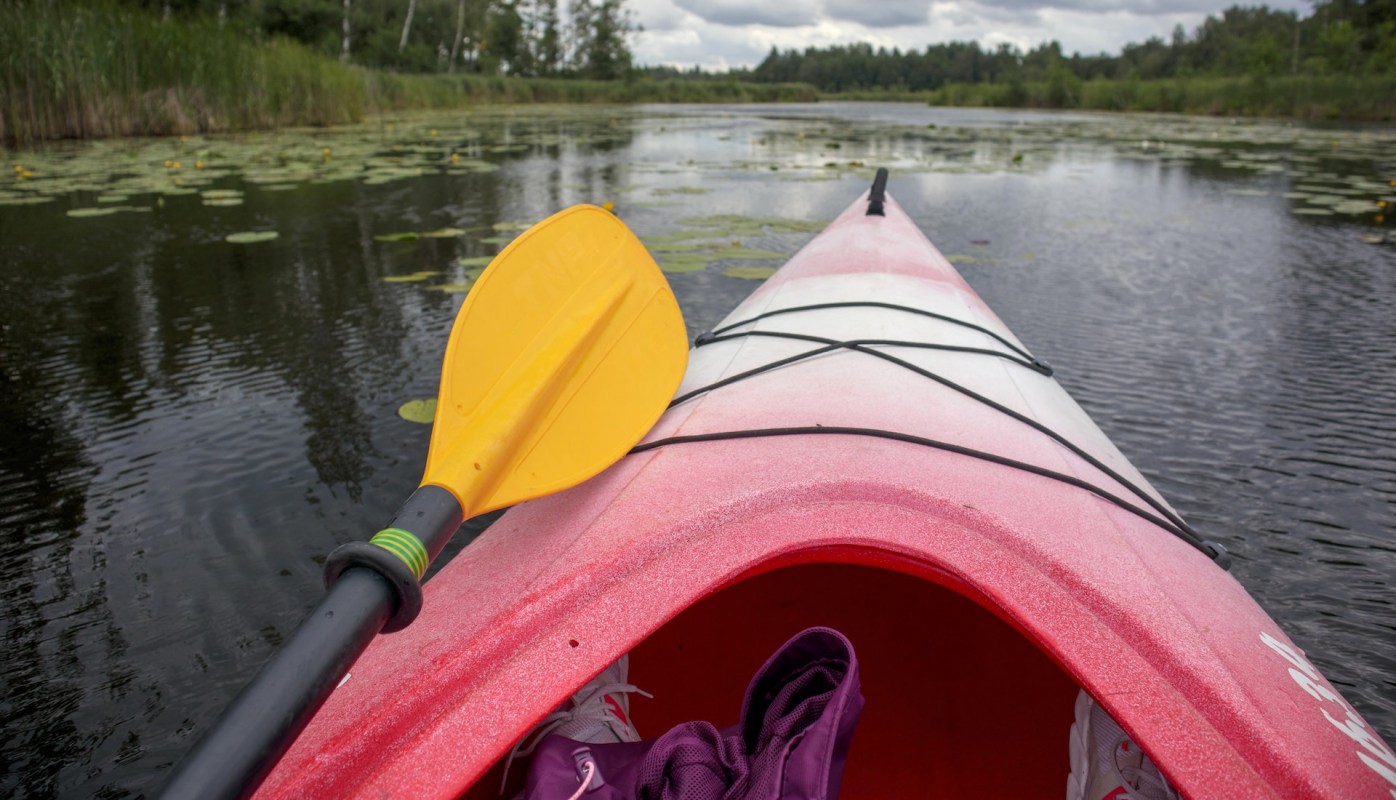
New York Senator Steve Rhoads joined a team of people to take part in the annual Water Chestnut Pull at a pond in Wantagh.
As the New York State Senate reported, the senator teamed up with members of the state's Department of Environmental Conservation, his team of interns, and other community members to remove water chestnut plants from Mill Pond.
The team took to the water in kayaks and pulled 1,600 pounds of the invasive plant from the pond.
Water chestnuts are native to parts of Asia, Africa, and Australia, and, according to the DEC, they were introduced to the U.S. in the mid-1800s as an ornamental plant.
The plants clump together on the water's surface, forming dense mats that block sunlight and remove oxygen from the water, which can create dangerous conditions for other plants and animals found in the waterways.
When talking about the event, Senator Rhoads said in a statement, "Long Island's environmental future depends on what we do today. Mill Pond is a treasured part of our community, and protecting it isn't just a duty — it's a personal responsibility."
Invasive species cause havoc all over the country, destroying native vegetation, impacting crop yields, and causing damage to property and infrastructure. Removing invasive species helps to support native ecosystems, ensuring that they operate properly.
Lots of invasive plants spread to natural ecosystems from people's backyards. The best thing people can do to prevent this is to remove invasive species and cultivate a native garden that helps support native plants and wildlife.
Installing a native plant garden also helps to keep yard maintenance costs low. Native plants are adapted to the local environment and weather conditions, so incorporating them into your landscaping projects reduces the need for irrigation and the application of expensive fertilizers.
As well as reducing your bills, this also protects the natural environment from fertilizer runoff and provides important habitats for pollinators, which are essential for food production.
TCD Picks » Quince Spotlight
💡These best-sellers from Quince deliver affordable, sustainable luxury for all




|
Do you think America does a good job of protecting its natural beauty? Click your choice to see results and speak your mind. |
 Definitely 👍
 There are many ways to make your yard more eco-friendly, from incorporating native plant flower beds to switching your lawn for a more natural one using plants like clover and buffalo grass.
Some people choose to go the whole way and rewild their entire space, creating wildflower meadows or other native landscapes.

Join our free newsletter for good news and useful tips, and don't miss this cool list of easy ways to help yourself while helping the planet.
Cool Picks






