


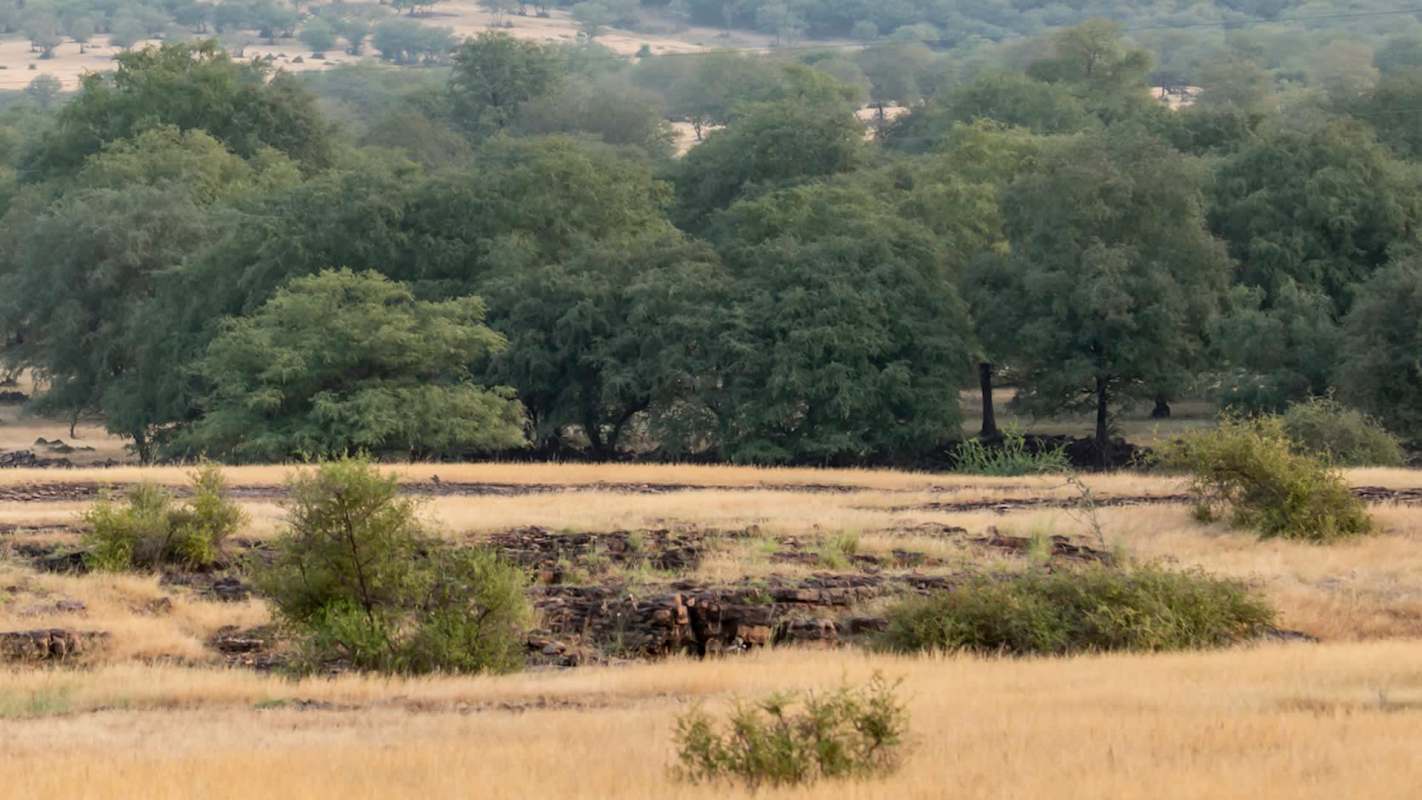
The Tal Chhapar Wildlife Sanctuary in Rajasthan, India, established in 1966, is finally back to a thriving grassland, as reported by Mongabay. Reversing decades of damage from Neltuma juliflora, formerly known as Prosopis juliflora, conservationists revived the land with a concerted effort of new grass and irrigation.
The sanctuary faced recurring droughts, and the sale of a local grass called "mothia" reduced food availability for local wildlife.
It got to the point that the forest department had to intervene.
Retired Assistant Conservator of Forest (ACF) of the Rajasthan State Forest Department, Surat Singh Poonia, said, "The forest department had started feeding the blackbucks because of scarcity of fodder in the sanctuary. That made me think: if this continues, these animals would become dependent on us. What will happen to their wild instinct?"
In 2007, Poonia started the systematic clearance of the invasive species, and his team applied lime to prevent it from regrowing. Slow-growing native trees were later transplanted to grow in its place. It's largely due to Poonia's work that this positive environmental change has happened.
Poonia's team worked on grassland restoration and increasing water availability as well. The forest department bought fodder and applied a water conservation and absorption technique called "contour bunding." Over time, this strategy has increased moisture levels and encouraged more grass growth.
By the end of the decade, the diversity of native grasses increased to 34 species. The migratory bird species rose from 100 to over 330, and all six of India's harrier hawks used the sanctuary as a wintering location. The blackbuck population also increased from around 1,250 to over 5,000.
Tal Chhapar Wildlife Sanctuary is only seven square kilometers (2.7 square miles). For context, that's only double the size of Manhattan's Central Park. If that amount of concentrated effort could be applied to larger zones, natural spaces could thrive, and endangered species' population numbers could bounce back.
While grasslands may not be the most glamorous choice for rehabilitation, they capture a lot of water, store carbon pollution, and help regulate temperatures.
Principal Chief Conservator of Forest Arijit Banerjee added, "An arid…land is not a wasteland. If locals can see how, by restoring or developing a grassland, they can also benefit, it will be worth our efforts."
TCD Picks » Quince Spotlight
💡These best-sellers from Quince deliver affordable, sustainable luxury for all




|
Would you be willing to let your yard grow wild? Click your choice to see results and speak your mind. |
 I already have 😎
Get TCD's free newsletters for easy tips to save more, waste less, and make smarter choices — and earn up to $5,000 toward clean upgrades in TCD's exclusive Rewards Club.
Cool Picks






