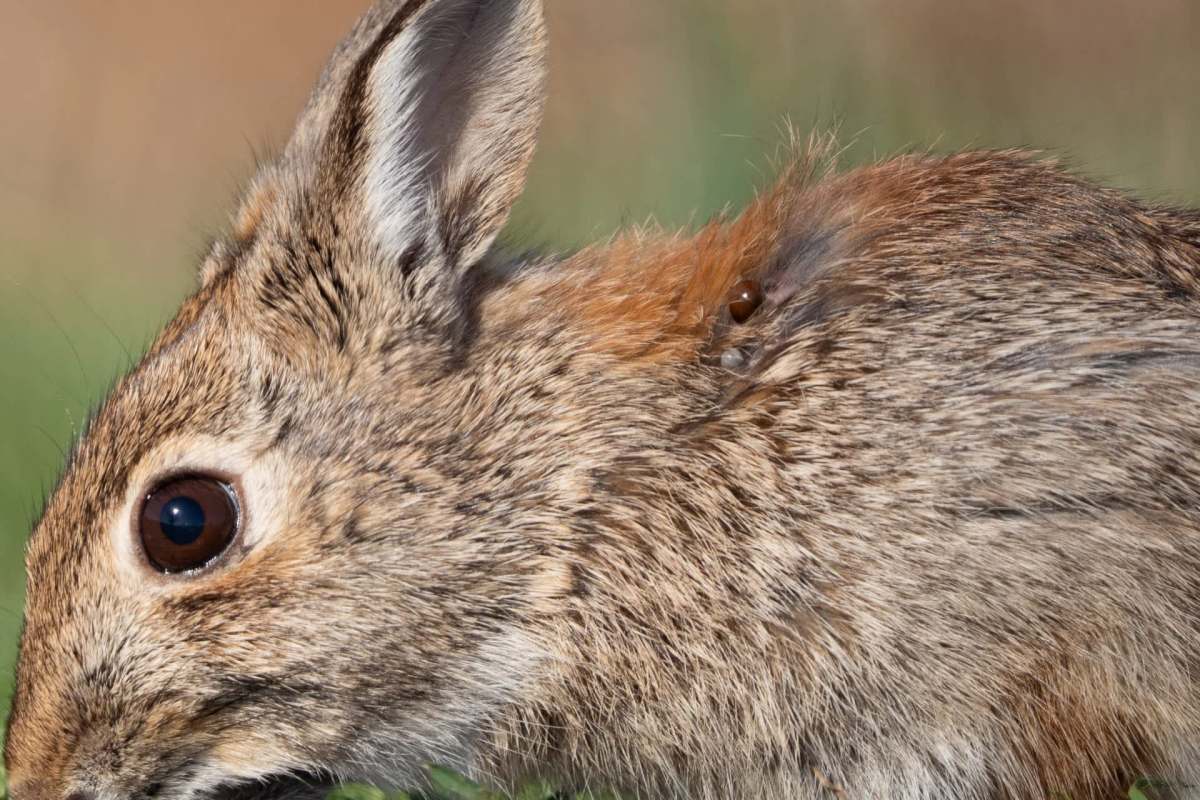
Residents of Fort Collins, Colorado, have been shocked to observe wild rabbits with strange, tentacle-like growths on their faces, NBC-affiliate KUSA Denver reported.
"It looks like it was black quills or black toothpicks sticking out all around his or her mouth," local resident Susan Mansfield told KUSA. "I thought he would die off during the winter, but he didn't. He came back a second year, and it grew."
What's happening?
Officials with Colorado Parks and Wildlife confirmed that the unusual growths have been caused by a virus. The growths are similar to benign tumor cells and do not cause the animals harm unless they grow in sensitive areas like the mouth or eyes, according to KUSA.
Another local resident described the growths as "a scabby-ish-looking growth" over the rabbit's face, per KUSA.
Officials have said that the virus cannot spread to non-rabbit pets or humans but advised keeping a safe distance from afflicted animals.
The growths have been caused by a version of the Shope papilloma virus, which is spread through the bites of insects like mosquitoes and ticks, according to PetMD. Outbreaks of the virus are more common during warm-weather months when insect populations are at their peak for the year.
TCD Picks » Good Store Spotlight
Get 10% off your next purchase with code TCD10




CPW officials say there is no known cure for the condition, per KUSA.
Why is a virus spreading among rabbits important?
As global temperatures rise, the changing conditions affect the population size and geographic range of disease-spreading insects like mosquitoes and ticks. While the Shope papilloma virus afflicting wild rabbits in Colorado does not pose a known risk to human health, plenty of diseases carried by insects do.
Mosquito-borne illnesses infect 700 million people per year, or roughly one out of every ten people on the planet, killing about one million people every year, according to the book Zika Virus Disease: From Origin to Outbreak, accessed via ScienceDirect.com.
As average temperatures increase, more and more areas become hospitable to disease-carrying varieties of mosquitoes.
TCD Picks » Quince Spotlight
💡These best-sellers from Quince deliver affordable, sustainable luxury for all




|
Do you worry about having toxic forever chemicals in your home?
Click your choice to see results and speak your mind. |
 Majorly 😥
 Malaria, once considered a disease afflicting only low-lying areas, has been spreading to higher elevation regions as rising temperatures make those areas hospitable to malaria-carrying mosquitoes, according to a 2024 report by the BBC.
"Malaria is very much thought of as a lowland disease," said Paul Tambyah, president of the International Society for Infectious Diseases, according to the BBC. "But now the definition of lowland is creeping upwards as temperatures get warmer, so mosquitoes are able to survive at higher altitudes."
Rising temperatures have also impacted the spread of mosquito-borne diseases in unexpected ways.
"For example, when households store water in response to drought, this can increase local mosquito breeding sites and disease risk," said Katie Anders, an epidemiologist and director of impact assessment at the World Mosquito Program, per the WMP website.
"Land use changes can also drive migration to cities, increasing the population at risk of explosive outbreaks of dengue and other mosquito-borne diseases," she explained.
What's being done about the spread of mosquito-borne diseases?
While using protective measures such as insect repellent and mosquito nets can help reduce the immediate threat of mosquito-borne illnesses for individuals, slowing or reversing the spread of disease-carrying insects requires addressing the much larger problem of rising global temperatures.
According to the UN, 75% of all heat-trapping pollution comes from the burning of dirty fuels like coal, natural gas, and oil-derived products like gasoline. Therefore, in order to curb rising global temperatures and the spread of disease-carrying insects, it is necessary to transition to cleaner, renewable energy sources like solar and wind.
By driving an EV or installing solar panels on your home, you can reduce planet-warming pollution while also saving money on gas and electricity.

Join our free newsletter for good news and useful tips, and don't miss this cool list of easy ways to help yourself while helping the planet.