


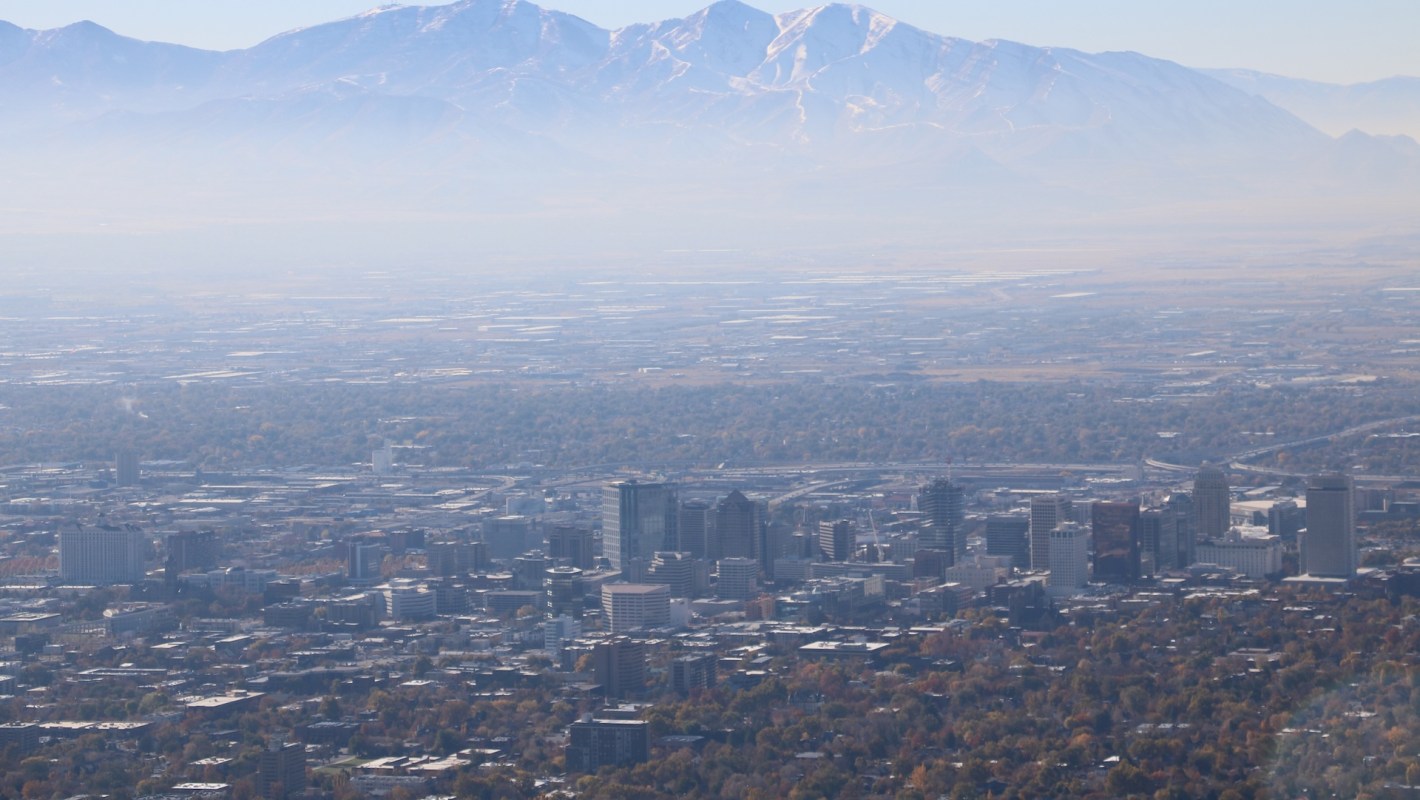
Due to a weather phenomenon, Salt Lake City residents are facing the worst air quality in the country.
What's happening?
As FOX 13 reported, the city was recently identified as the most polluted in the U.S. by the Air Quality Index. The AQI reached 104, which IQAir designates as "Unhealthy for Sensitive Groups."
The culprit in this case was an inversion. As the National Weather Service explains, inversions occur in low-lying areas during periods of clear skies and low winds. An inversion means warmer air is on top of cooler air by the surface, thus trapping in that cold air and any existing pollution and smoke.
For Salt Lake City residents, that equates to polluted air, hazy skies, and health risks until the inversion clears. While heavily polluted cities like India's Delhi feature AQIs of over 400, that shouldn't downplay the prolonged risk to vulnerable groups in Salt Lake City, while its AQI hovers at elevated levels.
Why is Salt Lake City's air pollution important?
Air pollution poses risks, including heart and respiratory issues, especially for sensitive groups like children, pregnant women, and the elderly. The indefinite nature of the inversion and its associated pollution is what alarms a pulmonary physician, Dr. Denitza Blagev, who spoke with FOX 13.
"I think it's a little bit misleading because it's really bad for all of us," Blagev said of the AQI designation. "That air pollution exposure, cumulatively over time, increases our risks of becoming one of the sensitive groups."
Blagev asserted that the impacts of the inversion would be seen in places like hospital emergency departments after several days of exposure, rather than on day one. There is some hope on the horizon, as a storm front could deliver relief from the inversion toward the end of the week.
Still, that leaves a few more days for Salt Lake residents to contend with hazy skies and polluted air.
What's being done about air pollution?
To address rising air pollution, transitioning to energy sources like solar and wind power can help reduce the amount of pollution that gets trapped when inversions occur. Another way to combat pollution is electrifying urban mobility with electric vehicles and e-bikes.
Residents can mitigate frequent poor air conditions by installing home air filtration systems. They can also limit time outside, take a break from strenuous exercise in the city, and closely monitor themselves and others who might be vulnerable in the conditions.
TCD Picks » Quince Spotlight
💡These best-sellers from Quince deliver affordable, sustainable luxury for all




|
Do you feel like the air quality is safe where you live? Click your choice to see results and speak your mind. |
 Always 💯
Get TCD's free newsletters for easy tips to save more, waste less, and make smarter choices — and earn up to $5,000 toward clean upgrades in TCD's exclusive Rewards Club.
Cool Picks






