


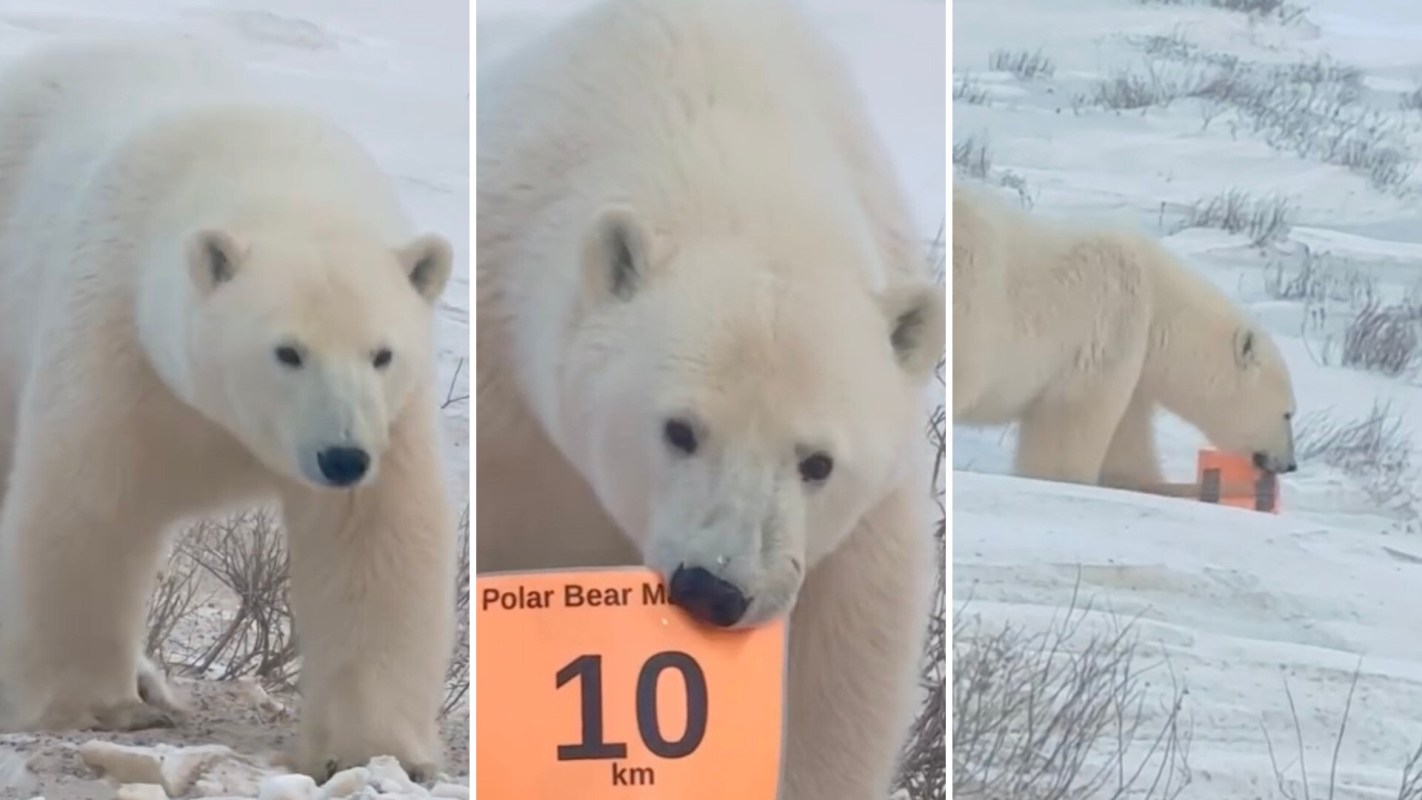
An annual marathon in northern Canada was recently interrupted by a polar bear, according to Running Magazine.
What's happening?
The aptly-named Polar Bear Marathon takes runners along the Hudson Bay shoreline, starting from Churchill, Manitoba. Temperatures during this year's race dipped below 24°F.
Runner Tarrant Cross Child (@tarrantcrosschild) captured footage of a polar bear approaching and removing the 10-kilometer sign along the route.
"He aimed straight for us," said Cross Child, according to Running Magazine. "I thought he'd veer off into the ditch or the field, but no, he beelined right to the 10K sign that said 'Polar Bear Marathon' on it."
Why are polar bear encounters important?
Polar bear habitat has been famously eroding. In particular, sea ice loss has forced polar bears to roam further afield in search of food or to starve altogether.
Given the slim pickings in the Arctic, polar bears are especially aggressive hunters, making human interactions with polar bears very dangerous. Prolonged exposure to humans only amplifies their comfort around people and increases the risk of attacks.
TCD Picks » Quince Spotlight
💡These best-sellers from Quince deliver affordable, sustainable luxury for all




As habitat degradation pushes polar bears into closer proximity to humans, the animals are also likely to mistake plastics for food options, with this marathon sign being a prime example. Researchers have found plenty of plastic in polar bear digestive tracts, indicating a growing trend.
Northern regions of the world are seeing outsized climate shifts compared to the rest of the world as temperatures have risen dramatically. As more snow and ice melt, less light is reflected, and more soil below absorbs heat, which further accelerates melt. Thawing permafrost also releases an enormous amount of harmful gases, exacerbating warming.
This cycle poses a transformational shift in ecosystems that have evolved to depend on the regular presence of snow and ice.
What's being done about polar bear populations?
Luckily, marathon staff were on hand to manage polar bear encounters, but this only helped in the instance of a single piece of signage.
Slowing dramatic sea ice loss and preventing the extinction of polar bears will require lowering atmospheric pollution on a large scale to bring down temperatures. This includes cleaning up transportation and energy production while also drawing that pollution down with new mature forests to sequester carbon.
|
Do you think humans are doing enough to protect endangered animals? Click your choice to see results and speak your mind. |
 Definitely 👍
Get TCD's free newsletters for easy tips to save more, waste less, and make smarter choices — and earn up to $5,000 toward clean upgrades in TCD's exclusive Rewards Club.







